Musk crosses $1 trillion as SpaceX's debut rewrites the public-market record book
SpaceX priced at $135 and opened at $151, lifting Elon Musk's paper fortune past twelve zeros — a milestone that says less about rockets than about who owns the next generation of public-equity capital.
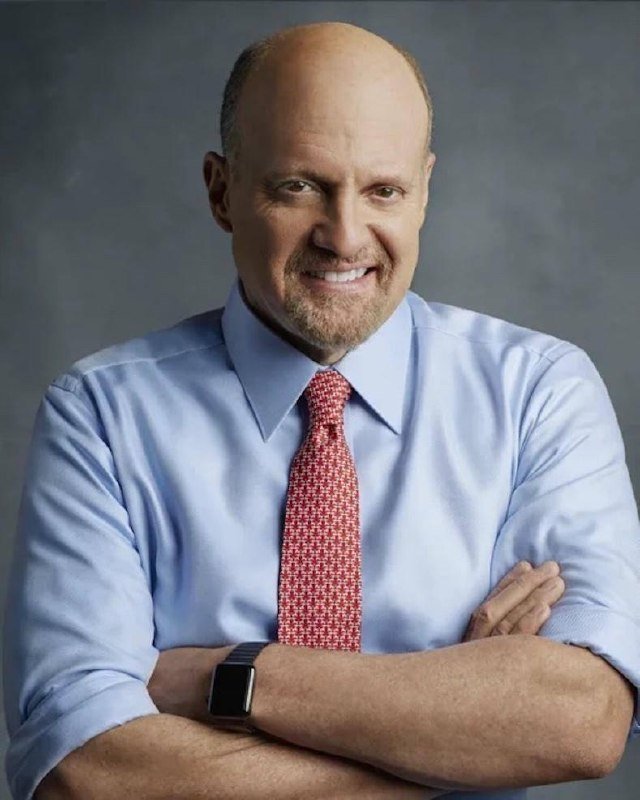
At 15:54 UTC on 12 June 2026, the first print crossed the tape. SpaceX shares indicated to open at $162, roughly twenty percent above the $135 price the company had set overnight in the largest initial public offering on record. By 15:55 UTC, the opening trade had printed at $151, and the company's fully diluted valuation cleared $2 trillion on the first cross. Within an hour, the personal-finance tallies had caught up. Elon Musk, the founder and chief executive, became the first individual in history whose net worth, on paper, exceeded $1 trillion.
That figure is not a salary. It is the arithmetic of a controlling stake in a private space-and-telecoms empire that, as of this week, is no longer private. The mechanics are unglamorous: a primary issuance that raised $75 billion at $135 a share, a secondary lift on the open, and a market that decided a rocket company belongs in the same conversation as the largest banks and oil majors. The story is not the trillion. The story is what kind of public-market infrastructure now sits underneath it.
A debut bigger than the field's history
SpaceX priced its IPO at $135 per share overnight, raising a record $75 billion and assigning the company a $1.77 trillion valuation before the first trade. By the opening bell, the deal had already eclipsed every previous IPO in the modern record. Indications of a $162 open, reported at 15:31 UTC, implied a roughly twenty percent first-day premium. The first trade settled lower, at $151, but the diluted valuation still crossed the $2 trillion line. The Cointelegraph wires at 15:54 UTC carried the headline; TechCrunch's afternoon write-up framed the moment in starker terms — "Musk's paper wealth" past twelve zeros, "at a time when he is more hated — and powerful — than ever." The wire's choice of conjunction is the editorial point: the IPO did not soften the public posture around Musk, it hardened it.
The scale deserves a frame. A $75 billion raise is, on its own, larger than the annual GDP of all but a few dozen countries. A $2 trillion opening valuation puts SpaceX in a tier previously occupied only by the megacap technology platforms — Apple, Microsoft, Alphabet, Nvidia — none of which debuted at anything close to that scale. The company is now a public-market peer of the firms that own cloud computing, search, and the AI training stack. It got there on the thesis that orbital launch, satellite broadband, and reusable rocketry constitute the next platform layer of the global economy.
The 10% wager that became a 2-trillion-dollar asset
The numbers arrive with a self-mythology. On the morning of the listing, Musk told an interviewer that he had given SpaceX less than a 10% chance of success at founding — a figure, reported at 13:58 UTC and again at 14:06 UTC, that is now doing the work of an origin story. The same window produced a complementary soundbite: SpaceX would, in his words, "take the fiction out of science fiction." Both lines are useful. The first converts a near-bankruptcy survival narrative into founder credibility, useful when retail bids are needed to clear a $75 billion book. The second gives the post-IPO narrative a mission that is legible to non-specialist shareholders.
The 10% line, in particular, is a financial artefact as much as a memory. Several of the companies that have shaped the past two decades of public markets — Tesla itself, Amazon in the early years, Nvidia before the AI cycle — were genuinely uncertain bets at the founding stage. The difference is that the venture bets behind those names were held by limited partners with diversified exposure and lock-up periods. The 10% bet on SpaceX, whatever its actual odds at the time, is now concentrated in a single balance sheet. The IPO does not dilute that concentration; it monetises it.
What the listing actually prices
The market is not buying a rocket company. It is buying a vertically integrated stack: launch services for government and commercial customers, the Starlink broadband constellation, and the option value of deep-space infrastructure that does not yet generate revenue. Each layer prices differently. Launch is a contracted-services business with national-security customers and high switching costs. Starlink is a recurring-revenue consumer product with growth-stage unit economics. Deep space is, at present, an unpriced call option on a regulatory and industrial environment that does not fully exist.
The $2 trillion opening number is, in effect, a bet that the second and third layers compound into something as large as the first. Read this way, the IPO is closer to a 1990s-era telecom-platform debut than to a 2010s software listing: high capex, regulated counterparties, a long build-out, and an equilibrium in which one firm ends up owning a meaningful share of the orbital real estate. The bull case is structural — that launch and orbit are consolidating the way cloud and mobile networks did. The bear case is equally structural: that Starlink's pricing power compresses, that defence procurement cycles turn, and that the deep-space option expires worthless.
Stakes, and what the wires are not yet saying
The trillionaire label obscures the structure of the wealth. The vast majority of Musk's net worth is illiquid, held in equity that the IPO has only just begun to convert into tradable form. Lock-ups, insider restrictions, and the practical limits on selling a controlling stake in a company he runs will keep the realised number lower than the headline for years. That is, in part, why the moment is politically combustible. The announcement lands in a year in which the public conversation around Musk is unusually hostile, by the standards of his own career, and in which the policy environment around his companies — defence launch contracts, spectrum allocations, regulatory access for autonomous systems — is actively contested.
What remains uncertain is the second-order read. A $75 billion primary raise, in a single issuance, is a structural event for the IPO market: it prices the next round of large private-to-public transitions and reorders the underwriter league tables. The retail bid that reportedly supported the first-day premium is also a sentiment signal — an indication that the public is willing to extend the late-cycle appetite for capital-intensive, narrative-driven equities. TechCrunch's framing — paper wealth, public hostility — is the honest one. The trillion is real as a market cap and provisional as a personal balance sheet. The list of things it does not yet tell us is longer than the list of things it does.
Desk note: Monexus framed this as a public-market story, not a personality profile. The wire coverage emphasised the round number; the analytical question is what kind of platform is now sitting on the public tape at $2 trillion — and who else gets to build on top of it.
Wire provenance
This editorial synthesis draws on the following public wire/social posts:
- https://t.me/s/cointelegraph/0
- https://t.me/s/cointelegraph/0
- https://t.me/s/cointelegraph/0
- https://t.me/s/cointelegraph/0
- https://x.com/polymarket/status/0
- https://x.com/polymarket/status/0
- https://x.com/pirat_nation/status/0