A trillion dollars, one man, and a market that has stopped pretending
Elon Musk has crossed the trillion-dollar threshold after SpaceX's record IPO. The headline is enormous; the questions it raises are larger still.
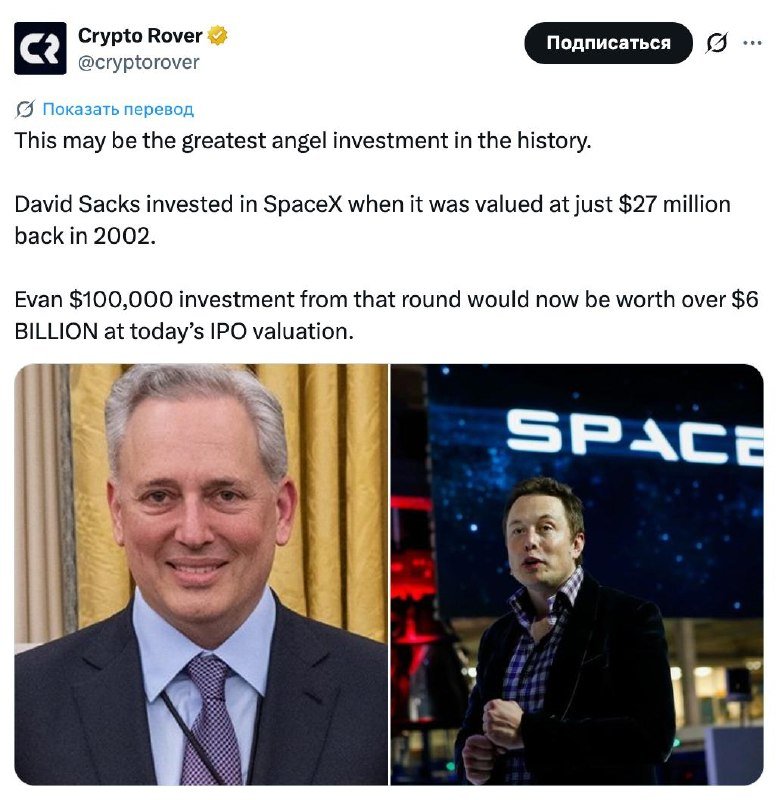
On 12 June 2026, Reuters and the BBC confirmed what had been telegraphed all week: Elon Musk has become the world's first trillionaire. The trigger was SpaceX's initial public offering, priced at $135 a share and valuing the company at roughly $75 billion on the way to a market capitalisation approaching $1.8 trillion — the largest IPO in history, per reporting from Al Jazeera and the BBC. The number is so large it has stopped functioning as a number. It works, instead, as a unit of political weather.
The point of an opinion column is not to marvel. It is to ask why a financial milestone of this scale is being processed as a personality story, an inevitability, or a piece of entertainment, when the same event, read structurally, tells us something specific about how the contemporary economy actually works.
The IPO itself
Reuters reported on 12 June 2026 that SpaceX's share sale had pushed Musk past the trillion-dollar mark, a figure derived from his SpaceX and Tesla holdings. Al Jazeera's lead that morning framed the moment against "rising angst over global inequality" — a phrase that, in wire copy, is the editorial equivalent of a fire alarm tested monthly. The BBC, in two pieces published within twelve hours, gave the story its human texture: Tom Mueller, SpaceX's first employee and a co-founder alongside Musk in 2002, told the BBC's Michelle Fleury that he had watched the firm grow from a small rocket venture into a public company whose IPO would rank as the largest ever recorded. The retail allocation, according to a person familiar with the deal cited by financial press, is being kept in the low 20 percent range — meaning the bulk of the paper wealth created is being distributed among institutions and insiders, not the public.
Three things deserve to be said plainly. First, the headline figure is a paper figure. Musk's net worth is a function of share prices and a refusal to diversify, not a vault. Second, IPOs at this scale do not happen in neutral markets; they happen because the underlying company has captured a public-good-adjacent franchise — in this case, US government launch contracts and Starlink's quasi-utility position — that no competitor can match. Third, when the largest IPO in history allocates only a low-20s percentage to retail, the float is, in effect, a transfer of optionality to a small set of institutions that already own everything else.
The framing we are being offered
The wire coverage has been technically correct and substantively anaemic. The story is being told as a biography — Musk, Mueller, the rockets, the audacity — and as a market technical, a record IPO. The structural question is being muted: what does it mean that a single private fortune has crossed a threshold previously reserved for nation-states?
The Global South reads this moment differently. A trillion dollars is roughly the annual external finance receipt of several dozen low-income economies combined. It is more than the GDP of South Africa. It is several times the combined market capitalisation of every listed African airline, bank, and telecom. When Al Jazeera pairs the trillionaire headline with "rising angst over global inequality," the framing is not moral posturing; it is arithmetic.
The counter-narrative on Western financial pages is that Musk's wealth is illusory, marked-to-market, and could evaporate with a single Tesla earnings miss. This is true and beside the point. Illiquid wealth still buys political access, platform reach, and the capacity to set terms with suppliers, regulators, and governments. The fungibility of fortune is not exhausted by its liquidity.
What the milestone actually signals
The deeper pattern is the concentration of industrial capacity in firms that are simultaneously contractors to the state, owners of critical infrastructure, and brand-name generators of cultural attention. SpaceX launches Pentagon payloads; it sells broadband to consumers; its founder owns a social media platform that shapes political discourse. The lines between government, market, and media have not merely blurred; they have been deliberately fused by a generation of policy choices that treat the frontier firm as a strategic asset.
The same is true, with variations, of the semiconductor, artificial-intelligence, and energy-storage sectors. The contemporary economy is producing a small number of companies whose political weight rivals that of mid-sized states, and a small number of individuals whose wealth is now denominated in political, not just financial, units. The trillion-dollar headline is the visible peak of a process that has been running for at least a decade.
The stakes, and what is still uncertain
If the trajectory continues, two things follow. The first is structural: a hardening of the boundary between a small set of trillion-dollar platforms and a long tail of firms, countries, and households that increasingly transact on terms those platforms dictate. The second is political: a re-legitimisation of the ultra-wealthy founder as a quasi-sovereign figure, answerable to no electorate and indispensable to every state.
What the available reporting does not settle is the durability of the valuation. The IPO is record-breaking; whether the price holds over a full market cycle is a different question. Nor does the coverage tell us how much of SpaceX's order book rests on government versus commercial demand, a distinction that determines whether the company is, in effect, a publicly traded defence contractor with a consumer brand. These gaps matter, and the next round of reporting should treat them as the actual story.
A trillion dollars is not a person. It is a verdict on the economy that produced it.
This piece reflects the editorial position of Monexus News. The wire led on the milestone; we are interested in the structure that made the milestone possible.
Wire provenance
This editorial synthesis draws on the following public wire/social posts:
- https://t.me/CryptoBriefing
- https://t.me/ClashReport