Netanyahu draws a personal red line on Iran as reports of a US-Iran framework circulate
Netanyahu's personal red line on Iranian enrichment lands in a week defined by a US-Iran framework announced from Islamabad, a Geneva signing still ahead, and a White House that has chosen to register its irritation in print rather than walk away.
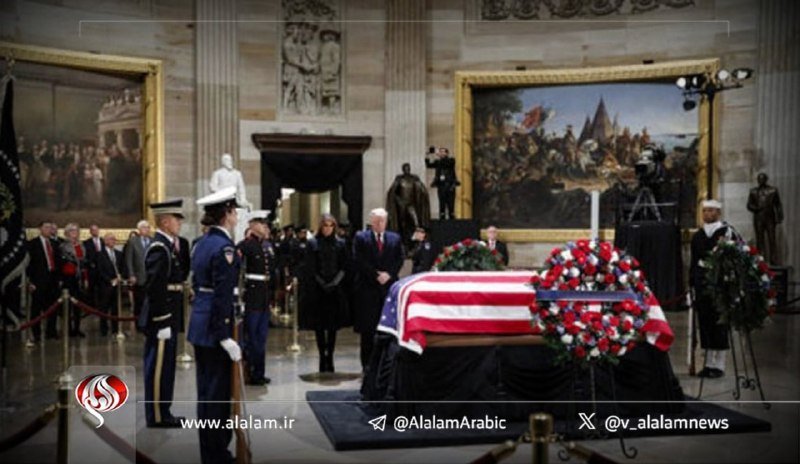
At a televised press conference on Friday morning in Tel Aviv, Prime Minister Benjamin Netanyahu declared that Israel would not accept any agreement with Iran that permits the Islamic Republic to retain enrichment capacity, language Israeli outlets carried verbatim because it came from the prime minister's own podium rather than from anonymous briefings. The red line was framed in personal terms: Netanyahu said he had transmitted the position to Washington through multiple channels and would not budge from it, regardless of which framework details were circulating in capitals from Islamabad to Geneva.
That posture lands in a week already crowded with diplomatic signals. A US-Iran memorandum of understanding was announced from Islamabad by Pakistani Prime Minister Shahbaz Sharif and framed as a peace deal that ends the war and reopens the Strait of Hormuz; Iran state media cited an informed source describing last-minute changes to the text; and President Donald Trump told the New York Times that a deal had been reached despite Netanyahu's objections, that strikes would resume if a final nuclear accord fails to materialise, and that Netanyahu is "a very difficult guy" who "should be very grateful to us, because if Iran had a nuclear weapon, Israel wouldn't be around for two hours." The prime minister's red line, in other words, did not arrive in a vacuum. It arrived as the political cover over a framework whose contents Israeli officials have not endorsed and whose text has not been published.
What the prime minister said, and what he did not
Netanyahu's statement did not reject diplomacy. It rejected a specific architecture: any settlement under which Iran enriches uranium at any level, on any timeline, under any inspection regime. Israeli media, including Times of Israel and Ynet reporting carried through the Jerusalem Post wire, treated the remarks as a continuation of the long-standing Israeli position rather than a new rupture, noting that prior coalitions had carried identical language against enrichment on Iranian soil. The political reading is that the prime minister is locking in a position hard enough that any future Israeli government would inherit it, and soft enough that Washington can present the framework as still compatible with Israeli demands.
What was missing was equally instructive. The prime minister did not threaten to strike Iran unilaterally, did not threaten to walk out of the US relationship, and did not threaten to dissolve his coalition. He used the language of conditional acceptance: a deal that meets the red line is acceptable, a deal that does not is not. That is the rhetorical posture of a leader who expects to be overruled but wants the overruling on the record.
The framework on the table, as best it can be read
The detail set is thin enough that analysis has to substitute for journalism. From the wire, the framework appears to include an end to hostilities, a reopening of the Strait of Hormuz described by Trump as "permanently toll-free," and an implicit pause on US military action that is conditional on a final nuclear accord. A senior Iranian source cited by Tasnim confirmed last-minute edits to the memorandum text in the final hours before announcement, which suggests the parties are still bargaining over the back of the document even as the front of it is being photographed. Trump reserved for himself the option to restart strikes if a final accord does not arrive, and floated an alternative: a US role as "the guardian of the Middle East" in return for twenty years of access, per his NYT interview.
On the European flank, a coordinated statement from the UK, France, Germany, and Italy said the E3+1 quartet was prepared to lift relevant sanctions if Iran takes clear and verifiable steps on its nuclear programme, language that couples relief to behaviour rather than to the agreement alone. The European phrasing matters because it implies the quartet intends to set its own verification track rather than defer to the US-Iran text.
The political reading from Jerusalem
Israeli commentary has settled on a familiar two-track analysis. The first track treats Netanyahu's red line as substantive: a serious Israeli coalition with a defence minister and an opposition that includes former senior security officials will not quietly absorb an Iranian enrichment programme on its declared borders. The second track treats the red line as theatre: a public marker that lets Washington claim it tried, lets Tehran claim it negotiated, and gives the prime minister a domestic win regardless of the final text.
Both tracks are correct, and that is the point. Israeli politics runs on red lines precisely because they preserve optionality, and the prime minister has spent a decade accustoming audiences to read his maximalism as a negotiating posture rather than as a veto. The risk is that this time the audience is not just the Israeli public but also a White House that is openly irritated, per Trump's published remarks, by having to manage him in real time.
Why a deal remains plausible, structurally
The counter-read is not that the prime minister is bluffing. It is that the structure of the negotiation pulls toward a deal despite the visible friction. The framework was announced from a third-party capital and brokered with Pakistani mediation, which is the signature of a US administration that wants an off-ramp it can claim was multilateral. Trump has tied the political price of failure to himself rather than to Israel, by reserving the strike option personally and by tying the alternative to a twenty-year US protectorate, a frame that only he can sell. Iran's speaker of parliament, Mohammad Bagher Qalibaf, the lead negotiator, plus foreign minister Abbas Araghchi, are due in Geneva for the signing alongside US vice president JD Vance. The E3 sanctions track creates financial incentives for Iran independent of the US text. And AP's analysis notes that Iran has emerged with a new lever in the Strait of Hormuz, which is exactly the kind of asset Tehran prefers to monetise rather than to test in a renewed air campaign.
Netanyahu's red line, in this reading, is the price of Israeli consent to a deal the prime minister cannot publicly want but cannot afford to refuse.
What to watch next
Three dates matter. First, the Geneva signing, where the text will be pored over in real time and where Israeli objections will either be absorbed into the document or registered as formal reservations. Second, any E3 statement on verification triggers, because that text will determine whether sanctions relief is automatic or discretionary. Third, Trump's own bottom line, since the strike restart option he has reserved for himself runs on a clock that no one else controls.
The harder question is what happens if the red line is crossed and the deal goes through anyway. Israeli political history suggests the prime minister will absorb that outcome by reframing the framework as having been improved by his objections, the same way previous coalitions have handled US-Iran episodes they opposed in principle. The risk is that, this time, an Iranian enrichment programme on the country's doorstep creates a domestic consensus for a unilateral strike that no framework anticipated, and that the political cover the prime minister is building now becomes the political authorisation for a war he has not yet asked for.
Sources
- Jerusalem Post via Telegram: "Donald Trump says Benjamin Netanyahu should thank US for reaching deal with Iran," 2026-06-14, https://t.me/The_Jerusalem_Post
- The Spectator Index via osintlive: "Trump says deal with Iran was reached despite objections by Israeli PM Netanyahu," 2026-06-14, https://t.me/osintlive
- Mehr News: "Pakistan Prime Minister Shahbaz Sharif: After intense negotiations, we are proud to announce that the peace agreement…" 2026-06-14, https://t.me/mehrnews
- Tasnim: "Some changes in the last few days and hours of the negotiations regarding the text of the memorandum," 2026-06-14, https://t.me/JahanTasnim
- Clash Report: "The UK, France, Germany and Italy said they are prepared to lift relevant sanctions," 2026-06-14, https://t.me/ClashReport
- AP via ourwarstoday: "The United States and Iran have reached an agreement to end the war and open the Strait of Hormuz," 2026-06-14, https://t.me/ourwarstoday
- intelslava via Trump/New York Times interview, 2026-06-14, https://t.me/intelslava
Desk note: Monexus led with the prime minister's own statement, attributed by name and by channel, and flagged the absence of deal text rather than paraphrasing anonymous summaries of the framework. The Iran and Israel coverage stays inside the established compass: Israeli security concerns as first-order facts, the prime minister's red line as a politically serious position rather than as theatre, and the counter-read that a deal remains plausible given as a structural argument rather than dismissed.
Follow the event.
These dated source records provide context. They do not retrospectively verify this archive article.
Separate what the nuclear watchdog reported from what it could not determine after the June 2025 strikes.