Netanyahu says he and Trump are "in complete agreement" on Iran as Geneva MoU talks loom
Netanyahu publicly aligned himself with Donald Trump on Iran on 12 June 2026, hours before US and Iranian negotiators were reported to be preparing to sign a memorandum of understanding in Geneva.
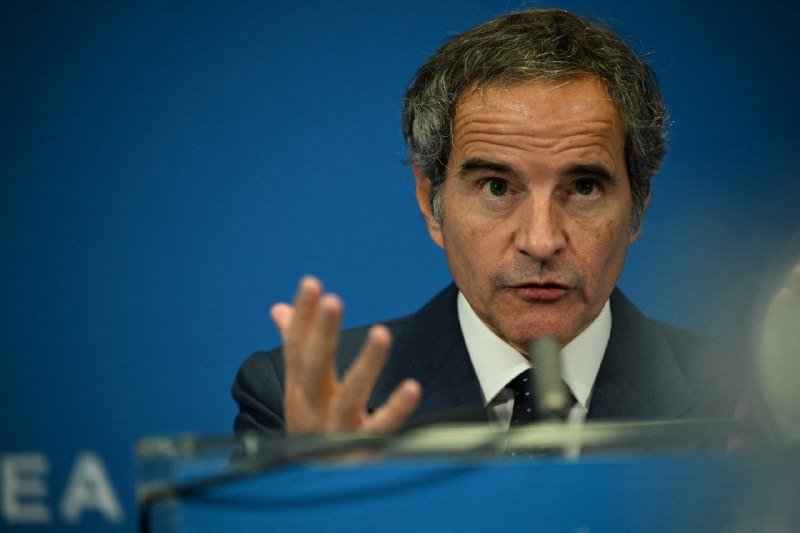
Israeli Prime Minister Benjamin Netanyahu said on 12 June 2026 that he and US President Donald Trump are "in complete agreement" on the question of Iran's nuclear programme, breaking his public silence hours before American and Iranian negotiators were reported to be preparing to initial a memorandum of understanding in Geneva.
The remarks, delivered in a brief televised statement carried by Israeli media and distributed through the prime minister's office, mark the clearest public alignment Netanyahu has offered the Trump administration since the current round of US-Iran diplomacy accelerated in the spring. They also underscore how narrow the political space is for any deal that does not, at minimum, codify an Israeli red line.
What Netanyahu actually said
Netanyahu's statement was short, scripted, and aimed at two audiences at once. "As long as I am the Prime Minister of Israel, Iran will not have nuclear weapons," he said, according to a transcript distributed by Israeli television channels and quoted in the prime minister's office feed. "President Trump and I are in complete agreement on this issue. For over 30 years I have been at the forefront of the effort to prevent Iran from acquiring nuclear weapons."
The wording did not specify what concrete steps Israel would accept, or reject, in a Geneva deal. It did not mention enrichment levels, missile constraints, or verification timelines. It did, however, do something politically significant: it endorsed, in public, the negotiating posture of a US president who has spent the past several months in direct talks with Iran's foreign minister. The Israeli prime minister's office has historically been careful to preserve daylight between itself and the White House on the Iran file, on the working assumption that a public gap gives Jerusalem more leverage if talks collapse.
The shift is not, in itself, a sign that Netanyahu has been read into the deal text. The text is reportedly being negotiated in Geneva under the supervision of Trump's special envoy, with the Swiss government acting as host. The Israeli read-out on 12 June appeared to be calibrated to take credit for whatever emerges, while reserving the right to disavow it if it falls short.
The Geneva framework, as reported
According to a 12 June 2026 report carried by Bloomberg and picked up by Israeli outlets, the United States and Iran could sign a memorandum of understanding as early as Sunday 14 June, with Trump expected to attend the G7 summit in the second half of the week. The Bloomberg reporting, relayed through the Israeli media, said the document would be a political MoU rather than a final nuclear agreement — closer to a framework that defers the hardest questions than to a comprehensive deal.
Iranian state-aligned outlets reacted with reflexive hostility. Tasnim News, the outlet closest to the Islamic Revolutionary Guard Corps, framed Netanyahu's statement as a "repeated claim against Iran" and cast the Israeli prime minister as "the terrorist prime minister of the Zionist regime." The framing matters: it tells the Iranian negotiating team that any concession made in Geneva will be read at home as capitulation to an Israeli veto, which raises the political cost of agreeing to even a soft framework.
Iranian officials have not, in the available reporting, denied that a MoU is being prepared. They have, however, insisted that any agreement must address sanctions relief on the Iranian side, that enrichment on Iranian soil will continue, and that the deal cannot be made conditional on Israeli sign-off. The Iranian foreign ministry, in briefings carried by state media in recent weeks, has treated Netanyahu as a third party whose views are "not relevant" to the bilateral track.
What the Israeli alignment actually buys
Netanyahu's statement gives Trump political cover at home. It tells the Republican caucus, the pro-Israel lobby, and the Israeli-American donor class that the US negotiating line in Geneva is not being run around the prime minister. It also raises the threshold for any Israeli public break with a Trump-brokered deal: a prime minister who has just declared himself "in complete agreement" with the president is in a weaker position to denounce the product of that agreement three weeks later.
The statement does not, however, bind Israel to a specific position on enrichment, on the snapback of UN sanctions, or on the military dimensions of Iran's programme. Israeli officials have, in background briefings carried by Israeli media, indicated that what they want to see in any MoU is language on the verifiable absence of weapons-related activities and a credible path to sanctions snapback if Tehran is judged to be in violation. They have not specified what level of enrichment they would tolerate, or for how long.
That ambiguity is deliberate. It keeps open the option of an Israeli strike if the MoU collapses, while giving the Trump administration room to claim a diplomatic success in time for the G7.
Stakes and what remains uncertain
If the MoU is signed in Geneva on Sunday as reported, the immediate effect would be a pause — not a settlement — in the escalation cycle that has run, off and on, since the US withdrew from the Joint Comprehensive Plan of Action in 2018. A framework deal of this kind would defer the hardest questions (enrichment, missiles, regional proxy forces) to a later phase, while buying time for sanctions-easing steps on the Iranian side and a de-escalation of the shadow war that has played out across Syrian and Iraqi airspace.
The Israeli prime minister's intervention on 12 June does not change the underlying disagreement between Jerusalem and Tehran. It does change the optics around whatever is signed in Geneva. Netanyahu has chosen to be photographed next to Trump rather than to stand apart from him. That is, in itself, a piece of news — and it is a piece of news the Iranian negotiating team cannot ignore.
What remains genuinely uncertain is whether the MoU will be initialed on Sunday as the Bloomberg reporting suggested, whether it will be characterised as a "framework" or a "deal" by the two sides, and whether it will include anything resembling a cap on Iranian enrichment. The source material available to Monexus as of 12 June 2026 does not specify the substantive contents of the document. Both the Israeli and Iranian public framings are being constructed in advance of a text neither side has confirmed on the record.
Monexus framed this as a single news event — Netanyahu's 12 June statement — and held off on characterising the Geneva MoU as either a breakthrough or a trap. The wire cycle is currently dominated by Israeli and US official read-outs; Iranian and Russian state media are pushing back hard. We will follow up with a verified reconstruction of the MoU text once it is released.
Wire provenance
This editorial synthesis draws on the following public wire/social posts:
- https://t.me/amitsegal/
- https://t.me/ClashReport/
- https://t.me/wfwitness/
- https://t.me/englishabuali/
- https://t.me/rnintel/
- https://t.me/FarsNewsInt/
- https://t.me/JahanTasnim/
Follow the event.
These dated source records provide context. They do not retrospectively verify this archive article.
Separate what the nuclear watchdog reported from what it could not determine after the June 2025 strikes.