Nizhnekamsk and the new arithmetic of Ukraine's long-range strike campaign
Kyiv's drones now reach the Volga. Moscow's missiles still reach Kharkiv. The two campaigns, separated by 1,300 kilometres of Russian territory, run on the same arithmetic.
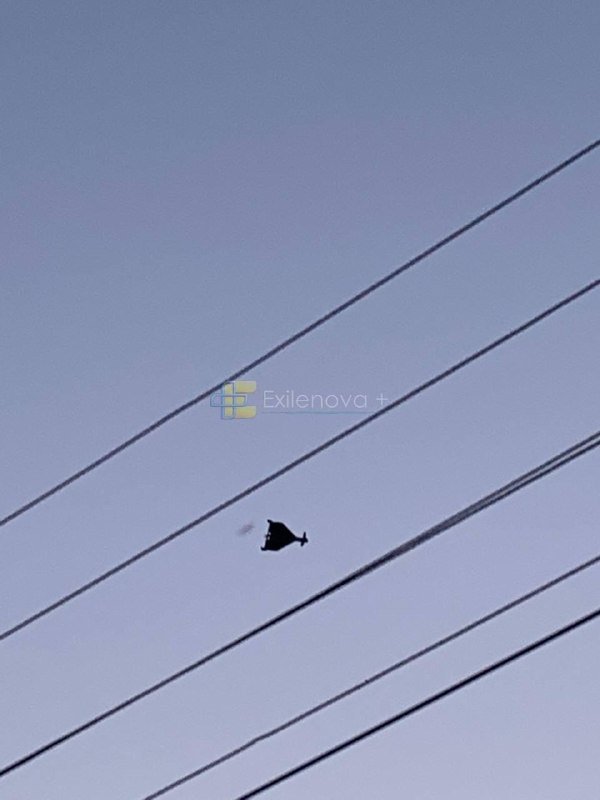
Nizhnekamsk sits on the Kama river in Tatarstan, roughly 1,300 kilometres from the closest stretch of Ukrainian-controlled territory, and it is the kind of inland petrochemical complex that used to be regarded as untouchable. On the night of 12 June, it was not. Reconnaissance footage circulating through the OSINTLive and War Translated feeds showed long plumes lifting off a residue-processing unit at the TAIF-NK complex, a signature consistent with a successful strike on a Russian refinery processing Caspian crude. Ukrainian long-range drones, mostly domestic Liutyi and foreign-supplied variants operated by the SBU and GUR, have now reached the Volga basin on a near-weekly cadence.
The contrast is the story. Two and a half years of Russian missile and drone strikes on Ukrainian energy infrastructure, the grid, the substations, the thermal plants, have been covered in granular wire detail: damaged transformers, rolling blackouts, repaired and re-repaired lines. Ukrainian strikes deep into Russian territory have moved the other half of the same war onto the same kind of industrial site. Both sides have spent much of 2026 trading blows on the other's downstream barrel. The geography of the strikes, however, is what has changed. Twelve months ago Kyiv's reach topped out at around 800 kilometres. This summer it crosses the 1,500-kilometre mark.
Nizhnekamsk is the most dramatic signal of that expansion, but it is not the only one. The Engel's airbase on the Volga, the Saratov oil refinery, the Kirishi complex near St Petersburg, the Slavyansk oil terminal on the Krasnodar steppe, all have surfaced in recent weeks as confirmed or plausible Ukrainian strike locations. The pattern matters more than any single hit: this is a campaign of attrition against a Russian downstream sector that Moscow has been straining to defend with point-defence, decoy balloons and shoulder-to-shoulder Pantsir deployments. The cost of those batteries, plus the interceptor missiles they burn, is being quietly added to a fuel price that Russian drivers are now paying at the pump. Russia's wartime refinery utilisation has slipped several points relative to last summer, and the share of high-octane components in the domestic fuel pool has thinned enough to draw official tinkering with export quotas.
The arithmetic runs further than fuel. A drone that costs a low six figures in dollar terms, striking a refinery unit that costs the better part of a billion to replace, is a favourable exchange even after a third of the salvo is intercepted on the way. Multiply by the tempo, and the calculus resembles the late-stage model Ukraine used against Russian logistics in 2022 and 2023: cheap system, expensive target, political patience behind it. The new element in 2026 is reach. The Liutyi programme, matured airframes and tighter Western-supplied navigation gear, has stretched the operational envelope from the Belgorod and Bryansk periphery into the country's industrial heartland. The domestic political effect inside Russia is not yet visible in polling that anyone publishes, but the geographic effect absolutely is: refineries that were nominally rear-area logistical nodes are now treated as forward posts.
The same channel that confirmed the Nizhnekamsk hit on Saturday afternoon also carried, that same evening, a far heavier Russian bombardment of Ukrainian cities. LiveUA reported explosions in Kyiv, Kharkiv and Dnipro; the Dormition Cathedral of the Kyiv-Pechersk Lavra, an eleventh-century Orthodox landmark, was reported on fire by Mayor Klitschko and by Status-6, with Ukrainian air defence being locally blamed for the falling debris. Faytuks and intelslava separately tracked a Russian double-tap strike in Kharkiv that killed five rescue workers responding to an initial impact. That pairing, a Volga basin refinery burning in daylight and a Kharkiv relief crew buried under rubble at night, is the load-bearing fact of mid-June 2026. The two strikes are not mirror images. They are inversions of the same industrial logic, separated by geography and only partly by capability.
The question that follows the data, and the one Western analysts are now writing around, is whether the Russian campaign against Ukrainian energy has peaked or merely rotated. Russia's missile output has been rebuilt through foreign supply chains and domestic lines, which means the pressure on Kyiv's transformers is not easing even as Moscow bleeds at its own refineries. The diplomatic backchannel is open: Zelenskyy spoke to Donald Trump on Sunday about the war and about peace negotiations, while Trump separately told Putin that ending the conflict is vital, according to Kremlin adviser Yuri Ushakov. None of those calls touched the strike tempo on either side. The new arithmetic keeps running. The Kama is now in range; so, just as visibly, is Kharkiv.
The centre of gravity has moved
Inside Ukraine's long-range strike programme, the most consequential shift of the past year has not been a new weapons class but a change in target logic. First-generation strikes sought validation: a flag on a map, a video for the domestic audience. The 2026 pattern is industrial throughput, measured in barrels per day of feedstock diverted, in octane pools thinned, in the running cost of point-defence dragged out across a thousand kilometres of perimeter.
The arithmetic Ukraine is running
The unit-cost ratio is the headline. A long-range drone at low six figures, against an atmospheric-vacuum unit whose replacement stretches into nine. Even with interception rates reaching four in ten on the densest nights, the exchange still bends toward the attacker.
The geography of the strikes
Nizhnekamsk, Engel's, Saratov, Kirishi, Slavyansk. Twelve months ago, the same list would have stopped west of the Volga. The reach is the difference between a nuisance campaign and one that registers inside Russian domestic fuel pricing.
What the inverse looks like tonight
The same Saturday that carried the Nizhnekamsk plumes also carried a Russian combined missile and drone attack on Kyiv, Kharkiv and Dnipro, with the Dormition Cathedral ablaze and five rescue workers killed in a Kharkiv double-tap. The two stories belong on the same page.
Follow the event.
These dated source records provide context. They do not retrospectively verify this archive article.
A dated voting record is evidence of one decision. Use the original UN record before turning it into an alignment label.
Visual explainer · historical vote of 2022-03-02 →