Pakistan and Gulf states step up shuttle diplomacy as Iran-US draft text emerges from Geneva track
A draft text is now on the table between Washington and Tehran. The mediators are no longer just the Swiss — they are Pakistan, Qatar, and Egypt, with Cairo coordinating and Islamabad preparing to fly to Geneva overnight.
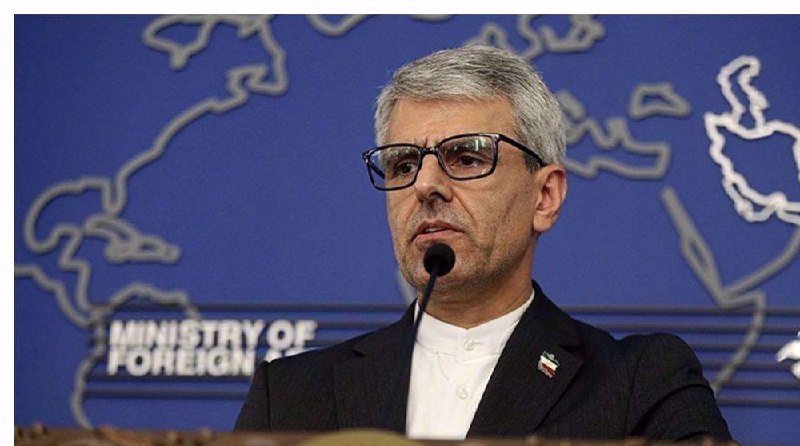
At 17:40 UTC on 12 June 2026, Iran's Tasnim News Agency reported that the Prime Minister and Foreign Minister of Qatar had spoken by phone with Egypt's Foreign Minister to coordinate positions on the Iran–United States track now being negotiated in Geneva. Six minutes later, at 17:46 UTC, IRNA — the official Iranian state news agency — said Pakistan's Deputy Prime Minister and Foreign Minister, Senator Muhammad Ishaq Dar, would travel to Geneva that evening to continue mediation between Tehran and Washington. A third item in the same cluster, published at 16:44 UTC by the Jahan Tasnim channel, quoted Pakistan's Prime Minister confirming that an agreed text had been reached between Iran and the United States and that Islamabad was cooperating with both sides to "finalise the agreement."
The shape of the back-channel has changed in a matter of weeks. What began as a discreet Swiss-hosted process now has three Muslim-majority regional states — Pakistan, Qatar, and Egypt — formally inserted between the principals, with Cairo coordinating and Islamabad preparing to board a flight overnight. The shift is less about the substance of any one clause and more about who is trusted to carry the document across the negotiating table.
The mediators, and what they say they have
Pakistan's Prime Minister is on record, via the Jahan Tasnim channel, confirming that "an agreed text has been reached between Iran and America" and that Islamabad is working with both to finalise the agreement. The phrase is careful: a text has been agreed, not a deal. In negotiation language that distinction matters — it signals that the working draft is now shared between the parties, but the political decision to initial, sign, or implement it has not yet been taken.
Qatar's role, as reported by Tasnim, is telephone diplomacy with Cairo. The Qatari Prime Minister and Foreign Minister — who also holds the foreign affairs portfolio — discussed "mediation between Iran and the United States" with his Egyptian counterpart. The conversation is consistent with a pattern Doha has run for several years: low-profile hosting, hotel-suite shuttle work, and back-channels to both the Iranian foreign ministry and the U.S. special envoy team. Egypt's involvement adds a weight Qatar cannot supply on its own — Arab League standing, a direct line to Cairo's intelligence service, and a diplomatic relationship with Tehran that survived the 1979 break.
Dar's overnight flight to Geneva, announced by IRNA, completes the picture. Pakistan is not a Gulf state and has no historical baggage with the United States over Gulf security, but it is one of the few countries with the political standing in Tehran to be received as a peer and the relationship in Washington to be treated as a credible messenger rather than a supplicant.
The counter-narrative: what the messaging is hiding
Two reads of the same cluster of wires deserve airtime. The first is the optimistic one — that mediation has matured into a document, the document is being finalised, and the principals are within reach of a framework. Pakistan's statement, as carried by Jahan Tasnim, is the strongest piece of public evidence for that read.
The second is more cautious. Iranian and Qatari state outlets are not neutral observers. Tasnim and IRNA are organs of, or adjacent to, the Islamic Republic's information architecture. The fact that a draft text exists does not, on its own, tell a reader that the text will hold — or that the political permission to sign it exists in Washington, in Tehran, or in the Gulf. The Qatari-Egyptian call could be substantive coordination, or it could be a managed signalling exercise to keep oil markets and regional allies pointed in the same direction while the principals work through their internal veto players. The sources do not specify which.
A further wrinkle: the framing of the Geneva track as a mediation with three Muslim-majority states, rather than a negotiation between the United States and Iran directly, is itself a choice. It widens the cast of plausible spoilers, and it raises the question of whose red lines the draft text is built to satisfy. If Cairo and Doha are now co-authors of the political cover, they will want assurances that the package does not leave their own security files — Suez transit, Red Sea shipping, Gulf missile defence — worse off.
The structural frame: who gets to mediate, and what that says
The pattern here is bigger than one weekend in Geneva. For the past two decades, U.S.–Iran diplomacy has run through European intermediaries — Switzerland, the EU's political director, Britain and France in the E3 formation, the IAEA in Vienna. The mediators' identity is itself a tell about whose interests the deal is designed to protect.
A Geneva process fronted by Pakistan, Qatar, and Egypt reflects a different political economy. The Gulf states bring energy-market exposure and Shia-Arab diplomatic capital. Egypt brings institutional Arab weight and a working channel to Tehran that has held for over four decades. Pakistan brings a nuclear-armed Muslim-majority state with both a defence relationship to Washington and a long, complicated border with Iran — and a public foreign-policy tradition of presenting itself as a bridge between the Muslim world and the West. Together, they reweight the diplomatic centre of gravity away from the European capitals where the Iran file has lived since 2003.
The plain-English version of what that means: a deal in which the mediators look like this is more likely to contain language on regional security, energy, and sanctions architecture that the Gulf and the wider Muslim world can defend publicly, and less likely to be a narrow nuclear-file accord that European capitals can claim sole ownership of. That is not necessarily a better or worse deal. It is a different deal, with different domestic constituencies inside Iran and a different set of allies that the United States will need to keep onside after any signing.
The stakes, and what remains uncertain
If the trajectory holds, the most concrete beneficiaries are the negotiating states themselves. Pakistan acquires a foreign-policy credential that money cannot buy. Qatar and Egypt lock in status as the Arab world's default diplomatic operators on the most consequential security file in the region. Iran gains a process in which the U.S. has had to share the table with non-European interlocutors. The United States, if a deal is reached, gets a de-escalation track that does not depend on the European political calendar and that gives Washington regional cover it cannot generate from the E3.
If the trajectory breaks, the cost is also widely distributed. A collapse in Geneva would expose the three mediators to accusations of having over-promised, and it would harden the position of the spoilers on every side — Israeli security voices that have been sceptical of any deal since the original JCPOA, Iranian hardliners who read the same text as capitulation, and U.S. domestic actors for whom any agreement with Tehran is automatically a loss.
What the public sources do not yet establish is the content of the agreed text. They confirm that one exists, that Pakistan says so, and that Cairo and Doha are coordinating around it. They do not say whether the document is a short framework, a long technical annex, or a political communiqué in coveralls. They do not name the U.S. principal in the room, and they do not record an Iranian acknowledgement that matches Pakistan's confidence note for note. Until those gaps close, the responsible reading is that the diplomatic architecture around a possible deal is more visible than the deal itself — and that the next 72 hours of shuttle work in Geneva are where that imbalance will either narrow or widen.
Desk note: Monexus is running this on the strength of Iranian and Qatari state-channel reporting plus a single Pakistani statement carried by an Iranian outlet; readers should expect the picture to sharpen as Western wire services file their own reads on the Geneva room.
Wire provenance
This editorial synthesis draws on the following public wire/social posts:
- https://t.me/wfwitness
- https://t.me/tasnimnews_en
- https://t.me/JahanTasnim
Follow the event.
These dated source records provide context. They do not retrospectively verify this archive article.
Separate what the nuclear watchdog reported from what it could not determine after the June 2025 strikes.