Pakistan claims US-Iran deal text is final as mediation enters endgame
Pakistan's prime minister says a final agreed text exists between Washington and Tehran, with Islamabad now coordinating the next steps — but neither side has confirmed the substance.
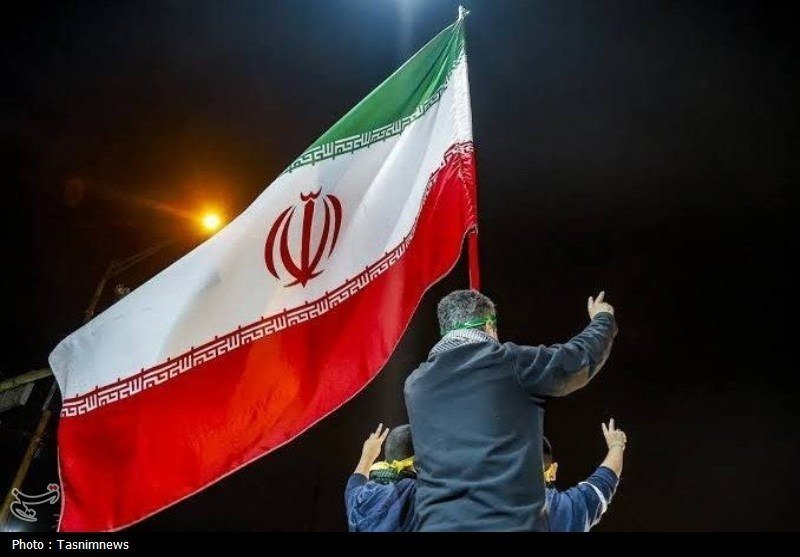
Pakistani Prime Minister Shehbaz Sharif announced on Friday, 12 June 2026, that the United States and Iran have reached a final, agreed-upon text for a peace deal, with Islamabad now coordinating the next steps with both sides. The statement, posted to his official account and amplified across Pakistani and regional news channels between 16:17 and 16:25 UTC, marks the most concrete claim yet from a third-party mediator that the long-running back-channel between Washington and Tehran has produced a document both capitals are willing to sign. Neither the US State Department nor Iran's foreign ministry had confirmed the substance of the text as of the same window. The announcement is therefore best read as a mediator's framing of where the talks stand, not as a treaty moment.
What is unusual is the language. Sharif used the words "final, agreed upon text" twice in the same brief statement, and pre-empted doubt by referring to "a misinformation campaign being waged by those who want to sabotage" the process. That phrasing — delivered into a media environment that has tracked every previous false dawn in the US-Iran relationship since 2015 — is itself the news. The Pakistani government is signalling that it considers a hostile information environment a live threat to the deal, and is publicly naming the risk before either principal confirms the document.
What was actually said
Sharif's statement, as carried by Euronews and multiple Pakistani outlets, frames the announcement in three steps: a confirmation that the text exists, an acknowledgement that the text is "final," and a forward-look in which Pakistan "is now working closely with both sides to finalize the next steps." The phrase "finalize the next steps" is deliberately narrower than "sign" or "implement," and gives Islamabad room to continue hosting shuttle diplomacy without overpromising. The Geo Political Watch channel, which broke the initial thread, included a line saying Pakistan is "fully aware of incessant misinformation campaign being waged by those who want to sabotage" the deal — language that points to actors outside the negotiating room, without naming them.
The wording is consistent across the seven channels that carried the statement between 16:17 UTC and 16:25 UTC: BRICS News, Insider Paper, Al Alam Arabic, RN Intel, Where's Footage Witness, Euronews, and Geo Political Watch. That consistency suggests a single source — almost certainly the Sharif press release or a transcript of his media appearance — rather than independent reporting from each outlet.
What has not been confirmed
Neither the US State Department, the White House, nor Iran's foreign ministry has, on the record, confirmed the existence of a final text. The Pakistani statement is the only public anchor for the claim. That is not a minor caveat. In 2015 the Joint Comprehensive Plan of Action was announced only after the P5+1, the EU, and Iran all confirmed the text in lockstep, and the same standard applied to the 2018 US withdrawal. A deal in which only the mediator speaks is, in the language of diplomacy, an unconfirmed handshake.
There is also no indication of the deal's substantive scope. The thread material does not specify whether the text addresses enrichment, sanctions sequencing, nuclear inspections, regional proxy forces, hostage files, or the frozen Iranian funds held in South Korean and Iraqi accounts. The absence of those specifics is consistent with a final text that has been negotiated behind a tight compartment — or with a mediator announcement designed to lock in leverage before the principals have signed.
Why Pakistan is the messenger
Pakistan's role as a US-Iran mediator is not a novelty — Islamabad has hosted back-channels for years — but Sharif's personal visibility in this round is. The prime minister's office has been the public face of the talks, which gives the announcement a domestic political dimension: a civilian government in Islamabad can claim a foreign-policy win at a moment when its economic relationship with Washington, including IMF programme review milestones, is under scrutiny. The mediation also positions Pakistan alongside Qatar and Oman in the small set of Gulf-adjacent states that can credibly host talks involving both the US and Iran, while giving Islamabad a seat at any post-deal regional security architecture.
The structural read is that the deal, if it holds, will be sold to regional audiences as a Pakistani-brokered outcome — not an American-imposed one. That framing matters in Tehran, where the politics of any agreement require that it not look like a Western victory, and in Gulf capitals, where the optics of who delivered the deal shape the post-deal hierarchy of influence.
The risks the announcement flags
Sharif's reference to a "misinformation campaign" is the line worth tracking. It implies that actors — domestic, regional, or Israeli — are already working the information space against the deal. In previous rounds, leaks to Israeli outlets and to Iranian hardline outlets have been used to harden opposition to any agreement; the Pakistani statement acknowledges that pattern without identifying who is doing it this time. The structural lesson of 2015-2018 is that a deal can survive the negotiating room and die in the press cycle. Sharif appears to be trying to inoculate the text against that risk in advance.
The other open variable is sequencing. "Finalize the next steps" can mean a signing ceremony, a parliamentary track, a sanctions waiver, or a prisoner exchange — none of which has been disclosed in the materials reviewed here. Until the principals confirm the text and the sequence, the deal is best understood as a mediator's claim, not a fait accompli.
What to watch
The next 72 hours will tell. A joint US-Iran confirmation, even in the form of a coordinated statement from the State Department and the Iranian foreign ministry, would convert the announcement from mediation into treaty. Absent that, the deal sits in the ambiguous zone Sharif has carved out for it — real enough to attack, not yet real enough to enforce. Pakistan's bet is that naming the text publicly raises the cost of sabotage for any party that wanted the talks to fail.
This publication has framed the announcement as a mediator's claim with the standard diplomatic caveat applied, rather than as a confirmed treaty; the wire treatment of the same statement has been more declarative.
Wire provenance
This editorial synthesis draws on the following public wire/social posts:
- https://t.me/insiderpaper
- https://t.me/euronews
- https://t.me/GeoPWatch
- https://t.me/bricsnews
- https://t.me/alalamarabic
- https://t.me/rnintel
- https://t.me/wfwitness