A CEO's 16-day digital fast goes viral, and exposes a labour question the corner office has not answered
An Indian tech CEO's sixteen-day screen fast went viral. The week he came back, his firm quietly froze lateral hiring. The read is not the detox, but whose absence is institutionally legible.
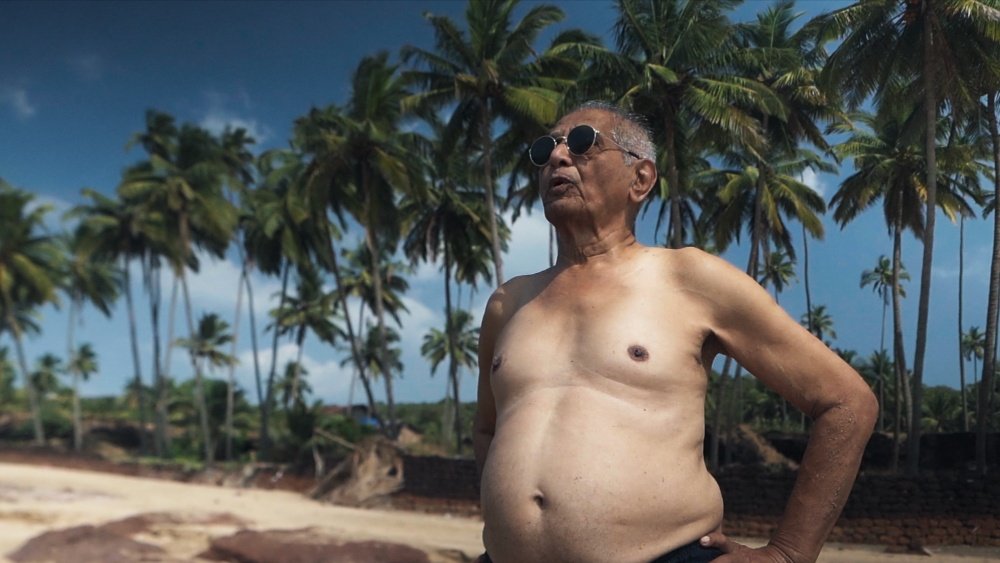
On 2 June 2026, an Indian tech executive quietly logged off every screen he could find and told his 1.3 million LinkedIn followers he would not be back for sixteen days. By the time he resurfaced on 18 June, the post had crossed eight figures, been turned into a meme template, and been covered, in tones ranging from reverent to incredulous, by almost every Indian newsroom that covers the IT services industry. The Hindustan Times Telegram channel flagged the moment within hours of his return.
What makes a thirty-something founder's screen holiday a story worth pausing on is not the act itself. Indian executives have been publicly disconnecting for years, often around the same August long weekends and Diwali breaks when the rest of the country is also off-grid. What made this iteration register is that it coincided with a quieter, less photogenic announcement: the same week he logged back in, his mid-tier outsourcing firm confirmed a freeze on lateral hiring and a tightening of performance management cycles across roughly 18,000 employees. The detox went viral; the freeze did not.
Whose recovery gets a film
Indian wire coverage has been near-uniform in framing the sixteen-day absence as a feat of personal discipline, with breathless photography of sunrises, handwritten notebooks and unscheduled family meals. The Hindi-language press in particular treated the episode as proof that the corner office, like the yoga studio, has finally absorbed the language of mental health. There is something real in that. The fact that a founder could announce a near-total communication blackout to a public following larger than the population of Uruguay and come back to applause, rather than panic selling, is a measurable cultural shift in how Indian executive masculinity is performed.
The same week, a contract programmer on the same firm's Hyderabad bench, told to take a "wellness day" after her seventeenth consecutive six-day week, was chided on an internal forum for being unreachable on a Sunday morning. She had not been on a screen fast. She had been on a sick relative's hospital rounds.
The permission slip, not the practice
This is the read that survives the Instagram filters. The digital fast, as a cultural object, is a permission slip. It announces that the practitioner is valuable enough to be unreachable. The unfriending of the inbox, in other words, is legible only when the inbox is full. The viral post does not normalise absence; it normalises the rarity of the absent person.
Indian IT services, the country's largest private-sector employer of college graduates, has spent two decades building a work culture in which "being online" is itself the deliverable. Status meetings run until 11 p.m. because the US client is awake. Laptop stickers reading "Reply All, Always" are not a joke. Against that backdrop, a CEO's public fast functions less as a model than as a one-percenter stress test: the institution tolerates his silence because his calendar is, in fact, optional. The bench programmer's calendar is not.
What the wellness week actually means
Look past the LinkedIn carousel and the framing gets sharper. The sixteen days, conveniently, covered the company's quarterly results cycle, a US offsite, and the lead-up to two contract renewals that the founder did not, in the end, handle himself. His deputies did. The fast, in operational terms, was a delegation exercise dressed as a wellness one.
Indian outsourcers have been quietly moving towards "outcome-based" staffing for at least three years, a phrase that means fewer bodies on projects at higher per-head productivity targets. A leader who can demonstrate that his absence does not collapse the machine is, in that world, doing two things at once: he is collecting personal-equity goodwill from the wellness commentariat, and he is showing the board that the bench is deep enough to absorb his disappearance. Both are useful. Neither requires the rank and file to follow him off-grid.
A labour question the corner office has not answered
The harder question, which the press cycle has so far declined to ask, is whether the next layer down gets the same permission. India does not have a statutory right-to-disconnect for private-sector knowledge workers, although a private member's bill was filed in the Rajya Sabha in 2024 and has not moved. Infosys, Wipro and TCS have all published mental-health policy documents in the past eighteen months; none of them commits to a measurable cap on after-hours contact. The founder's fast, in that light, is not a precedent. It is a highlight reel.
What the commentariat celebrated was the appearance of a corporate culture that can hold a leader's absence. The substance, the actual infrastructure of who gets to be offline and when, has not moved an inch.
What to watch next
The first quarterly town hall after the fast will tell more than the post itself did. If the founder uses the platform to publish a verifiable, firm-wide after-hours contact protocol, the sixteen days were a beginning. If the post fades into the company's marketing deck and the bench programmer is still fielding Sunday-morning messages in October, the fast was, in the end, just a sixteen-day marketing campaign. Indian wire coverage is unlikely to revisit the question. The board, however, will.
Sources
- Hindustan Times (Telegram): Coverage of the CEO's digital fast and return, 2–12 June 2026. https://t.me/hindustantimes
Desk note: Indian wire coverage framed the sixteen-day fast as a feel-good executive wellness moment. Monexus read it as a quiet confirmation of whose recovery is institutionally legible, and whose is not.