Putin's infrastructure ultimatum: Moscow escalates strikes as Kyiv claims gains behind a 'lockdown' strategy
On 12 June 2026, Vladimir Putin publicly ordered intensified strikes on Ukrainian infrastructure to deter retaliation, even as Kyiv says its 'lockdown' campaign is steadily eroding Russian supply lines.
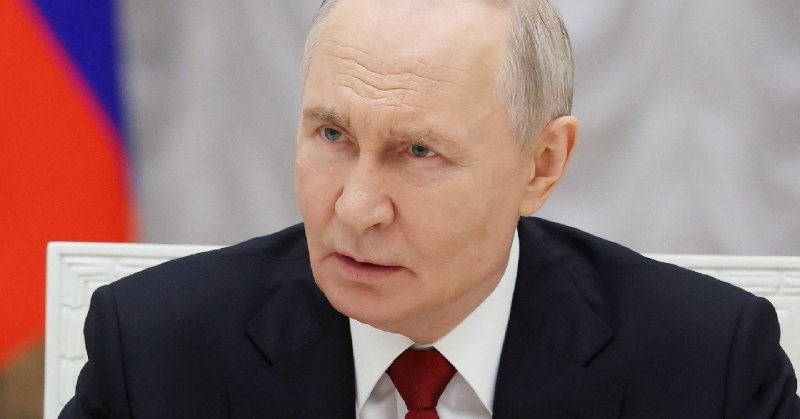
On 12 June 2026, with European allies still digesting the diplomatic shockwaves of recent weeks, the war in Ukraine produced two contradictory signals within the same afternoon. At 14:26 UTC, the Telegram channel noel_reports carried remarks from Vladimir Putin in which the Russian president demanded stepped-up strikes on Ukrainian infrastructure, framing the escalation as a response to deter Ukrainian retaliation against Russian territory. Ninety-six minutes later, at 14:14 UTC, the channel ClashReport posted a softer-sounding counterpoint from the same address: an admission that Russian forces are "not advancing as quickly as we would like" and are instead "making gradual progress every day." At 13:34 UTC, Al Jazeera reported from the other side of the line that Ukraine is reclaiming territory and doubling attacks on Russian logistics, with Kyiv describing a "lockdown" strategy that it says is now disrupting Russian supply lines. The day captured the war's central paradox: an invading power publicly demanding more destruction while privately conceding that the battlefield is not moving at the speed the Kremlin wants.
Three signals in ninety-six minutes rarely make a clean story. Read together, however, they sketch a campaign in which the operational tempo is being set less by territorial manoeuvre than by a quieter contest over fuel, rail, ammunition depots and the electrical grid that keeps both armies in the field. The public posture from Moscow is that escalation will restore deterrence. The public posture from Kyiv is that interdiction is restoring momentum. The facts on the ground, as far as the day's reporting allows, sit between the two.
The Russian framing: deterrence by infrastructure
Putin's public line, as transmitted by noel_reports at 14:26 UTC, is that strikes on Ukrainian infrastructure must be intensified because Ukraine has been striking Russian targets and Moscow must respond "properly." The framing is explicit: punishment, in the form of civilian and economic damage inside Ukraine, is being positioned as the answer to Ukrainian long-range strikes against Russian territory. Read in the long grammar of this war, that is a continuation of a doctrine Moscow has pursued since at least the autumn 2022 wave against the Ukrainian power grid, but the language on 12 June is unusually direct about intent: the strikes are meant to discourage, not merely to degrade.
The structural problem with that doctrine is that it has now had more than three and a half years to prove itself, and the Ukrainian grid is still functioning, the Ukrainian state is still functioning, and the Ukrainian government is still publicly commissioning strikes on Russian soil. Deterrence by infrastructure requires the assumption that civilian hardship translates into political pressure on the targeted government. The available reporting on 12 June does not show that translation occurring. It does show, however, that the Russian leadership continues to bet on it.
The Russian counterpoint: "gradual progress"
The ClashReport transmission at 14:14 UTC gives the more candid version of the same day's messaging. Putin, in the same set of remarks, acknowledged that Russian forces are not advancing as quickly as Moscow would prefer, while insisting that progress is being made day by day. That juxtaposition — escalation in one breath, slow grinding in the next — is itself a signal worth weighing. Public admissions of slow progress from the Kremlin have historically been rare; when they appear, they tend to be paired with a forward-looking demand for more from the military and the defence industry.
The honest reading of the two Putin items together is that Moscow is publicly bracing its domestic audience for a long war while ordering the air force to compress the timeline by hitting what sustains Ukrainian resistance. That is a coherent military logic, even if its underlying political bet — that more pain produces more compliance — is contested by the available evidence.
The Ukrainian framing: a "lockdown" on logistics
The Al Jazeera report at 13:34 UTC, sourced to Ukrainian officials, claims that Ukraine is reclaiming territory and that its "lockdown" strategy is working as it disrupts Russian supply lines. The term "lockdown" is doing a lot of work in that sentence. In the open-source conversation around the war, it refers to a deliberate campaign of strikes against rail nodes, fuel depots, ammunition storage, and the rear-area logistics that allow Russian units to sustain forward positions. The claim is not just that individual strikes are landing, but that the cumulative effect is constraining the operational tempo of Russian forces.
That claim should be read alongside the same day's Russian admission of slow progress. If the two are both true — and they are at least compatible — then the operational picture on 12 June is one in which Russian ground advance is being throttled not by a single dramatic counter-offensive but by a sustained interdiction campaign that is making every kilometre of Russian movement more expensive in fuel, ammunition and time.
What the sources do not let us claim
Three caveats belong in any honest version of this story. First, the Russian items are transmitted through Telegram channels with named affiliations and should be read as the Kremlin's intended messaging as much as a neutral record of what was said. Second, the Ukrainian "lockdown" claim is sourced to Ukrainian officials and is not independently verified in the day's reporting; the framing that interdiction is "working" is Kyiv's own characterisation. Third, the Al Jazeera report does not specify the scale of territory reclaimed, the units involved, or the duration of the disruption claimed. The headline is that both sides are talking past each other in real time, and the operational truth is somewhere inside that noise.
The structural frame is straightforward. The war is no longer being decided in single dramatic movements; it is being decided in a grinding contest over the systems that allow either side to keep fighting — fuel, rail, electricity, ammunition, and the political will to absorb losses. Putin's infrastructure ultimatum is a recognition of that contest, even if it dresses itself up as a deterrence message. Kyiv's "lockdown" claim is a recognition of the same contest, dressed up as a counter-narrative. The next weeks will tell which side's framing the battlefield ratifies.
This article draws on Telegram-channel transmissions and a single Al Jazeera wire report from 12 June 2026. Monexus presents the Russian and Ukrainian framings on their own terms, with explicit sourcing caveats, and does not treat either side's preferred narrative as a stand-alone factual basis.
Wire provenance
This editorial synthesis draws on the following public wire/social posts:
- https://t.me/noel_reports
- https://t.me/ClashReport
Follow the event.
These dated source records provide context. They do not retrospectively verify this archive article.
A dated voting record is evidence of one decision. Use the original UN record before turning it into an alignment label.
Visual explainer · historical vote of 2022-03-02 →