Putin expands Russian military to 2.4 million, orders intensified strikes on Ukrainian infrastructure
A 12 June 2026 decree lifts the Russian armed forces to 2,399,130 personnel, of whom 1,510,000 are military, as the President demands deeper strikes on Ukrainian energy and transport networks.
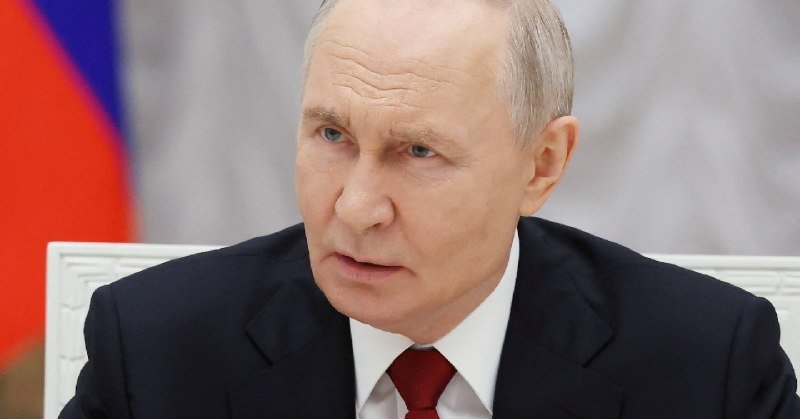
Vladimir Putin has signed a decree fixing the staffing level of the Russian armed forces at 2,399,130 personnel, including 1,510,000 military servicemembers, in a move that formalises the largest standing order of battle Moscow has publicly acknowledged since the full-scale invasion of Ukraine began in February 2022. The Kremlin announced the order on Friday, 12 June 2026 at 15:32 UTC, pairing the headcount expansion with an explicit threat to intensify what it calls "retaliatory strikes" against Ukrainian infrastructure unless Kyiv halts its own attacks on Russian territory.
The decree, confirmed separately by the Telegram channel Readovka and the Euronews wire at 15:32 UTC, lifts the upper bound of the Russian military establishment by roughly 400,000 over the figure Putin set in late 2024. It is the clearest administrative signal yet that Moscow is preparing for a war that the Kremlin no longer expects to conclude in months. Paired with the same-day demand, reported by Clash Report and Noel Reports, for "proper" retaliation against Ukrainian strikes on Russian soil, the staffing order amounts to a public admission that the war economy is being retooled for a longer, more industrial campaign.
What the decree actually does
The 12 June 2026 order is administrative rather than legislative. It sets the ceiling on the size of the armed forces — the maximum number of bodies the uniformed services may carry on their books at any one time — and the split between uniformed military personnel (1,510,000) and the broader cohort of civilians, contractors, and paramilitary formations that make up the remainder. By Western open-source counts, Russia had already been operating at or near the 1.5 million uniformed ceiling set by the previous decree; the new figure suggests Moscow is now legally regularising a force structure that has, in practice, been built up through successive waves of "partial" mobilisation, contract recruitment, and convict recruitment via the Wagner successor organisations.
The decree is also a fiscal signal. Each of the additional 400,000 slots implies a multi-year obligation to pay salaries, pensions, and separation benefits from the federal budget at a moment when Russian non-defence spending is being compressed. That trade-off — guns over butter — is the kind of decision wartime governments make when they believe the war will outlast any one budget cycle.
The threat to escalate
Within hours of the decree, Putin appeared to use the moment to reset the rhetorical ceiling. According to Telegram channels aligned with the Russian military beat, the President demanded that Russian forces intensify strikes on Ukrainian energy, transport, and industrial infrastructure in order, in his framing, to deter further Ukrainian attacks on Russian targets. The language — "retaliatory strikes", "civilian targets" in scare-quotes — recycles the formula Russia has used since the 2022-23 campaign to justify barrages against the Ukrainian grid.
Read against the staffing order, the threat is not a new posture but an amplified one. Ukrainian and Western reporting has documented a steady ratcheting of Russian glide-bomb and long-range-drone strikes on Ukrainian rail hubs, thermal generation, and ammunition depots through the spring of 2026. The 12 June demand signals that Moscow intends to escalate the cadence, not redesign the target set.
The structural read
The decree and the threat belong to the same arithmetic. A force of 2.4 million cannot be paid, fed, and equipped cheaply, and it cannot be demobilised quickly. By writing the larger establishment into law, the Kremlin is converting a wartime expedient — ad-hoc mobilisation, prisoner recruitment, paid volunteers — into something that looks more like a permanent feature of the Russian state. That is a heavier political commitment than any single speech, and a heavier fiscal one than any single budget line.
The same logic is visible in the production data. Russian output of artillery shells, Shahed-type long-range drones, and glide-bomb kits has, on the most conservative Western open-source estimates, been running at roughly twice NATO-aggregate capacity through the first half of 2026. The new ceiling gives that production base a larger pool of uniformed bodies to absorb, and a legal pretext to keep conscripts under contract past the nominal twelve-month service window. It also creates a constituency — the long-service professional soldier, the career officer, the defence-industrial worker — for whom an end to the war now looks like an end to a livelihood. That is a structural barrier to any negotiated settlement that does not include Russian-facing guarantees.
What remains uncertain
The decree names a ceiling; it does not specify how many of the 2,399,130 slots are currently filled, nor how quickly the gap will be closed. The Telegram sources that carried the order are Russian-aligned and offer no independent payroll or unit-strength data; Ukrainian and Western open-source intelligence has not, as of the time of writing, published a reconciled figure. The split between uniformed military (1.51 million) and the broader cohort is also opaque — the difference of roughly 889,000 could include Rosgvardia, the border service, and various paramilitary formations, but the decree text cited in the Telegram posts does not itemise the categories.
What can be said with confidence is this: on 12 June 2026, the Russian state put the largest armed force in its post-Soviet history on a legal footing designed to last, and the man who signed the order used the moment to demand deeper strikes on a country it invaded four years ago. The line between the two announcements is the line between budget and battlefield, and on Friday that line moved.
Desk note: The wire services that first carried the decree — Readovka and Euronews, both via Telegram — gave the headline figure of 2,399,130. Western wires have not, as of the time of writing, published a corresponding count of the civilian-and-paramilitary tail, and Monexus has therefore reported the split as the Russian source framed it. The 12 June 2026 threat to escalate strikes on Ukrainian infrastructure is carried on Russian-aligned channels and has not yet been independently corroborated by a Ukrainian general-staff briefing in the public record; we have flagged the claim as Russian-sourced accordingly.
Wire provenance
This editorial synthesis draws on the following public wire/social posts:
- https://t.me/readovkanews
- https://t.me/euronews
- https://t.me/ClashReport
- https://t.me/noel_reports
Follow the event.
These dated source records provide context. They do not retrospectively verify this archive article.
A dated voting record is evidence of one decision. Use the original UN record before turning it into an alignment label.
Visual explainer · historical vote of 2022-03-02 →