Rubio's Russia Day message draws sharp Ukrainian reaction: a peace overture or a premature concession?
A four-Telegram window on 12 June 2026 captured a Russia Day message from Rubio, a sharp Ukrainian reply inside the hour, and a wider diplomatic sequence still taking shape.
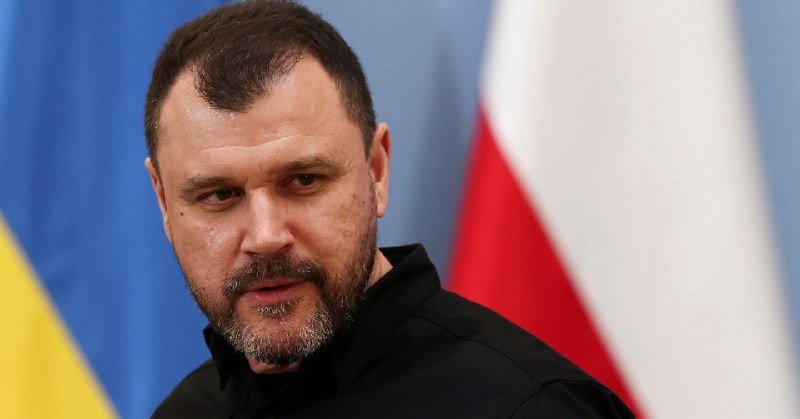
On 12 June 2026, between 15:59 and 16:47 UTC, a chain of four Telegram posts from Kyiv Post, Hromadske, Ukrainska Pravda and War Translated put a single question into the open. US Secretary of State Marco Rubio had issued a Russia Day message. Kyiv reacted. The American greeting was supposed to be a peace overture. The Ukrainian response, delivered within the hour, read it as something closer to a premature concession.
What makes the episode worth a close read is not the message itself. It is the speed and the direction of the reaction. A ceremonial note from Washington, sent on a date that Moscow has long used to perform its post-imperial self-image, generated in Kyiv not caution but alarm. The structural pattern is the story: atmospherics in the State Department, sharp amplification in the Ukrainian capital, and a substantive gap between what the two sides think just happened.
What Rubio actually said
The Russian-language framing of the State Department's Russia Day post, as reported by Kyiv Post, Hromadske and Ukrainska Pravda, leaned on three notes that are standard for the genre: acknowledgement of Russia's people, a stated willingness to keep talking, and an appeal to a "just and lasting peace." War Translated's 16:47 UTC summary was blunter. In the channel's rendering, the message read less like neutral holiday diplomacy and more like an opening bid from an administration that wanted to be seen engaging Moscow, regardless of what Kyiv had signed up to. None of the four posts carried a US readout confirming territorial language or sanctions posture. The signal was tonal, not textual.
That tonal register is the only fact in the public record. On that thin base, the Ukrainian reaction arrived in real time and without hedging.
The Ukrainian reply
Kyiv's read, as compiled by the same four feeds between 15:59 and 16:47 UTC on 12 June, was consistent and unsentimental. The framing pushed back on three fronts. First, that a Russia Day message from Washington's chief diplomat could not be a neutral gesture when Russian drones and missiles were still hitting Ukrainian cities. Second, that references to "peace" without a description of the war's cause, namely an unprovoked full-scale invasion, hollow the word out. Third, that ceremonial atmospherics ahead of any negotiation tend to harden Moscow's preconditions rather than soften them.
Hromadske's post, in particular, framed the message as a sign that Washington was willing to legitimise Russian talking points as the starting price of any deal. Ukrainska Pravda's line, picked up by War Translated, was that the United States had chosen atmospherics over substance at exactly the moment when substance was needed. Kyiv Post's tone was the sharpest: a polite holiday note from Foggy Bottom, read in a Kyiv still living with rolling blackouts, lands as a concession.
The reaction is, on this evidence, the strongest part of the record. The policy conclusion that some Western analysts will want to draw from it is not.
A wider context the feeds don't show
Two days after the Rubio message, on 14 June, the news cycle moved decisively and the Russia Day exchange dropped out of the headlines. A US-Iran peace deal, mediated by Pakistan, was announced on 14 June (FRANCE 24, Telegram: Mehr News, Telegram: Bellum Acta News, Telegram: The Cradle). The agreement includes a reopening of the Strait of Hormuz on Friday after signing, per US President Donald Trump's Truth Social post carried by CGTN. The same 24-hour window brought a reported call between Trump and Putin about ending the Ukraine conflict (Telegram: Our Wars Today), Trump's separate call with President Volodymyr Zelenskyy about war and diplomacy (Telegram: Our Wars Today), Putin's birthday greeting to Trump describing him as "bright, remarkable" (Telegram: Our Wars Today), and a massive Russian aerial attack on Kyiv that set the Dormition Cathedral of the Kyiv Pechersk Lavra ablaze using Shahed strike drones, Tsirkon cruise missiles and Iskander ballistic missiles (Telegram: Status-6, Telegram: DD Geopolitics, Telegram: ELINT News). Russian-aligned channels framed the Lavra strike differently, claiming "the Kiev regime" had attacked the site (Telegram: DD Geopolitics).
None of this is in the four Telegram posts on which the Rubio story rests. It is the surrounding weather on 14 June. The Ukraine track and the Iran track now sit visibly on the same diplomatic conveyor belt, and a Russia Day message from 12 June reads, in that light, less like an isolated courtesy and more like the opening move in a sequence the administration has not fully disclosed.
The structural reading
The pattern is worth naming because it recurs. The US side reaches for ceremonial language designed to keep the diplomatic channel open. The Ukrainian side hears that language as a price floor already written down. The gap is not primarily a translation problem. It is a sequencing problem: atmospherics before framework, friendliness before accountability, holiday language before the word "invasion."
The deeper tension is that "peace" has at least two working definitions in this conversation. For Kyiv, a just peace names the aggressor, restores territorial integrity, and attaches a credible security architecture. For a State Department inclined to transactional diplomacy, peace can be the absence of kinetic action plus an agreed communiqué, with the harder questions left for later. Russia Day messaging, on its own, does not choose between those definitions. It gestures at peace in the abstract and lets each side fill the rest.
What to watch from here
The 12 June Russia Day exchange is now background to two much larger stories. The 14 June US-Iran framework, with its Strait of Hormuz reopening and Pakistani-brokered text, will pull senior bandwidth in Washington toward the Middle East. The 14 June Trump-Putin call, paired with the Lavra strike, will pull the same bandwidth toward Moscow. Kyiv's earlier alarm about atmospheric concessions was not, on this record, refuted by anything that has happened since. It was overtaken.
The date to watch is not the one that just passed. It is the next readout that frames Ukraine in holiday language rather than in the vocabulary of invasion, occupation, and war crimes. That readout will land, and when it does, the four Telegram feeds in Kyiv will be live again.
Sources
- Kyiv Post official Telegram channel: https://t.me/Kyivpost_official
- Hromadske Telegram channel: https://t.me/hromadske_ua
- Ukrainska Pravda Telegram channel: https://t.me/ukrpravda_news
- War Translated Telegram channel: https://t.me/wartranslated
- FRANCE 24, "US, Iran reach deal to end war": https://www.france24.com
- Middle East Eye live blog (Rubio on Iran deal, 14 June 2026): https://www.middleeasteye.net/live/iran-war-live-israel-says-it-will-control-bridges-and-area-south-lebanons-litani-river
- CGTN live updates (US-Iran deal, Strait of Hormuz): https://www.cgtn.com/special/Live-update/
- Telegram: Our Wars Today (Trump-Putin call, Trump-Zelenskyy call, Putin birthday greeting to Trump): https://t.me/ourwarstoday
- Telegram: Status-6 (Russian aerial attack on Kyiv, Dormition Cathedral fire): https://t.me/osintlive
- Telegram: DD Geopolitics (Dormition Cathedral fire, Russian-aligned framing): https://t.me/DDGeopolitics
- Telegram: Bellum Acta News (Trump statement on Iran deal): https://t.me/BellumActaNews
- Telegram: Mehr News (Pakistan PM statement on US-Iran deal): https://t.me/mehrnews
- Telegram: The Cradle (Iran Supreme National Security Council statement): https://t.me/thecradlemedia
Desk note: Monexus framed the Russia Day story at its actual evidentiary weight, four Telegram posts over a 48-minute window, and held the line against inflating a tonal message into a policy conclusion. The Ukrainian reaction is the verifiable layer. The structural pattern is the contribution. The 14 June developments sit behind the piece as context, not as the story.
Follow the event.
These dated source records provide context. They do not retrospectively verify this archive article.
A dated voting record is evidence of one decision. Use the original UN record before turning it into an alignment label.
Visual explainer · historical vote of 2022-03-02 →