Salman Khan's Delhi HC move against 'Kala Hiran' puts a single line of dialogue in the dock
A pre-release injunction request against the upcoming 'Kala Hiran' has turned a teaser into a legal test case for how far Hindi cinema will police the names of real people on screen.
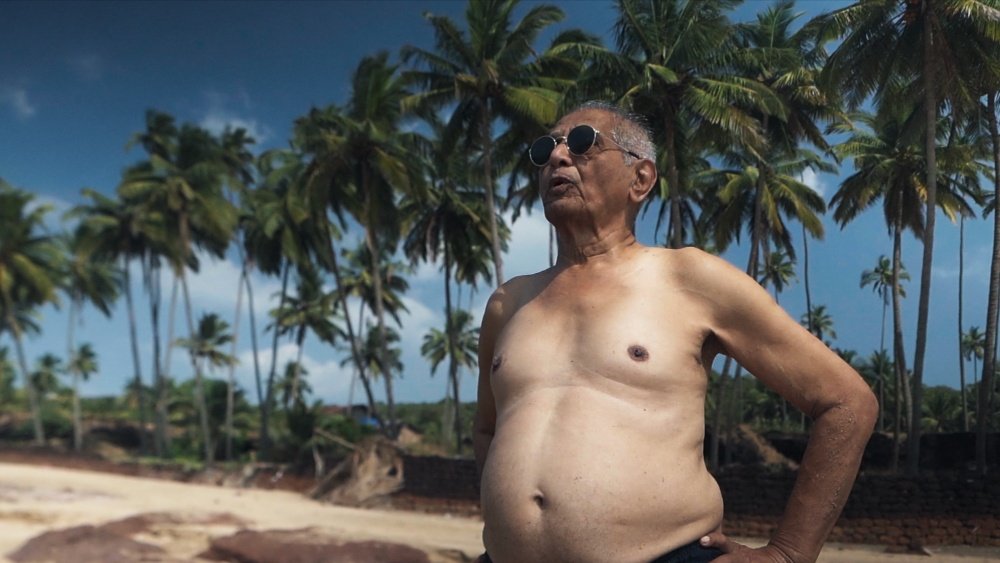
A pre-release legal fight landed at the Delhi High Court this week, with actor-producer Salman Khan seeking to restrain the makers of the upcoming Hindi film "Kala Hiran" from using his name, likeness or any "disparaging" reference in the project's teaser and wider release. The petition, reported by The Indian Express on 12 June 2026, asks the court to restrain the producers from circulating the teaser and from screening the film in any form that allegedly violates the petitioner's rights. The plea has not yet been adjudicated on merits, and the court's interim order — if any — is awaited.
The case is small in legal terms and outsized in what it signals. Bollywood has long used real-world names as cinematic shorthand, sometimes in tribute, sometimes in satire, and occasionally in the kind of acid-tongued reference that produces a defamation writ. The "Kala Hiran" dispute is the latest data point in a recurring pattern: when a star's public persona is treated as fair game by writers, the star's lawyers reach for the same statute book the writers' lawyers eventually cite in defence. What is different in 2026 is the compression — a teaser, a streaming drop, a court date, all inside a single news cycle.
The petition, as reported
According to The Indian Express's 12 June 2026 report, Salman Khan has approached the Delhi High Court to seek a stay on the release of "Kala Hiran," including its teaser, on the grounds that the material allegedly contains references that disparage him. The report identifies the relief sought as a restraint on circulation of the teaser and on the film's release in any form that breaches the petitioner's rights. The Indian Express's report does not detail which specific dialogue, scene or visual the petition objects to, and the petition's precise averments are not in the public domain beyond the framing carried by the wire.
Two procedural points matter. First, the Delhi High Court is being asked to pass an interim order — a temporary restraint that lasts until the court hears the substantive case. Interim relief in defamation and personality-rights matters is typically granted only if the petitioner shows a prima facie case and the court is satisfied that the balance of convenience tilts in favour of restraint. Second, the petition targets the teaser as well as the film itself. Teasers, in 2026, are not merely previews; they are marketing assets in their own right, distributed across YouTube, Instagram, X, and theatrical chains, and are often watched more times than the films they advertise. Asking a court to pull a teaser is, in effect, asking it to pull a campaign.
The makers of "Kala Hiran" have not, in the material available to this publication, issued a public response to the petition's substantive allegations. The Indian Express report, dated 12 June 2026, is the primary wire on the case as of that timestamp.
Why a teaser, and why now
The pre-release injunction is a recognisable Bollywood litigation pattern, but the speed of the relief sought is unusual. The film has not yet been certified by the Central Board of Film Certification, and the petition's framing — targeting the teaser as well as the film — suggests the petitioner is treating the marketing rollout itself as the actionable harm rather than waiting for the censors to take a view. That posture compresses the legal calendar: the court is being asked to act before the CBFC, and arguably outside the CBFC's jurisdiction over the production company.
There is a structural read here that has nothing to do with Salman Khan specifically. The economics of Hindi cinema in 2026 reward names in the title and recognisable faces in the trailer. The fastest way to convert an unknown project into a known one is to attach it, in the viewer's mind, to a star who already exists. If the attachment is unflattering, the star's remedy has historically been a post-release damages suit — slow, expensive, and largely symbolic. The Delhi HC petition suggests a different tactic: move at the teaser stage, before the marketing flywheel has spun up, when the cost of pulling the asset is highest and the deterrent is sharpest.
A counter-reading: the producers of "Kala Hiran" may have been content to ride the controversy. In an attention economy, a writ from a Bollywood A-lister is itself a form of publicity. The Indian Express's 12 June 2026 report will reach audiences who would not otherwise have read the name "Kala Hiran." From that vantage, the petition and the film are locked in a feedback loop neither side can easily exit.
Personality rights, and the case the court will actually hear
Beneath the celebrity surface, the "Kala Hiran" case will turn on a doctrinal question the Delhi High Court has been developing over the last decade: how to treat the commercial value of a public figure's persona when it is used in expressive work. Indian courts have recognised "personality rights" — the right to control commercial use of name, likeness and other indicia of identity — alongside the older defamation framework. The two doctrines do not always point in the same direction. Defamation asks whether the statement harms reputation; personality rights ask whether the use appropriates commercial value. A filmmaker can in principle be liable under one doctrine and not the other, depending on what the offending line is doing.
The Indian Express report frames the petition as a challenge to "disparaging" reference. That is defamation-adjacent language. If the petition is reframed at the next hearing as a personality-rights claim — commercial appropriation, dilution, unfair competition — the legal terrain shifts. The court will have to weigh the producer's Article 19(1)(a) right to free expression against the petitioner's right to control his public image. Precedent in this area, including rulings from the Delhi and Bombay High Courts, has tended to draw the line at advertising and merchandising, leaving artistic works with broader latitude. Where a teaser falls on that spectrum is the live question.
The structural pattern, in plain language: when a public figure's economic value is bound up with a tightly policed persona, the legal system tends to extend the perimeter of protection to cover the marketing layer — teasers, posters, song promos — even when the film itself would survive. The result is that the legal fight happens upstream, before the censor board, before the critic, before the audience. The "Kala Hiran" case, on the public record so far, is exactly that fight.
Stakes and what to watch
The immediate stakes are practical. If the Delhi High Court grants an interim stay, the producers of "Kala Hiran" will need to pull the teaser from digital platforms, notify exhibitors, and re-edit or rebrand before any further release. The cost of doing so in a marketing window is high and rises with each day of restraint. If the court declines interim relief, the film proceeds and the dispute migrates to damages or to a post-release injunction, where the deterrent value is lower for the petitioner.
The broader stakes sit in the wider Hindi-film industry's risk calculus. A petitioner-friendly interim order, even one confined to a single project, signals to writers and producers that persona-related litigation is now a viable pre-release tactic, not just a post-release one. A defendant-friendly order tells writers that the teaser stage is still theirs. The Indian Express's 12 June 2026 report does not record the court's interim position; that ruling, when it comes, will be the more durable story.
The remaining unknowns are several. The petition's specific objections have not been made public in the wire report. The respondents have not, in the material available, issued a formal rebuttal. The CBFC's role in the chain has not been addressed. The court will have to work through each of these, and the only safe forecast is that the timetable will run beyond the film's scheduled release window. The Indian Express will be the wire to watch for the next procedural beat.
Desk note: Monexus has framed the "Kala Hiran" petition as a legal and industry-pattern story, with the Indian Express's 12 June 2026 report as the sole on-record source for the petition's contents. No quotation from the petition, the producers, or the court has been attributed beyond what that wire carried. Where the record thins, the piece says so.