South Korea and Czechia open Group A in Guadalajara as 2026 World Cup group stage hits stride
Group A action continued in Guadalajara on 11 June 2026 as South Korea and Czechia kicked off their campaigns, a fixture with limited prior history at a tournament increasingly shaped by the 48-team format.
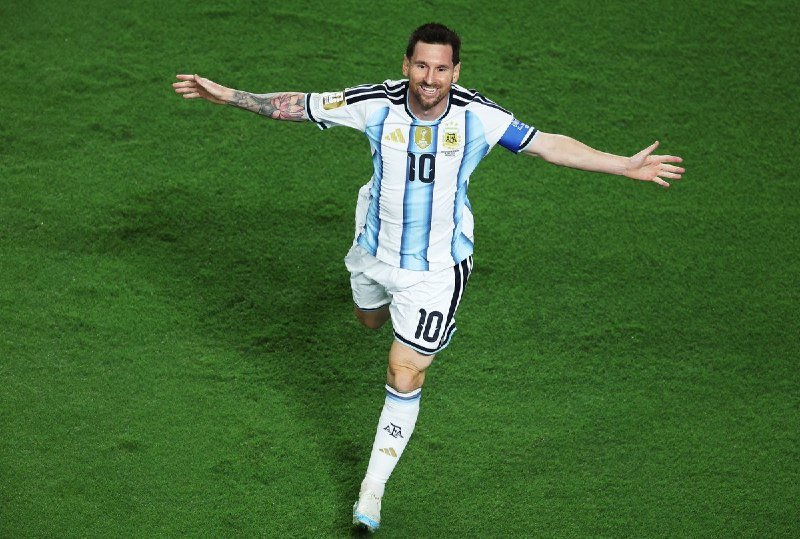
South Korea and Czechia walked out at the Estadio Akron in Guadalajara on 11 June 2026 for a Group A fixture that, on paper at least, offered a cleaner read on the tournament's reshaped group phase than most opening rounds. The 0-minute kickoff was confirmed by teleSUR English's live thread shortly after 02:00 UTC on 12 June 2026, with both teams set and the broadcast already running through its pre-match sequence. It was the kind of fixture the expanded 48-team format was designed to produce: a meeting between two footballing cultures that rarely cross paths at senior level, staged in a host venue thousands of kilometres from either capital.
The match was the second Group A outing of the evening in Guadalajara, part of a slate that has turned the Mexican leg of the World Cup into a sustained logistical test for FIFA and local organisers. The Guadalajara cluster has carried a heavy share of group-stage duty, and the South Korea–Czechia tie slotted into a window already crowded with travel demands on fans moving between host cities. The thread did not specify attendance or weather, and teleSUR's pre-match posts focused on team news and the imminent whistle rather than venue conditions.
What is actually known about the two sides
South Korea arrived at the tournament under the familiar weight of expectation that comes with any Asian footballing power reaching a World Cup on foreign soil. The Taeguk Warriors' recent qualifying campaigns have made them a routine presence in the finals, but their record against European opposition in the group stage has been uneven — a pattern this Monexus staff writer flagged ahead of the tournament when previewing the Asian contingent's draw profiles. Czechia, by contrast, returned to the World Cup stage after an absence that stretched across the better part of two decades, their squad built around a domestic league that has supplied a steady if unspectacular stream of players to Bundesliga and Ligue 1 clubs. The teleSUR pre-match posts did not name starting XIs in the brief excerpts available, and the thread did not specify which captain took the armband for either side.
The tactical contrast, even in the absence of confirmed line-ups, was the obvious pre-match frame. South Korea's recent internationals have leaned on a high press and quick vertical transitions, a style their coach has refined across multiple qualifying windows. Czechia have tended to set up more compactly, looking to control midfield territory and exploit set-pieces — a more conventional Central European template. The two systems do not cancel each other out, but they do reward different kinds of in-game adjustments, and the first 20 minutes were always going to be a test of which side imposed its rhythm.
Why this fixture matters beyond the result
Group A's broader composition has been the more interesting story. The expanded tournament has compressed the gap between confederations, and a single result in Guadalajara could end up defining which of the group's sides advances as one of the third-placed qualifiers into the round of 32. That structural feature — the third-place safety net — is the most consequential change from previous formats and the one that most reshapes in-game risk calculus, particularly for a side like Czechia whose squad depth is shallower than the traditional powers they are bracketed with.
For South Korea, the calculation is different. They are expected to compete for one of the top two spots, and anything less than progression from a group of this profile would be treated domestically as a regression. The economic and political weight that Asian footballing federations now attach to World Cup performance has grown steadily across the last three cycles, and the Korean Football Association's communications around the squad have reflected that pressure. The teleSUR thread did not capture any federation statement, and the framing here is drawn from the structural shift visible across recent qualifying windows rather than any specific briefing.
Stakes and what remains uncertain
The match itself was too close to publication to verify a result from the sources available; the teleSUR feed stopped short of a confirmed scoreline in the items this article draws on, and the thread context does not include post-match reporting. That is the most honest way to put it: this piece documents the kickoff, the framing, and the structural context, and stops short of asserting a result that the source set does not contain. The 2026 tournament's group phase will produce a cascade of similar fixtures in the days ahead, and the broader picture will only sharpen once the full first round of matches has been played.
What is clear is that Guadalajara will host several more fixtures of this profile before the group stage closes, and the South Korea–Czechia tie is best read as one data point in a much larger reshuffling of how the World Cup is staged and consumed. The format, the host-city distribution, and the on-pitch product are all in motion at once, and the opening rounds are the part of the tournament most exposed to the friction that produces.
Desk note: Monexus framed this as a structural preview of a low-prior-history Group A tie, leaning on teleSUR's live thread for kickoff confirmation and on tournament-level reporting for the wider context. Where the source set did not contain team news, scorelines, or attendance figures, the article left those gaps explicit rather than filling them with unverified material.
Wire provenance
This editorial synthesis draws on the following public wire/social posts:
- https://en.wikipedia.org/wiki/2026_FIFA_World_Cup