SpaceX's $1.75 trillion IPO lands in Asia's worst week
The largest IPO in history prices as Asia's biggest investors raise concerns about access, governance, and what a $1.75 trillion private space empire actually means for the rest of the world.
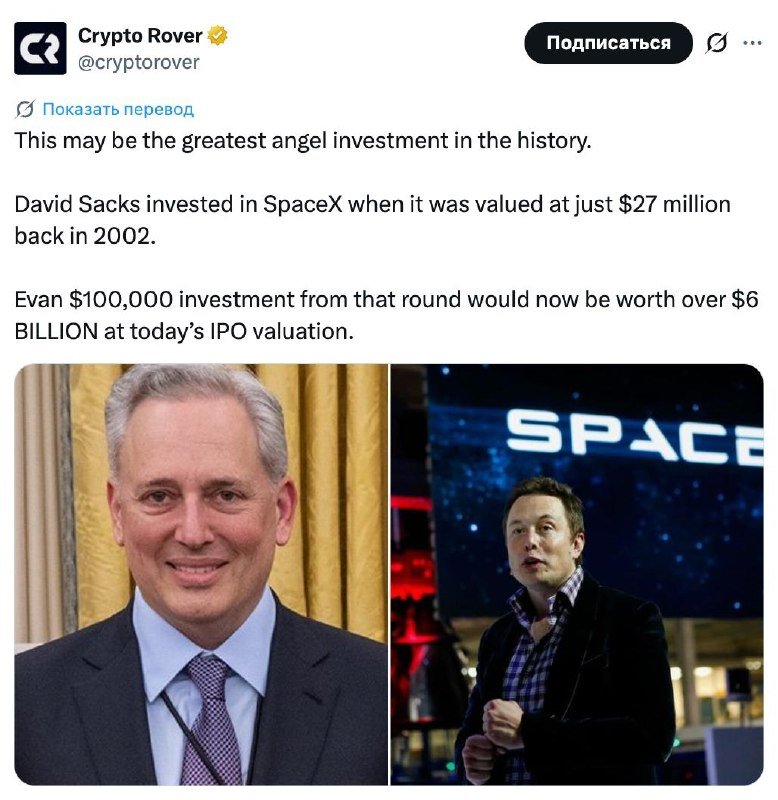
Elon Musk's SpaceX priced the largest initial public offering in US market history on Thursday 11 June 2026 at $135 per share, raising roughly $75 billion and putting a fully diluted valuation near $1.8 trillion on a company that, until Friday morning, ordinary investors could not buy. The shares are scheduled to begin trading on the Nasdaq on Friday 12 June 2026. The headline number is so large it almost stops being a number.
The more interesting question is not the size. It is who gets to participate, who gets locked out, and what the structure of this listing reveals about the gap between American capital markets and the rest of the world that is being asked to underwrite them.
The pricing is the easy part
According to CoinDesk's reporting on the Thursday pricing, SpaceX's fully diluted value lands at roughly $1.8 trillion once options and convertibles are counted, on a base raise of about $75 billion at the $135 offer price. Crypto Briefing's coverage noted the deal puts Musk within reach of "trillionaire" territory on paper, a designation that is more symbolic than financial but is doing real work in framing the moment. LiveMint's wire carried the same numbers in the Asian morning, with the additional detail that the share sale makes SpaceX "one of the world's most valuable companies" by a margin that has no obvious precedent.
The mechanics, in other words, are settled. A book of institutional money has agreed to clear at $135. The float, the lock-ups, the underwriting syndicate — these are now administrative problems, not political ones.
The Asia problem Nikkei is naming
What Nikkei Asia flagged in the early hours of Friday 12 June 2026 is something the American financial press has so far been reluctant to name out loud: this IPO was not built for Asian capital. Allocation pools, distribution agreements, and the regulatory plumbing of cross-border participation all reflect a US-centric deal architecture. Nikkei's reporting raises the question of whether the freshly minted $1.75 trillion valuation is a number Asian investors and regulators are being asked to accept as a fait accompli, or one they have any meaningful ability to test.
The framing matters because the rocket business is no longer a US business. Launch customers in Tokyo, Seoul, Singapore, and New Delhi are now central to SpaceX's commercial model, and several Asian sovereign and quasi-sovereign funds have been visible buyers of pre-IPO secondary shares for at least two years. A listing that prices the equity without those buyers' structural input is not a global market event. It is a domestic American market event with a global marketing slogan.
The regulator's window is closing
On the same Thursday that SpaceX priced, US Senator Elizabeth Warren publicly raised concerns about the listing and the speed at which it has moved through the regulatory pipeline. Unusual Whales reported that the company is scheduled to debut on Friday, leaving regulators almost no time to act on her concerns. That is the operative phrase: "almost no time." The compressed gap between pricing and trading is not an accident of the calendar. It is a structural feature of a market that has decided which side of the trade it wants to be on.
The conventional defence is that the company is well-known, the books are well-trodden, and the disclosures are adequate. That defence assumes a baseline of scrutiny that this particular listing has not, in any visible public forum, been forced to clear. A $1.75 trillion private space and connectivity empire is, by definition, also a communications-infrastructure, defense-procurement, and orbital-traffic-management company. Those categories have public-interest review processes in most of the jurisdictions whose savings are now flowing into the offer.
What the deal actually says
A listing this size is also a soft-power statement. It tells every non-US capital market that the most consequential private technology assets of the next decade will be priced, governed, and floated on American terms, in American trading windows, under American disclosure standards that those markets are invited to ratify rather than negotiate. The Asian buyers who care about this are not sentimental about jurisdiction. They are watching a pattern repeat: the biggest private pools of capital in the world keep being routed through a single listing venue, on a single regulatory clock, with the rest of the world as price-taker.
The counter-narrative is that American disclosure is the most demanding disclosure regime that exists, and that any listing here is therefore the most scrutinised listing possible. That defence is not wrong. It is just incomplete. The disclosure regime tells buyers what they are buying. It does not tell non-buyers what they are not being asked.
Stakes, plainly
If the listing opens cleanly on Friday and trades through the next quarter without a meaningful repricing event, the architecture described above is the new default. Asian pension and sovereign capital learns to live inside a US-anchored float calendar. Regulators learn that their window to ask hard questions is measured in hours, not weeks. And the line between "global capital market" and "American capital market with foreign customers" gets a little harder to see.
The remaining uncertainty is whether the Asian coverage Nikkei is publishing is a one-off regional scepticism or the opening move of a more durable pushback from buyers who would like, at minimum, a seat at the table before the next $1.75 trillion asset is assembled. The sources do not yet settle that question. Friday's tape will.
— This article was written by Monexus staff. We framed the SpaceX listing through the Asia-allocation lens Nikkei raised, rather than the celebratory valuation-first framing dominant in the US financial wires; the counter-narrative on US disclosure regime strength is included for balance.