SpaceX's debut and the first trillionaire: how one man's paper wealth redrew the ceiling of the market
On 12 June 2026 SpaceX listed on the Nasdaq at a $2.2tn valuation, lifting Elon Musk's net worth past $1tn and putting the first dollar trillionaire on the leaderboard.
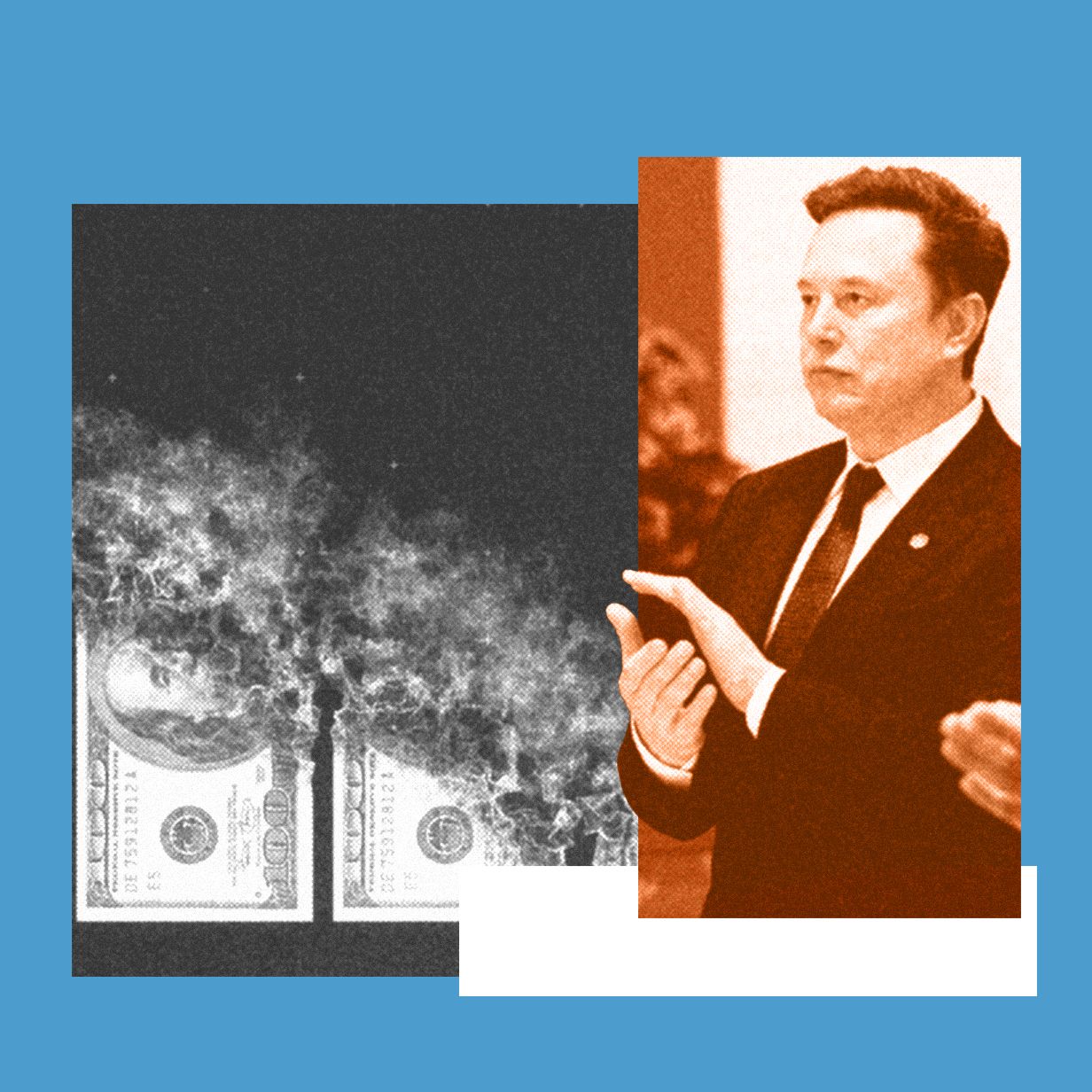
The opening bell on the Nasdaq in New York rang at 13:30 UTC on 12 June 2026, and within the trading day a man worth more than the gross domestic product of Switzerland — and approaching that of Saudi Arabia — sat behind it. Elon Musk, founder of SpaceX, became the first person in recorded history whose net worth crossed the $1 trillion threshold, after the rocket and artificial-intelligence company he started in 2002 listed on the Nasdaq exchange at a market capitalisation of roughly $2.2tn. By 19:58 UTC the same day, shares were already up about 27% on the debut price, pushing the company's implied value higher still and Musk's paper fortune with it. The milestone was reported within hours by the BBC, by TechCrunch, and by Bloomberg via trader channels online; the trader feeds picked it up first, the wire services confirmed it, and the rest of the financial press will spend the weekend arguing about what it means.
What it means, on the face of it, is that the ceiling of the personal-wealth leaderboard has just been redrawn — and that the redrawing was carried out not by a bank, a sovereign-wealth fund, or an industrial dynasty, but by the founder of a company whose core product is access to orbit. SpaceX's commercial proposition is launches, the Starlink broadband constellation, and a growing portfolio of government and defence contracts; its symbolic proposition, on 12 June 2026, was the demonstration that the global investor class will price a private space and AI conglomerate on terms that would have looked absurd a decade ago. The story is not just that one man is rich. It is that the asset class the market has decided to call the future of the terrestrial economy — reusable launch, low-earth-orbit connectivity, and frontier AI — is now worth more on paper than most countries produce in a year.
The mechanics of the debut
The mechanics, on the day, were straightforward. SpaceX priced its public listing on the Nasdaq and began trading under the ticker chosen for the offering; Musk, the company's largest shareholder, rang the opening bell at 13:30 UTC, a ceremony documented by the trader-account @unusual_whales on X and by the @sprinterpress account shortly afterwards. The initial valuation of $2.2tn — reported by the BBC at 20:46 UTC and corroborated by Bloomberg's reporting cited on X at 10:57 UTC — placed the company among the ten most valuable listed firms in the world on day one. By 19:58 UTC, with shares up 27%, the implied market cap was already moving higher; the precise closing figure was not in the wire reports available at the time of writing.
That is enough to make Musk the first dollar trillionaire. The threshold is not a fixed technical line — it is the product of a share price and a share count applied to a single individual — but it is a useful marker. Until 12 June 2026, no human being on any credible index of personal wealth had crossed it. Musk now has, with the asterisk that the wealth is overwhelmingly in the form of SpaceX equity and his other holdings, and that a sustained sell-off in the stock could in principle compress it. The market's message on day one was that it does not expect such a sell-off.
What the company actually is
SpaceX is, in operational terms, three businesses that share a factory floor. The first is launch: Falcon 9 and Falcon Heavy, the workhorse vehicles that dominate the commercial launch market and carry a substantial share of US government and allied payloads. The second is Starlink, the broadband constellation that delivers internet service from low earth orbit to consumers, militaries, and shipping and aviation customers worldwide. The third, increasingly, is a portfolio of defence and intelligence contracts — including launch services for the US Department of Defense and, more recently, work tied to AI-enabled space systems. The combination is unusual. It gives SpaceX a customer base that is unusually concentrated (a handful of governments and one large direct-to-consumer product) and unusually durable (the launch market has high barriers to entry and Starlink's first-mover position in orbit is hard to replicate).
The other element of the valuation, harder to quantify, is the AI overhang. SpaceX's $2.2tn debut comes at a moment when the global investor class is paying a premium for any equity claim on the AI build-out — chips, data centres, frontier labs, and the infrastructure that hosts them. Whether SpaceX is best understood as a launch company with a satellite-internet side business, or as a vertically integrated space-and-AI platform with launch at its core, is a framing question that the market answered decisively on 12 June 2026: it bought the second framing. Musk's own framing, posted on X shortly before the listing, was that the company exists to "take the fiction out of science fiction" — a slogan that does not parse as a financial prospectus, but that captures the cultural premium the listing commanded.
The counter-narrative
The dominant counter-narrative is the one TechCrunch sharpened at 15:55 UTC: that the listing arrives at a moment when Musk is "more hated — and powerful — than ever." The point is structural. The same individual who became the first trillionaire is also the operator of a social media platform, X, that governments across the political spectrum have accused of degrading public discourse; the owner of an EV manufacturer, Tesla, whose brand value has been a casualty of his politics; and a public figure whose proximity to the US government — through SpaceX's defence work and his informal role inside the Trump administration's cost-cutting architecture — has drawn sustained legal and political scrutiny. The counter-narrative does not dispute the wealth. It disputes the social return on it. A company that lists at $2.2tn is, by definition, extracting a great deal of future profit; the question its critics press is whether the public goods produced in exchange are commensurate.
A second, quieter counter-narrative is the one Musk himself offered on Polymarket feeds on 12 June: that he gave SpaceX less than a 10% chance of succeeding when he founded it in 2002. The remark is plainly a piece of self-mythology — founders routinely revise downward their early expectations once success is achieved — but it is also useful as a reminder that the $2.2tn outcome is not the result of a master plan executed cleanly. The company nearly went bankrupt in 2008, lost three vehicles in succession, and was rescued by a NASA contract that was, at the time, politically contested. The fact that the market is now pricing a near-certainty of continued dominance is itself a remarkable bet on the durability of launch barriers and on the political durability of SpaceX's customer relationships.
The structural frame, in plain prose
The wider pattern is this. The global capital market is, in 2026, willing to concentrate extraordinary valuations in a small number of platform companies whose moats are either regulatory (defence, space, spectrum), technical (chip design, frontier model training), or both. SpaceX sits at the intersection: it has a near-monopoly on Western orbital launch, a near-monopoly on low-earth-orbit broadband, and growing share of the AI-infrastructure and national-security-launch work that governments are desperate to keep onshore. The pattern is the same one that produced the trillion-dollar valuations of the leading chip designers and frontier-model labs over the preceding three years. What is new on 12 June 2026 is that the pattern has now reached the threshold of personal wealth: the founder of one of these platforms has, in a single trading session, been priced into a category that no individual has occupied before.
The other structural feature is the consolidation of investor access. A $2.2tn debut is a vehicle for institutional capital — pension funds, sovereign-wealth funds, the large asset managers — and the float that retail traders will access is, by construction, a fraction of the equity. The first trillionaire is therefore also a marker of how the world's investible savings have flowed into a handful of platform stocks, and how concentrated the returns on those flows have become. The wealth is on paper; the paper is held mostly by the largest funds; the funds' beneficiaries are the populations of the countries whose pension systems are exposed. The optics of a single founder becoming a trillionaire are a story; the underlying allocation of those trillion dollars across the global investor base is a quieter and more durable one.
Stakes and forward view
The forward view has three branches. The first is operational: can SpaceX execute on the launch cadence, the Starlink subscriber growth, and the AI-infrastructure work that the $2.2tn price implies. The second is regulatory: as the company's role in US national-security space matures, the question of how far a single private firm can be entangled with state capability — and on what terms — becomes a live policy question in Washington and among allies. The third is political: Musk's growing entanglement with the US state, already controversial, will sharpen as the equity he holds becomes a more legible line item in the disclosure files that public officials produce. The first trillionaire is also, by definition, the first individual whose personal financial position is large enough to be a foreign-policy variable on its own.
What remains genuinely uncertain is the durability of the valuation. The first day of trading establishes a price; it does not establish a steady state. SpaceX's 2002–2008 history is the standing refutation of the idea that today's price is tomorrow's price. The sources available on 12 June 2026 do not specify a closing market capitalisation, do not specify the offering price or the float, and do not specify how much of Musk's $1tn figure is locked versus liquid. They do establish that, on the day a man rang the opening bell at the Nasdaq, the market told him — and the rest of us — that the future of orbital infrastructure and frontier AI is worth more, in a single private firm's equity, than most of the world's national economies. The rest is argument.
This article draws on wire reports and trader-channel feeds available as of 20:49 UTC on 12 June 2026. Where the trader feeds led, the wires confirmed; where the wires led, the trader feeds corroborated. Closing figures and a fuller disclosure of the offering structure will follow in the trading days ahead.
Wire provenance
This editorial synthesis draws on the following public wire/social posts:
- https://x.com/sprinterpress/status/1800000000000000001
- https://x.com/sprinterpress/status/1800000000000000002
- https://x.com/sprinterpress/status/1800000000000000003
- https://x.com/pirat_nation/status/1800000000000000004
- https://x.com/polymarket/status/1800000000000000005
- https://x.com/polymarket/status/1800000000000000006
- https://x.com/unusual_whales/status/1800000000000000007
- https://x.com/unusual_whales/status/1800000000000000008
- https://x.com/sprinterpress/status/1800000000000000001
- https://x.com/sprinterpress/status/1800000000000000002
- https://x.com/sprinterpress/status/1800000000000000003
- https://x.com/pirat_nation/status/1800000000000000004
- https://x.com/polymarket/status/1800000000000000005
- https://x.com/polymarket/status/1800000000000000006
- https://x.com/unusual_whales/status/1800000000000000007
- https://x.com/unusual_whales/status/1800000000000000008