The $1.8 Trillion Listing: How SpaceX's IPO Rewrites the Market for Private Capital
SpaceX priced the largest US IPO on record at $135 a share, lifting its valuation close to $1.8 trillion and crystallising a new cycle in which the privately built balance sheet outgrows the public one.
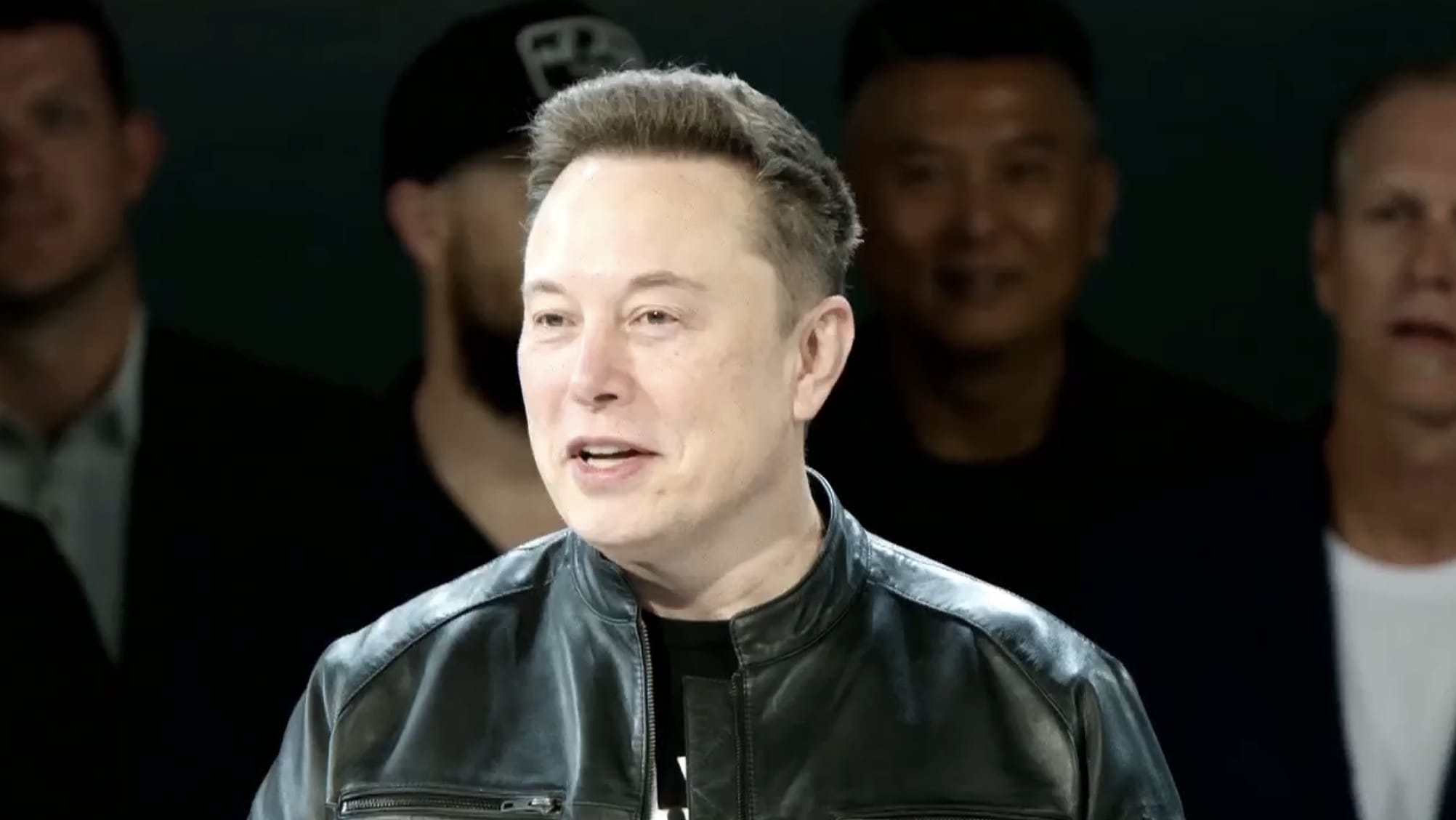
When SpaceX opened the order book for the largest US initial public offering on record, it did so in a market that had been waiting, almost without saying so, for a private balance sheet to be brought into daylight. The rocket and satellite company priced the sale at $135 per share, Reuters reported on 12 June 2026, a figure that lifts the company's value close to $1.8 trillion and confirms Elon Musk as the operator of one of the most valuable private-to-public conversions in financial history. The deal is, on its face, a pricing event. Underneath, it is something more durable: a referendum on a decade in which the most consequential infrastructure on Earth — orbital launch, broadband from space, the data backbone of artificial intelligence — was financed almost entirely off the public tape, and is now being reintroduced to it.
The mechanics are simple to describe and harder to absorb. SpaceX is selling shares to public investors for the first time, at a level that puts it among the five or six most valuable listed companies in the world on day one. The BBC, citing the same prospectus, placed the implied valuation at "nearly $1.8tn" and noted the side-effect that the float is "expected to make Elon Musk the world's first trillionaire." The Washington Post, picked up by Euronews's wire on 12 June, urged a measure of caution with the trillionaire label, on the grounds that Musk's net worth is a derivative of two illiquid positions — his stake in SpaceX and his continuing shareholding in Tesla — and that a quoted price is not the same as cash. That distinction is the right one to start with.
A new scale for what a single founder can carry
The size of the float changes the conversation. Until now, the largest US IPOs have belonged to Saudi Aramco in 2019 (a non-US listing), to Alibaba in 2014, to the early listings of the dotcom era. SpaceX, at a $1.8 trillion implied valuation, sits above all of them on a like-for-like basis. The order book is also a retail book in a way that recent mega-listings have not been. According to a person familiar with the matter, as reported on 11 June, SpaceX is allocating shares in the low twenties of percentage terms to retail buyers — a notably higher slice than the institutional default. That decision matters: it puts a piece of the orbital economy into small accounts at the moment of pricing, and it gives the company a political constituency it could not have built through private rounds alone.
The capital raised is the second-order question. The primary one is what the price tag means for the cost of capital across the rest of the private space and infrastructure stack. A $1.8 trillion print on a company that, three years earlier, was last marked in the secondary markets at well under half that level, is not a vindication of SpaceX alone. It is a signal to every private owner of a hard asset — launch capacity, satellite constellations, AI compute, defence-adjacent robotics — that a public bid is now in the market for them too. The repricing will be felt in the spreadsheets of late-stage venture funds first, in the comparables used by bankers advising the next cohort of pre-IPO companies second, and in the public equity allocations of pension funds and sovereign wealth vehicles third.
What the listing actually contains
SpaceX is not a single product line. It is a stack. The launch business, anchored by Falcon 9 and the in-development Starship vehicle, is the cash engine. Starlink, the low-Earth-orbit broadband constellation, is the recurring-revenue layer. The two are interlocked: Starlink terminals ride on Falcon 9 flights, and the cadence of those flights is itself a function of Starlink deployment. A third, less-discussed asset is the data centre business tied to Musk's artificial intelligence company, xAI, which depends on the same launch tempo and ground-station network. The IPO is, in effect, a public claim on all three — with the usual caveat that any single-asset disappointment (a Starship test failure, a regulatory action on Starlink spectrum, an AI capex blowout) now translates into a public-markets move, not a private-markets conversation.
The Washington Post's caveat, as relayed by Euronews, is therefore the central one. A $1.8 trillion market capitalisation is a real number on a real screen, but the float on day one is a fraction of the company. Until the lock-ups expire and the full register of holders is visible, the price is a thesis about a private asset, not a measure of one. The trillionaire label sits on the same fault line: it is a function of a mark-to-market net worth calculation that becomes binding only if Musk sells, or if the public price holds through a full market cycle.
A cycle closing, and a new one opening
The deeper story is the closing of a cycle that began roughly in 2012, when Facebook's IPO disappointed, the post-2008 IPO market thinned, and a generation of founders concluded that the public market was a worse place than the private one. For a decade, the most ambitious US companies — SpaceX above all, but also Stripe, ByteDance at one end, and a long tail of AI labs and biotech firms — accepted private capital at valuations that were implicitly a bet that the public market would, eventually, agree. The public market has now agreed, and the agreement comes with a price tag that suggests the private bet was a sound one.
The counter-narrative is that the agreement was inevitable only because the Federal Reserve kept real rates low enough, for long enough, to make any long-duration growth asset look cheap. That read has merit. A $1.8 trillion mark on a company with the launch and satellite businesses described above is, on most conventional discounted-cash-flow frames, a bet on terminal value so distant that it requires a low discount rate to look rational. A 100-basis-point move in the long end of the US Treasury curve changes the calculus sharply, and the same investors who crowded into the book at $135 will be the first to mark down the position if rate path disappoints.
The structural read, in plain terms, is that the United States has built a system in which the most strategically important infrastructure on Earth — the orbital layer, the AI compute layer, and the grid that ties them together — is being carried on a private balance sheet that is, as of 12 June 2026, transitioning to a public one. The transition does not change who controls the assets. It changes who is exposed to them, and at what multiple.
The global read
The most useful comparison is not to other US listings but to other infrastructure prints. Saudi Aramco's 2019 listing, at roughly $1.7 trillion, was the high-water mark of state-backed energy capital finding a public home. SpaceX, at a similar nominal level, is the high-water mark of founder-controlled deep-tech capital doing the same. The two together mark out a shift: the most valuable pieces of global infrastructure are no longer being financed by captive corporate balance sheets or by sovereign wealth, but by the diversified public investor who can be reached in a retail allocation.
That has consequences for the rest of the world. A repriced US private-to-public pipeline tightens the gap between US venture-style assets and the public equity allocations of pension funds in Europe, Japan and the Gulf. It also raises the cost of trying to build a parallel stack in any jurisdiction that does not have access to the same listing regime. For policymakers in Brussels, Beijing, Tokyo and Riyadh, the question is no longer whether to allow national champions of comparable scale to list in their own markets. It is whether their own markets are liquid enough, deep enough, and trusted enough to absorb the same kind of print without an immediate discount. On the evidence of 11–12 June, the answer for now is no.
Stakes and what to watch next
The stakes are concrete. If the price holds, the rest of the private-to-public pipeline in the United States opens in a way that the post-2021 market has not seen, and the next year will bring a queue of companies in adjacent verticals — AI labs, autonomous-vehicle platforms, satellite operators, defence tech firms — that will price on the back of this print. If the price does not hold, the damage is not to SpaceX alone; it is to the broader private-asset repricing that has been underway since the start of 2026, and to the late-stage venture funds that have marked their books on the assumption that a public bid would eventually arrive.
Four things to watch over the next ninety days. First, the first post-IPO quarterly disclosure, which will set the template for what the Street is willing to underwrite. Second, the behaviour of the lock-up cohort when restrictions begin to roll off, which will tell the market whether the long-only bid is durable. Third, the response of the regulator, particularly on the spectrum and launch-cadence questions that touch national security. Fourth, the next comparable print, whether in AI compute, in autonomous mobility, or in defence robotics, which will tell the market whether the $1.8 trillion print was a one-off or a new ceiling.
The honest reading is that the sources do not yet allow a confident call on which of those four scenarios prevails. The price is a thesis, the trillionaire label is a function of that thesis, and the cycle that the listing is closing is one in which the private balance sheet learned that it could carry the public one. The cycle that the listing is opening is the one in which the public market decides whether it agrees.
— Monexus framed this as a market-structure story, not a personality story. The wire led on the trillionaire label; the structural read is the repricing of the private-to-public pipeline and the political economy of who gets to carry the next decade of strategic infrastructure.
Wire provenance
This editorial synthesis draws on the following public wire/social posts:
- https://t.me/euronews
- https://t.me/bbcnews
- https://t.me/finance