SpaceX's $28.5 trillion pitch and the moon-trip flourish: read the IPO for what it actually is
A record IPO oversubscribed by 4.5x and a Sequoia partner's lunar salesmanship land the same week. The interesting story is what neither tells you.
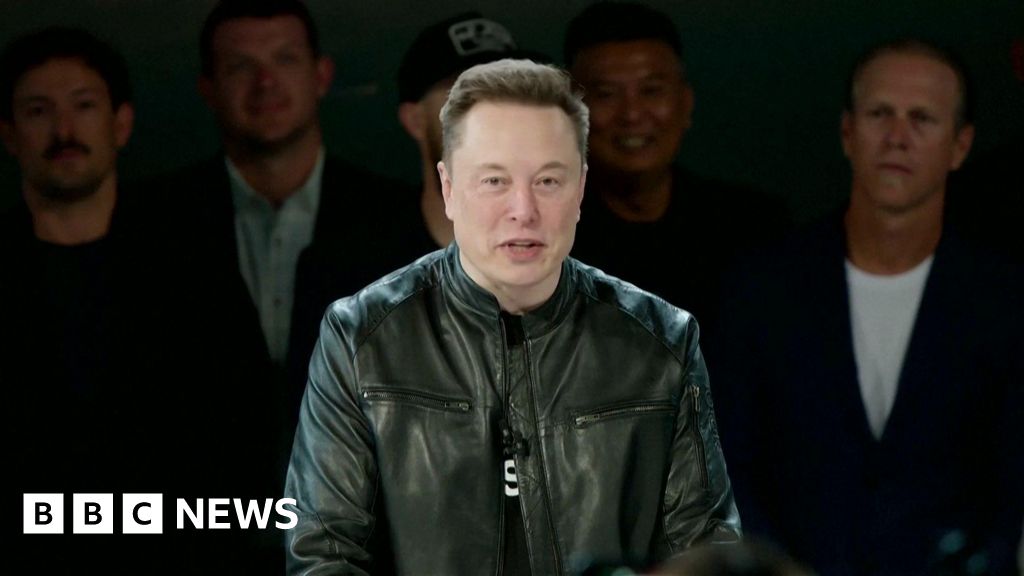
Lead. On 12 June 2026, the world's most valuable private company told the public markets a number so large it almost defies parsing: SpaceX has projected a $28,500,000,000,000 — $28.5 trillion — total addressable market, and it says artificial intelligence accounts for nearly all of it. Hours later, the same news cycle carried the gloss: the offering is reportedly more than 4.5 times oversubscribed, with demand topping $350 billion, and as many as 400 current and former employees are on track to cross $100 million in personal net worth once it prices. A Sequoia partner, Sean Maguire, separately offered the retail-friendly kicker: future generations could take "science field trips to the moon."
Nut graf. Read together, these data points are not a finance story dressed up as spectacle. They are a finance story in which the spectacle — the lunar field trip, the AI-driven TAM, the four-and-a-half-times-oversubscribed book — is the product. SpaceX is selling scarcity-shaped confidence to an allocator base that has been structurally short of it for two years, and the IPO machinery is doing what IPO machinery does: converting a long-duration industrial bet into a tradeable event with a clean story attached. The story is the asset.
The number, the demand, and the people inside
Start with the demand. Polymarket's news feed on 12 June 2026 carried a reporting note that the IPO is "more than 4.5 times oversubscribed, with demand topping $350,000,000,000.00" — a $350 billion order book against an offering whose size has not been publicly confirmed in the source material available to Monexus. A 4.5x cover at that scale is not just hot; it is the kind of cover that lets a bank syndicate reprice upward and still leave book-builders with allocation headaches. When oversubscription of this magnitude lands in a single name, the constraint is no longer price discovery — it is rationing.
The human downstream is reported in the same wire: 400 current and former SpaceX employees are "poised to become worth over $100 million" once the listing prices. That figure is plausible only because the company has carried its valuation through a private mark that the public market is now being asked to ratify. It is also a tell. Public-market comps for a launch and satellite-broadband business do not, in 2026, support a per-employee wealth distribution of that shape on operating cash flow. The 400 is a function of cap-table structure and a private-mark trajectory, not of run-rate earnings — which is precisely the kind of detail that disappears inside a "lunar field trip" headline.
The $28.5 trillion TAM, and why AI has to carry it
SpaceX's own framing of its total addressable market is striking in two directions. First, the figure: $28.5 trillion is roughly the size of US GDP and Chinese GDP combined. Second, the composition: AI is said to constitute "nearly all" of that TAM. The honest reading is that SpaceX is bundling two distinct businesses — launch services and Starlink broadband — and then reattaching both to a third, far larger, addressable market: orbital data-centre compute, where the company is positioning its Starship stack as the only credible bulk-delivery system for the power, cooling, and silicon that terrestrial grids cannot absorb.
The structural argument for that TAM is real. Frontier-model training clusters are electricity-bound; terrestrial grid interconnection queues in the United States routinely stretch four to seven years, and hyperscalers have been quietly buying land adjacent to gas, nuclear, and hydro capacity for the same reason. SpaceX's pitch — compute in orbit, beamed down via laser-linked Starlink constellation — is a coherent response to a real constraint. The market size implied is also, by design, unfalsifiable in the near term. A TAM this large cannot be tested against actual revenue within an analyst's forecast horizon, which is exactly why it works as an investor narrative.
The counter-read is straightforward: orbital compute is a 2030s story at the earliest, and a TAM line item in 2026 marketing materials is a capital-allocation signal, not a forecast. Allocators who treat the figure as a probability-weighted NPV will underwrite a different company than those who treat it as a multiple-expansion story. The Polymarket-reported demand suggests the latter cohort is winning the book.
The field trip line, and the political economy of the pitch
Maguire's "science field trips to the moon" line — carried in the same 12 June feed — is the kind of remark that is easy to mock and structurally important to understand. Sequoia is the lead-tier venture house that backed SpaceX in its earliest institutional rounds; a partner going on the record with a moon line in IPO week is doing permission-giving work. It tells the public-market buyer, in plain English, that the long-horizon space thesis is intact and that the people who have been marking the private book for a decade are not rotating out at the listing. Permission-giving is itself a scarce resource in a market where allocator conviction has been fragile since the 2022–2023 repricing, and it is the kind of remark that algorithmic news desks amplify because it is quotable.
It also serves a second function: it shifts the centre of gravity of the story from the spreadsheet to the symbolism. A $350 billion order book is intimidating; a moon field trip is legible. The information asymmetry between issuer and buyer is enormous, and the easiest way to compress it is to anchor on a vivid, falsifiable-enough-to-feel-real image. The image is doing analytical work that the $28.5 trillion TAM, on its own, cannot.
What the sources do — and do not — tell us
Three caveats this publication wants to be plain about. The Polymarket news-feed items aggregated here are summary lines, not primary documents; the precise IPO size, the final pricing, and the post-listing float have not been independently confirmed in the material available to Monexus on 12 June 2026. The $28.5 trillion TAM figure is a company-stated projection, not a third-party estimate, and its inclusion in a TAM chart does not bind SpaceX to any specific revenue trajectory. And the 400-employee millionaire count is a function of the private cap-table at the most recent mark — it does not survive a sustained public-market drawdown unchanged. Readers should treat the headline numbers as inputs to a forecast, not as the forecast itself.
The most likely alternative read of the day is the cynical one: that the oversubscription, the TAM, and the moon line are coordinated theatre, and the trade is to fade the listing within ninety days. The argument for that read is that no single private name in the last cycle has been able to absorb this much demand at this scale without a post-IPO correction. The argument against it is structural: the buyers of the float are long-duration holders, the float itself is small relative to the bid, and the underlying businesses — launch cadence, Starlink subscriber growth, and now a credible orbital-compute optionality — are not the kind of revenue lines that depend on multiple expansion alone. On balance, this publication reads the demand as real, the TAM as a marketing line that will be tested in 2027–2028, and the moon line as a permission-giving flourish that did its job the moment it was printed.
Desk note: Monexus is publishing this as an opinion piece because the source material on 12 June 2026 is a single Polymarket news feed carrying four summary lines. Where wire confirmation of IPO size, pricing, and allocation becomes available, Monexus will follow up with a desk piece; until then, the framing here is the framing the wire is allowing us to build, and not a substitute for the underlying filings.