SpaceX lists, Musk crosses a trillion: what the paper tells us about the real economy
On 12 June 2026, SpaceX rang the Nasdaq bell, its shares jumped, and Elon Musk became the first person on paper worth $1 trillion. The number is extraordinary; what it actually measures is something else.
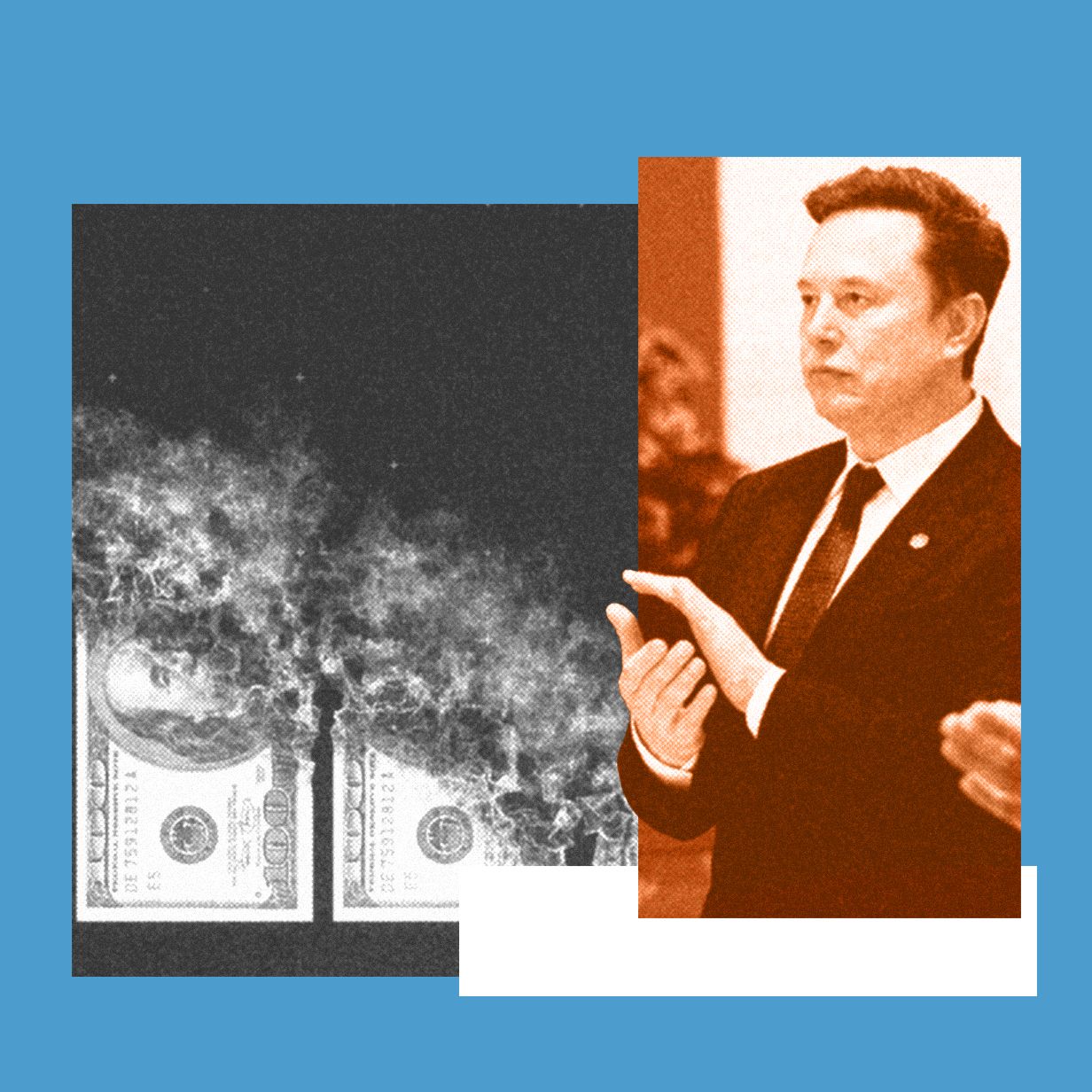
At 13:48 UTC on 12 June 2026, Elon Musk stepped onto the podium at the Nasdaq MarketSite in New York's Times Square and rang the exchange's opening bell. SpaceX, the rocket company he founded in 2002, had just begun trading publicly. Less than four hours later, shortly after 17:30 UTC, Deutsche Welle reported that the company's shares had climbed more than 25% above their opening price, and the math on Musk's stake produced a number that had never before attached itself to a single human being: a paper net worth of $1.1 trillion. The wires called him the world's first trillionaire, in a sentence that, depending on the reader, signalled either the apotheosis of frontier technology or the final proof that the global wealth ledger has stopped tracking anything to do with the real economy. Both readings are defensible. The harder task is to keep them in the same frame without the picture dissolving into either boosterism or schadenfreude.
What actually happened on Thursday is narrower than the headlines. A private company, financed for more than two decades by a mix of NASA contracts, Pentagon launch orders, commercial satellite sales and equity injections from Musk himself, was converted into a public one. The listing shifted a fraction of the firm's equity into the daily quoted market. The remainder, including the super-voting shares Musk holds, continues to do what private equity does: sit on a capitalisation table, marked to a price that the market has agreed to be willing to pay. The $1.1 trillion figure is the result of multiplying that agreed price by the share count he controls. It is, in other words, an artefact of the listing itself, not a wire transfer, a realised gain, or a tax event. It is closer to a thermometer reading than to a bank balance.
The listing, in plain terms
For most of its life, SpaceX was an industrial outlier: a closely held company building the world's most frequently launched rocket family, Starlink, and a moon lander, on the strength of contracts that, in the 2000s, no rational bank would have underwritten. Musk himself, in remarks relayed on the Polymarket X account at 13:58 and 14:06 UTC on 12 June, said he had given the company less than a 10% chance of success at its founding. The IPO prospectus, when it lands, will likely repeat that figure in a more legalistic register. Either way, the point is the same: SpaceX went public after a generation of public money had already de-risked the operations that justify the price tag.
The structure of Thursday's debut, as the wires described it, was straightforward. Shares opened, traded up by more than a quarter, and stayed there. By the close, the implied valuation placed the company comfortably above any private mark it had previously carried, and Musk's resulting net worth crossed the trillion-dollar threshold, a milestone first flagged on Bloomberg terminals and rapidly propagated through social channels. TechCrunch's account framed the moment through the lens of Musk's polarising public standing: more hated, and more powerful, than at any previous point in his career. That observation is editorial colour, not financial analysis, but the underlying point is material. A first-day pop of this magnitude is partly a price discovery event and partly a referendum on the principal. The market is, in effect, voting on whether Musk's continued control of SpaceX is an asset or a liability. Thursday's vote was unambiguous.
The counter-narrative: a number with an asterisk the size of a rocket
The dominant read on the wires is celebratory, in the constrained way that financial journalism celebrates anything. Insider Paper's Telegram channel posted the figure as a punchline. The Polymarket X account treated it as a marker of historical significance. TechCrunch's note was closer to ambivalence. Each of these frames flatters Musk, but each also flattens what the figure actually contains. A paper trillion is not a liquid trillion. If Musk tried to sell a meaningful slug of his SpaceX holding into a market that, on day one, was already absorbing 25% upside on a thin float, the price would do what prices do when supply appears: it would fall, and the net-worth calculator would fall with it.
There is a deeper objection, and it is structural. The $1.1 trillion measures Musk's claim on the future cash flows of a launch services provider and a satellite broadband operator that, taken together, do not yet earn the annual cash flow that would justify a traditional valuation at these heights. The number is sustained by a market that has decided to price SpaceX as a platform company, an infrastructure monopoly, or both. The market may be right. Starlink is, by any measure, the largest satellite constellation in operation, and Falcon 9 is the workhorse of the global launch industry. The fact that the market is willing to price the company on that basis is, in itself, news. The fact that Musk's personal balance sheet is treated as a continuous function of that price is, in itself, a story about the way wealth is reported in the early twenty-first century. The trillion-dollar figure is the headline; the concentration of untraded equity in the hands of one individual is the policy story hiding behind it.
The structural frame, translated
A generation of coverage has made a habit of quoting household net-worth figures as if they were cash. They are not. They are, almost always, paper marks against illiquid equity, real estate, and private businesses. The system is honest about this in its footnotes and dishonest about it everywhere else. The trillionaire milestone is the logical endpoint of a long trend: the migration of wealth out of wages, out of dividends, and into the residual claims on a small number of very large companies, valued at multiples that assume continued dominance. The first person to be measured at $1 trillion is not necessarily the first person to control $1 trillion of economic value. The first billionaire in 1917, John D. Rockefeller, controlled a much larger share of his country's productive capacity than Musk does of the United States' today. The dollar figure grew faster than the underlying concentration. The reporting followed the dollar, not the concentration. That is the structural pattern worth naming, and it is older than the Nasdaq.
There is also a politics of the figure, and not only the one the social platforms enjoyed on Thursday. A trillion-dollar net worth, whether or not it can be turned into cash, confers a particular kind of power: the power to set the terms on which capital is allocated, on which regulators are lobbied, on which counterparties are chosen. Musk's other businesses, including Tesla, X, and the artificial-intelligence operation he has stitched together across them, are already treated by analysts as extensions of his personal balance sheet. Thursday's mark will tighten that knot. A government that wants to negotiate with the operator of the largest commercial launch fleet and the largest low-Earth-orbit communications platform will, from this point forward, be negotiating with the balance sheet of a man the market has just told is worth more than the GDP of Switzerland. The bargaining will not be invisible.
Stakes, and what we still cannot see
The forward view is necessarily hedged. SpaceX has not yet filed a full prospectus with the Securities and Exchange Commission, and the public market is, for the moment, working off the opening tape and a thin float. The shares will discover their real clearing level over weeks and months, not hours. If the price retreats, the trillion-dollar figure retreats with it, and the historical-marker framing in the X and Telegram feeds will read, in retrospect, as the kind of premature milestone journalism the financial press is occasionally guilty of. If the price holds, the more durable questions come into view: how a single individual came to control so much of the orbital infrastructure on which weather forecasting, military communications, broadband access and the GPS-adjacent economy now depend; what the appropriate regulatory posture is toward a company whose principal is also the operator of a social platform and a frontier AI lab; and whether the next trillion-dollar threshold, when it comes, will be set by an industrial operator or by someone in a less tangible line of business.
There is also what the sources do not tell us. The reporting on Thursday is uniformly Anglo-American. None of the wire items, the Telegram post, the X accounts, or the channel broadcasts canvassed the views of regulators in Washington, the European Union, China, or Russia, all of whom have material interests in the structure of the global launch market. None of them cited independent analysts, investment-bank research notes, or insurance industry assessments of the operational risks the public market is now pricing. The day-one pop is a fact. The list of unknown unknowns is longer. A trillion-dollar milestone is, in that sense, less a conclusion than a starting gun: the moment the public conversation about a private company's pricing, and about a single individual's claim on it, becomes impossible to defer.
— Monexus framed this as a structural story about how paper wealth is measured and reported, not as a personal triumph or a personal scandal. The wires, by contrast, ran the milestone line; the Telegram and X feeds amplified it. Monexus's contribution is to read the figure against the way wealth reporting has worked for a century, and to ask what the price tag actually buys.
Wire provenance
This editorial synthesis draws on the following public wire/social posts:
- https://t.me/insiderpaper