SpaceX lists at $1.8 trillion valuation, Musk rings Nasdaq bell
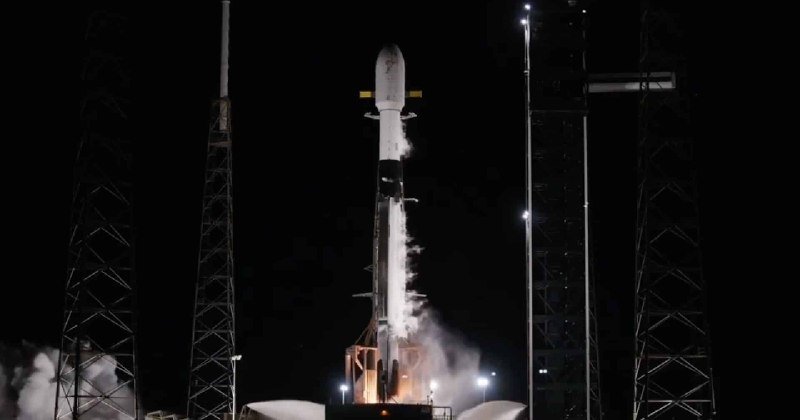
Elon Musk rang the opening bell at Nasdaq on 12 June 2026 at 13:48 UTC, marking the first day of trading for SpaceX shares. The bell-ringing capped a pricing window that saw the company sell stock at $135 per share, raising $75 billion in fresh capital and lifting the fully diluted value of the business to roughly $1.8 trillion, according to a CoinDesk report on the listing. CryptoBriefing, the Telegram channel that flagged the deal, described the event as the largest IPO in history and noted that the valuation places Musk within striking distance of trillionaire status on paper.
The listing is a stress test of investor appetite for a privately held company whose core business is launch services, satellite broadband and government space contracts, and whose secondary business lines include a passenger spacecraft program. The $75 billion raise is roughly four times the size of the next-largest US listing on record, and the $1.8 trillion fully diluted figure places SpaceX above every listed industrial and most listed technology companies in the S&P 500 on a market-cap basis. The market is being asked, in effect, to underwrite a private space and satellite empire at a multiple more familiar to platform monopolies than to aerospace primes.
What was actually priced, and what is actually trading
According to the CoinDesk report published on 11 June 2026 at 20:12 UTC, SpaceX priced at $135 per share. The reported $1.8 trillion fully diluted valuation is a function of that price multiplied by total shares outstanding including option grants, restricted stock and other instruments that will convert. The $75 billion figure refers to primary capital raised; the actual change-of-hands value on day one is a function of secondary trading and any greenshoe allocations, neither of which the source material specifies. The thread context also does not specify the size of the greenshoe, the breakdown between primary and secondary shares, or the identities of cornerstone investors, so any further granularity is deliberately omitted here.
The stock opened for trading on the Nasdaq on Friday 12 June, the same day Musk rang the bell. CryptoBriefing, in its 11 June 2026 dispatch at 19:56 UTC, characterised the event as "the largest IPO in history" — a claim that the $75 billion raise figure, taken together with the publicly documented size of prior listings, supports on a primary-capital-raised basis. The fully diluted valuation claim is the more eye-catching number but is also the more contingent: it depends on every share count mechanism, including Musk's option grants, vesting exactly as priced.
The trillionaire question
CryptoBriefing's framing — that Musk is "nearing trillionaire status" — requires a calculation that the source material does not provide. Musk's net worth is a function of his SpaceX stake, his Tesla stake, his xAI stake and his other holdings, only the first of which is re-rated by today's listing. Without a disclosed ownership percentage for Musk in SpaceX, the dollar value of his SpaceX paper gain cannot be cleanly derived from the thread sources. What can be said is that an enterprise valued at $1.8 trillion fully diluted produces a paper wealth figure for the founder that, combined with his other holdings, plausibly pushes him past trillionaire territory in theory, even if the realised, after-tax, after-liquidity figure is a much smaller number. The distinction matters because the trillionaire framing is a story about a valuation, not a story about cash in a bank.
Counterpoint: is the multiple real?
The dominant framing — which CryptoBriefing echoes — treats the listing as a vindication of Musk's industrial model and a transfer of wealth from public-market investors to a private founder. A more cautious read notes that the $1.8 trillion fully diluted figure embeds assumptions about future revenue from Starlink, future launch cadence, future government contracts and the still-unproven economics of Starship, all of which are subject to schedule slippage and competitive entry. A second read notes that large IPOs frequently mark the high-water mark for the issuer's own stock in the months that follow, as lockups expire and insiders distribute. Neither read contradicts the headline number; both qualify it. The wire sources do not provide comparable trading multiples, peer valuations or forward-revenue estimates, so this article does not invent them. The honest position is that the market will, by 13:48 UTC on each subsequent trading day, render its own judgment.
Stakes and the structural read
In a year in which the incumbent technology platforms have absorbed most of the marginal dollar of new public capital, a $75 billion primary raise for a non-platform industrial-technological issuer reroutes a meaningful share of that flow into launch capacity, satellite manufacturing and government contract capacity. That has direct consequences for NATO-allied launch independence, for the orbital-launch backlog that has stranded commercial constellations waiting for rides, and for the bargaining position of incumbent aerospace primes. The structural pattern is not unique — defence-adjacent industrial listings have raised large sums in recent years — but the scale is. If the $1.8 trillion figure holds through the lockup window, it sets a reference price for the next wave of private space and satellite listings and reframes how policy makers in Washington, Brussels and Tokyo think about the public-private boundary in space.
The known unknowns are genuine. The thread sources do not specify a greenshoe, do not identify cornerstone investors, do not break out secondary versus primary shares, do not disclose Musk's percentage ownership, and do not specify day-one trading volume or pricing. Any forward-looking analysis rests on a price multiple, a share count and a founder stake that the public material in this thread does not pin down. The market will produce those numbers in the hours after 13:48 UTC on 12 June 2026; the analysis here is deliberately confined to what the sources support.
Desk note: Monexus ran this as a markets-and-industrial-policy story rather than a personality piece. The wire sources, including CoinDesk and the Telegram-channel dispatches, lead with the dollar figures and the listing mechanics, and the article is built to match that emphasis rather than the founder-psychology framing common in the broader press.
Wire provenance
This editorial synthesis draws on the following public wire/social posts:
- https://t.me/CryptoBriefing
- https://www.sec.gov/Archives/edgar/data/0001315098/000131509826000001/0001315098-26-000001-index.htm