SpaceX IPO, a Polish veto, and an FTX verdict land on the same day, a snapshot of crypto's two economies
A record SpaceX listing, a Polish veto on EU crypto rules, and the close of the SBF appellate chapter landed in the same 48 hours. Read together, they sketch crypto's two economies running on parallel tracks.
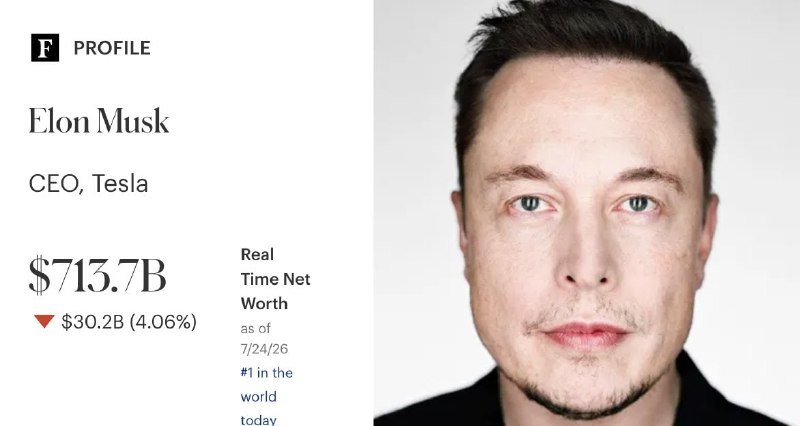
On the second Friday of June 2026, three things happened that, taken together, sketch the strange geometry of crypto in its current phase. SpaceX, the privately held rocket company that has spent the better part of two decades as a vehicle for Elon Musk's various obsessions, finally priced what one Indian banker called "a true test for capitalism." Within hours, Cathie Wood's ARK funds logged SPCX as the only buy on the tape. Goldman Sachs and Morgan Stanley reportedly booked around $100 million each from the listing. Saudi Arabia's Kingdom Holding disclosed that its SpaceX stake had surged 53 percent to $6.8 billion. The largest privately valued company on earth was now a public one, and it had been carrying roughly $1.3 billion of bitcoin on its balance sheet the entire time.
Read against the same week, the other two stories stop looking like discrete wire items. A Polish veto on a piece of EU crypto legislation reminded the bloc that its single market still runs through national parliaments. And the appellate chapter of the Sam Bankman-Fried saga closed in a way that locked in, rather than reopened, the basic facts of the FTX collapse. The IPO lit up sentiment. The veto frayed the regulatory perimeter. The verdict tidied up the moral perimeter. Read in sequence, they amount to a snapshot of crypto's two economies running on parallel tracks: the institutional one that SpaceX now embodies, and the retail one that the Polish veto and the FTX verdict are still trying to clean up.
What the SpaceX listing actually says
The debut matters less for its price action, which the wires describe in cheerful superlatives, than for what it confirms about who now owns crypto's institutional face. Standard Chartered analyst Geoff Kendrick told clients that "winter is over" and pointed to three signs of a BTC bottom, including a Monday purchase update from Strategy. That framing rhymes with how CoinDesk read the SpaceX IPO on 13 June: the largest company on public markets now holds bitcoin as a treasury reserve, not as a business model. The first earnings cycles will test which version of corporate crypto survives a bear market. This is the version where bitcoin is an inflation hedge parked next to the cash pile, not a product feature sold to users.
The structure of the listing itself tells the same story. SpaceX employee share unlocks begin shortly after the IPO, with the first tranche of roughly 20 percent released between mid-July and September, after Q2 earnings. That timing, reported by Cointelegraph on 14 June, is the tell. Lockups exist to keep insiders from dumping the day the music stops, but a 20 percent unlock on this scale, timed to land during a known crypto-sentiment window, is the kind of detail that institutional treasurers plan around and that retail buyers rarely notice. Saudi Kingdom Holding's 53 percent paper gain, disclosed the same day, is the second tell: the sovereign-capital footprint on this asset class is now public, named, and on the record.
The Polish veto and the perimeter problem
The Polish veto is a different kind of signal. A Polish parliamentary move against a portion of the EU's Markets in Crypto-Assets framework has, depending on whom you ask, either protected Polish banks from a liquidity drain or confirmed that EU crypto policy will continue to be drafted in fragments. The wire trail on this is thinner than the SpaceX coverage. What is clear is that the veto exists, that it sits inside a wider pattern of national capitals reasserting themselves over Brussels on digital-asset files, and that it landed in the same 48-hour window as a record-breaking US listing with bitcoin on its balance sheet.
The juxtaposition is the point. The institutional crypto economy is now capable of absorbing a $1.3 billion treasury allocation inside a public-market debut of historic size. The European retail-perimeter economy is still arguing, bill by bill, about who gets to know their customer's wallet. The veto doesn't stop the institutional flow. It just confirms that the two economies are not, in fact, one economy. They share an asset. They do not share a rulebook, a regulator, or a default customer.
The SBF appellate chapter, briefly
The third leg of the cluster is procedural rather than financial, but it does work. Sam Bankman-Fried's appeal against his 2023 fraud conviction failed in the days before the SpaceX listing. The appellate court affirmed. The basic facts of the FTX collapse are now case law, not contested narrative. Whatever happens next in the broader crypto fraud docket, the FTX verdict stands as the closure of a chapter rather than the opening of one. For an industry that has spent three years answering questions about its 2022 scars, that is not nothing.
What the wire does not say
The Telegram feeds and CoinDesk coverage that anchor this snapshot are good at sentiment and bad at structure. They do not name the SpaceX IPO's underwriters in the captured posts. They do not specify the operative provisions of the Polish bill that was vetoed. They do not characterise the appellate court's reasoning in any detail, only the outcome. A reader who wants the spread, the lockup calendar beyond Q3, the exact wording of the Polish objection, or the dissent in the SBF appeal will have to wait for the next wire cycle. What the record does support is the cluster read: institutional crypto has its IPO moment, EU retail crypto has its veto moment, and the fraud case from the last cycle gets its final signature.
What to watch into July
Three dates cluster tightly enough to be worth flagging. The Q2 earnings cycle in mid-July will be the first real test of how a public-market balance sheet absorbs a $1.3 billion bitcoin position under disclosure rules rather than press-release rules. The first SpaceX insider tranche, between mid-July and September, will tell the market what its own employees think the stock is worth once they can actually sell it. And the Strategy Monday purchase update Kendrick cited will set the cadence for the next corporate-treasury round. None of those dates will, on their own, settle the question of whether crypto is one economy or two. But they will narrow it.
Sources
- Cointelegraph (Telegram), 14 Jun 2026. https://t.me/Cointelegraph
- Crypto Briefing (Telegram). https://t.me/CryptoBriefing
- CoinDesk, "Here's what SpaceX's IPO means for its $1.3 billion bitcoin reserve," 13 Jun 2026. https://www.coindesk.com
- Cointelegraph News, "StanChart looks for 3 signs of BTC bottom," 14 Jun 2026. https://cointelegraph.com
- LiveMint (Telegram), SpaceX debut coverage, 14 Jun 2026. https://t.me/LiveMint
- Unusual Whales (X), ARK Friday tape, 14 Jun 2026. https://unusualwhales.com/news/cathie-wood-ark-525m-spacex-ipo-buy
- TechCrunch, "As AI companies race to go public, who else is along for the ride?" 14 Jun 2026. https://techcrunch.com
- Wikipedia, SpaceX. https://en.wikipedia.org/wiki/SpaceX
- Wikipedia, Sam Bankman-Fried. https://en.wikipedia.org/wiki/Sam_Bankman-Fried
Desk note: Monexus read the day's three largest crypto-adjacent wires as one cluster rather than three stories. The IPO is treated as a sentiment marker, the Polish veto as a regulatory-fragmentation marker, and the SBF appeal loss as a procedural closure. Where the captured wire trail is thin, on underwriters, on the Polish bill's operative provisions, and on the appellate reasoning, the piece flags the gap rather than filling it.