SpaceX's $1.75 trillion IPO lands Friday — and the SEC won't be in the way
SpaceX prices at $135 a share for a $1.75 trillion valuation, with derivatives pointing to a 35% pop on debut. Senator Warren's last-minute SEC delay demand looks set to miss its window.
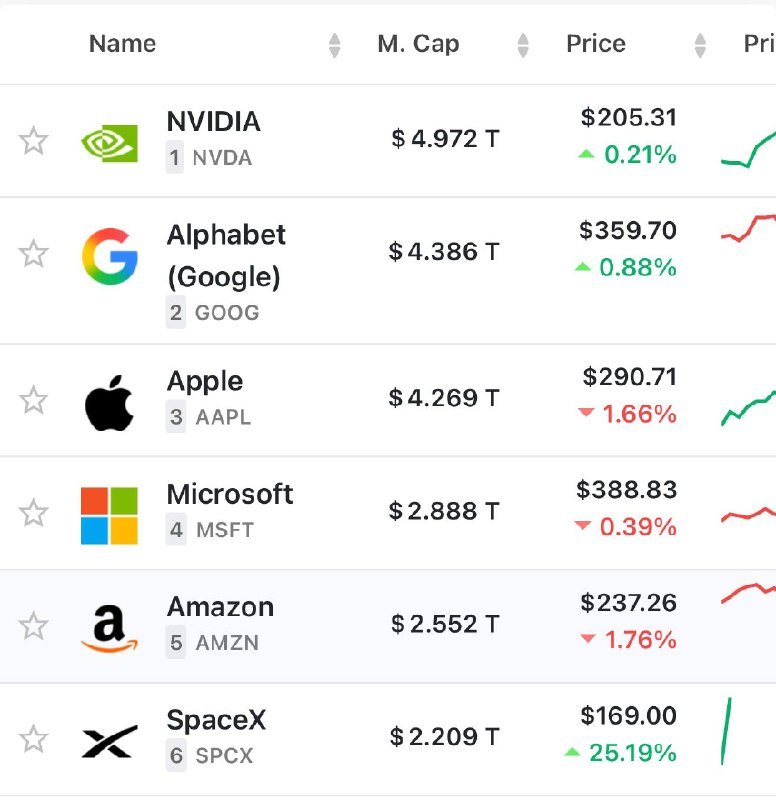
SpaceX is scheduled to list on US equity markets on Friday 12 June 2026, priced at $135 a share and valued at roughly $1.75 trillion, with derivatives markets signalling a possible 35% jump on the first day of trading. The size of the float, the speed of the bookbuild, and the truncated window for any last-minute regulatory intervention have combined to make this the most consequential non-bank listing of the cycle — and one of the most politically charged.
The setup is unusual even by the standards of a 2026 market that has normalised jumbo private-to-public transitions. The IPO lands on a Friday, the closing day of a US trading week in which Senator Elizabeth Warren has publicly pressed the Securities and Exchange Commission to slow the process, citing concentration risk and disclosure concerns. According to a post on X by the Unusual Whales account, the timing leaves regulators "almost no time to act on her concerns" before the first trade prints, a window that effectively converts Warren's intervention into a post-mortem complaint rather than a gatekeeping event.
The mechanics of a Friday mega-deal
The pricing of $135 per share was reported by LiveMint on 12 June 2026, with the outlet noting that the float values the company at approximately $1.75 trillion and that demand has run ahead of expectations. CryptoBriefing's Telegram wire, citing derivatives positioning, projected a 35% lift on debut. CoinDesk's day-ahead note, also published on 12 June 2026, framed the listing as a two-way trade: a successful first day would re-anchor risk appetite across the entire private-markets-to-public-markets pipeline, while a soft open would expose the gulf between late-stage private valuations and the discipline of public price discovery.
The derivatives signal matters. Pre-listing options activity has, in recent issues, become a leading indicator of how the first session clears, because institutional traders use single-stock options to express views on debut pricing when allocations are tight. A 35% implied move is not, in itself, a forecast; it is a market-stated expectation that the deal will price conservatively and trade higher, the pattern that has dominated every marquee tech listing of the last three years.
The debt overhang LiveMint flagged is the counterweight. SpaceX carries leverage accumulated through Starship development, the Starlink constellation build-out, and the internal acquisition of late-stage assets. The same write-up that confirmed the $135 price also carried analyst warnings about that debt load, urging investors to weight the long-duration revenue case — broadband subscribers, defence launch cadence, and any eventual Mars programme cashflow — against near-term servicing costs.
The political tail
Warren's intervention is the variable that does not show up in a derivatives model. Her argument, as summarised in the Unusual Whales wire, is that the SEC's review window is being compressed by the choice of a Friday listing, leaving the regulator unable to interrogate the prospectus with the rigour applied to a mid-week float. The structural objection is concentration risk: a $1.75 trillion private-to-public transition transfers voting and pricing power into the hands of an unusually narrow retail and institutional base, and the disclosure regime has not, in her telling, kept pace with the speed of late-stage private capital.
The counter-argument — and it is the one that has carried the day in the regulatory conversation through 2026 — is that the SEC's mandate is disclosure, not valuation. If the prospectus contains the relevant risks, the commission's job is to let the market clear. Speeding or slowing a listing on the basis of valuation scepticism is a different policy choice, and one the current chair has shown no appetite for. The Friday-slot scheduling therefore reads less as regulatory capture and more as calendar engineering: a window chosen precisely because it limits the room for political manoeuvre.
Crypto's proxy trade
For the digital-asset complex, the listing is a directional event. CoinDesk's day-ahead note, published at 11:23 UTC on 12 June 2026, makes the link explicit: a clean SpaceX print pulls capital into risk assets, including tokens that have been waiting for a clean risk-on signal, while a soft open pulls the floor out from under the same trade. The reflexive connection is well-rehearsed — major tech listings in 2024 and 2025 reliably moved crypto beta — but the marginal trader is no longer treating the relationship as guaranteed. The base case is correlation, not causation.
The harder question is what a $1.75 trillion valuation, on the back of derivatives-implied first-day demand, does to the private credit market that funded the build-up. If public investors validate the late-stage private pricing that produced the 2025 secondary rounds, the model holds and the next cohort of private-to-public candidates — AI labs, autonomous-vehicle outfits, defence-tech specialists — gets a clean runway. If the print disappoints, the secondary marks that have anchored a year of venture and growth-stage fundraises will need to be redrawn.
The structural frame
What is happening on Friday is not a single listing. It is the largest transfer of private-market valuation into public-market discipline of this cycle, executed on a timeline that neutralises the most credible political objection. The pattern — a marquee tech float scheduled into a narrow regulatory window, with a derivatives market already pricing the debut — is a template. The next several listings of this scale are likely to be engineered the same way, which means the SEC's room to slow-walk future issues narrows with each successful execution.
The stakes for Washington are not abstract. Concentration risk, retail exposure to private-market valuations, and the leverage carried into the float are all live policy questions. They will not be answered on Friday. They will be answered in the hearings, the comment letters, and the rule-makings that follow — and the Friday timing is, in part, a wager that the political energy required to revisit the rules dissipates faster than the public memory of the listing itself.
What remains uncertain
The sources are not unanimous on what Friday will look like. The derivatives signal is a 35% lift, but pre-listing options have a history of overstating first-day moves in either direction when the float is tight. LiveMint's analyst commentary is explicit that the debt load is the variable that can override the demand story. And the regulatory complaint Warren has lodged is, for now, a complaint without a remedy — but complaints lodged at the moment of listing have a habit of becoming the agenda item of the following quarter.
What this publication is watching: whether the first 30 minutes of trading match the derivatives-implied range; whether the post-IPO secondary window opens cleanly or with a wide bid-ask; and whether the SEC, in its next public statement, treats the Friday timing as a precedent to be repeated or an edge case to be discouraged.
The desk framed this as a market-mechanics story with a political tail, not as either a Musk-hero narrative or a Warren-vindicated one. The derivatives positioning is the cleanest data point; the regulatory complaint is the variable that the derivatives model does not price.
Wire provenance
This editorial synthesis draws on the following public wire/social posts:
- https://t.me/cryptobriefing/
- https://x.com/unusual_whales/status/