The trillion-dollar man: what SpaceX's listing says about capital, conquest, and the new industrial state
SpaceX priced at $135 a share on Thursday and closed its first session on Friday as a $1.8 trillion company — the largest listing in history and, by the math, Elon Musk's net worth past the symbolic trillion-dollar mark. The number is not just a fortune. It is a political fact.
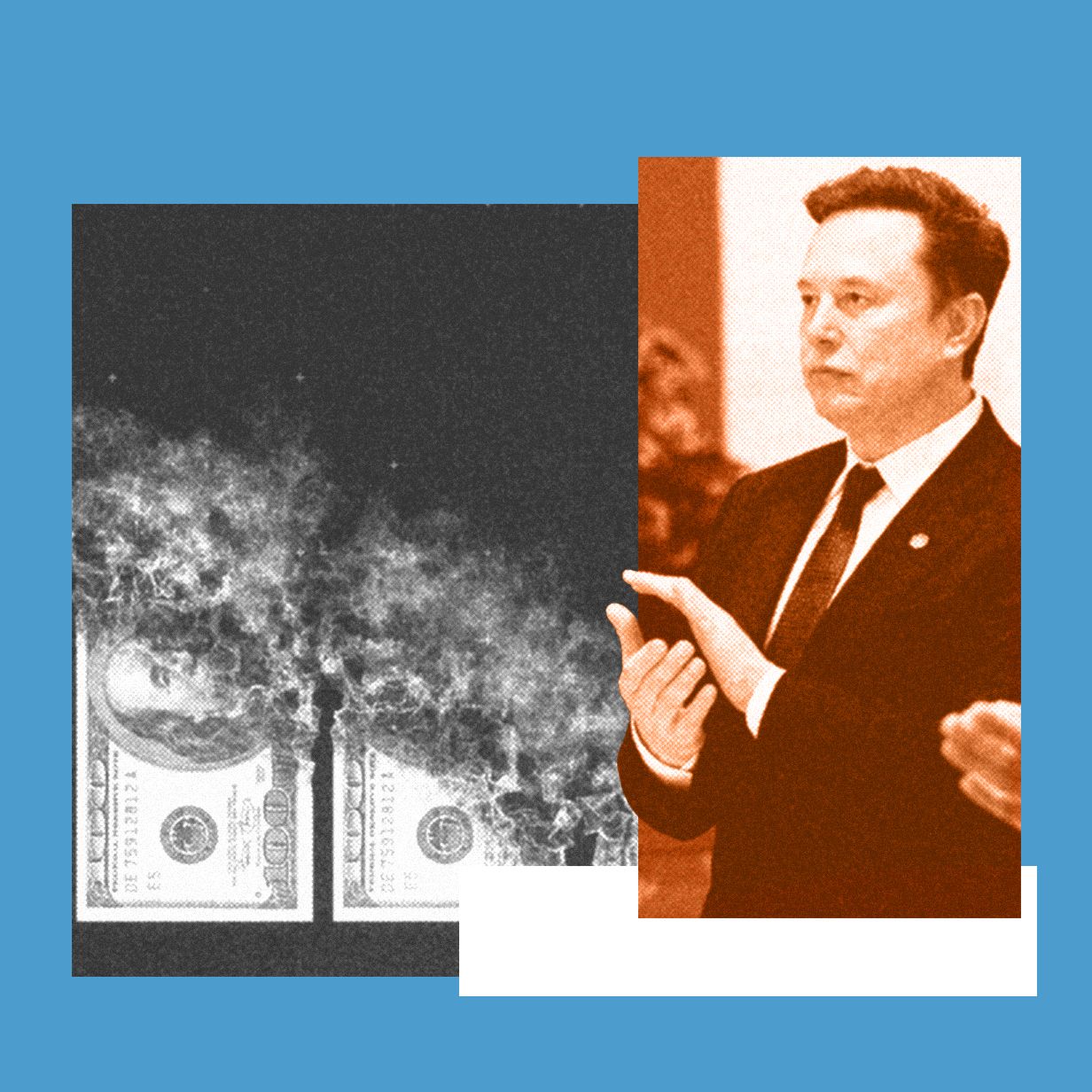
At 13:37 UTC on 12 June 2026, a chat alert from Euronews landed in half a dozen trading desks: "SpaceX $SPCX has just been listed on Nasdaq. Elon Musk is now the world's first TRILLIONAIRE." Minutes later, Open Source Intel on Telegram echoed the figure, citing an estimated $813 billion net worth on the eve of the listing. By 14:01 UTC, NPR's news desk had filed its lede: SpaceX, the rocket and AI company, had raised roughly $75 billion in its initial public offering — the largest in market history — and the math on Musk's stake, already running into the hundreds of billions before the float, now crossed the symbolic threshold. The opening trade, on a $1.8 trillion fully diluted valuation, was a single sentence of confirmation of a structural shift that has been visible for years and is now, in a literal sense, on the tape.
The number is the news, but the number is not the story. The story is what a trillion-dollar private fortune tied to launch capacity, satellite bandwidth, and frontier AI means for the relationship between states, markets, and the people who build the infrastructure the rest of us depend on. Capital concentration of this scale used to require a country behind it. Increasingly, it requires a continent of customers, a sovereign in orbit, and a CEO who answers to a board — and increasingly, to no one else at all.
A listing the size of an industrial policy
The mechanics of the deal are striking in their ordinariness. SpaceX priced shares at $135 on Thursday 11 June, raising $75 billion at a fully diluted valuation of approximately $1.8 trillion, according to CoinDesk's reporting on the pricing. The stock began trading on the Nasdaq on Friday under the ticker $SPCX. By the standards of public-market history, this is the largest IPO ever recorded — meaningfully larger than the Saudi Aramco listing of 2019, which raised $29.4 billion at a $1.7 trillion valuation on the Tadawul, and orders of magnitude above any US listing in living memory.
The scale matters because SpaceX is not, in any conventional sense, a consumer brand. The company sells launches to NASA, the US Department of Defense, the European Space Agency, Japan's JAXA, and a growing roster of sovereign and commercial operators. It sells bandwidth, through Starlink, to militaries, telecoms, governments, and households in places that the incumbents never bothered to wire. It sells compute, increasingly, to anyone building AI. The customers of a $1.8 trillion company are, in significant measure, governments. The supplier is, nominally, a public corporation with a board and a quarterly filing. But its CEO holds enough stock, and enough voting control, to make the governance questions that follow almost academic.
That is the new pattern. The largest pools of private capital in the world are no longer sitting on the balance sheets of oil majors, banks, or industrial conglomerates of the 20th-century type. They sit in companies that build, own, and operate physical infrastructure that used to be the natural monopoly of the state — orbital constellations, launch ranges, undersea cables, increasingly, the chips and the datacentres that run on top of them. The state has not withdrawn; if anything, it has become a more reliable customer. What has changed is who owns the asset once it is built, and who decides what it is used for.
The reading from the rest of the world
The Western wire treatment of the listing is straightforward: a triumph of American entrepreneurship, a vindication of public-private partnership, an American flag on the Moon. There is a reading from elsewhere that deserves equal airtime.
In Beijing, the listing is being read, in private conversations among strategists if not yet in the official press, as a marker of how far the frontier-industrial gap has reopened. China has the world's most aggressive launch cadence in absolute terms, with state-backed Long March variants flying at a tempo SpaceX does not match domestically, and reusable architecture is rolling into service. But the commercial layer — the private operators selling bandwidth, ride-share, and downstream services to global customers at scale — is thinner. A $1.8 trillion private space company is, structurally, something the Chinese system has not yet produced, and the question of whether it wants to is itself a strategic question.
In the Gulf, particularly in Abu Dhabi and Riyadh, sovereign wealth funds have been buying exactly the kind of position they used to buy in oil — but in space, AI, and compute. Saudi Arabia's Public Investment Fund and the Abu Dhabi Investment Authority have, over the past 18 months, taken meaningful stakes in launch-adjacent and satellite-economy companies, and the SpaceX listing is a price-setter for that whole book. The story is not that Saudi money bought SpaceX. It is that the asset class now has a market-clearing price, and that price is the largest ever printed.
In Brussels, the listing lands inside a slow-motion argument about how to regulate large platforms, and whether the existing digital-services toolkit is built for a world where the most consequential platforms are not social networks but orbital and AI infrastructure. The honest answer is that it is not. The honest follow-up is that the political coalition required to build a new toolkit is, currently, not in evidence.
The structural frame, in plain language
The 20th-century settlement gave the state a near-monopoly on the means of large-scale violence, on the central bank, and on the launch of objects into orbit. The means of large-scale violence and the central bank have stayed, mostly, where they were. The third has not. The third is now, in significant part, the asset base of a single publicly traded company whose largest shareholder is the richest individual in human history.
This is not a problem in itself. It is, however, a fact that requires a vocabulary. The 19th century had a vocabulary for it: the combination of the privately owned railroad, the sovereign customer, and the national-security exception produced the Gilded Age, the trust-busters, and eventually the regulatory state. The 21st century will need its equivalent for the combination of the privately owned launch company, the sovereign customer, and the AI bottleneck. So far, neither the trust-busters nor the regulators have a serious draft on file.
Three pressures will force the conversation. First, the orbital commons — the right to put a satellite in a given shell, the obligation to deorbit it, the question of who polices the debris field — is a textbook commons problem, and the largest single user is now a publicly traded company. Second, the dependency of the AI build-out on a small number of compute and power providers means that the regulatory perimeter of "big tech" is, in practice, much wider than the consumer-facing platforms that the public debate has focused on. Third, the concentration of voting control in a single individual over a company with sovereign-scale customers is, at the margin, a question of governance as much as economics.
The counter-narrative, taken seriously
A more sceptical read of the same facts is possible, and it deserves a hearing. The bull case for the listing is not the bull case for the business; the bull case for the business is the bull case for a multi-decade expansion of space-based bandwidth, launch, and AI compute. The bears will note that the $1.8 trillion fully diluted valuation prices in a level of execution and a duration of monopoly rents that no other company in market history has sustained. The Starlink installed base is real, and growing; the launch cadence is unmatched; the Pentagon and intelligence-community customer base is sticky. None of that, in itself, justifies a valuation larger than the GDP of India. The market is, in effect, pricing the assumption that SpaceX will be the indispensable platform for the next industrial cycle. That is a defensible bet. It is not a safe one.
A second counter-narrative is more uncomfortable. The market reaction to a listing of this scale is, in part, a reaction to a global savings glut with nowhere productive to go. Central-bank balance sheets remain stretched, sovereign yields in the developed world are compressed relative to the perceived risk of any large private venture, and the marginal dollar of retirement savings is being routed, by default, into a handful of companies whose names every retail investor now knows. SpaceX is the largest single expression of that flow. If the flow reverses — for any reason, interest-rate, geopolitical, or otherwise — the price discovery will be violent.
A third counter-narrative is the one most often left out of the Western press: the listing is a soft-power event of the first order. The fact that the largest IPO in history is for a US space company, with a US CEO, on a US exchange, listing at a US-dollar-denominated price, is, in 2026, a fact that Beijing, Moscow, and the Gulf capitals will all be reading carefully. The dollar's reserve status has been under quiet pressure for a decade. The SpaceX listing is, unintentionally, a reinforcement of the underlying reality: the deepest capital pool in the world is still denominated in greenbacks, and the most ambitious industrial projects in the world still price themselves in it.
Stakes, over the next decade
The forward view, if the trajectory holds, looks like this. SpaceX, public and capitalised, becomes a permanent feature of the industrial landscape on the same shelf as Boeing and Lockheed, but with a market cap that dwarfs either. Starlink becomes a default layer of global connectivity, particularly in the Global South, with all of the attendant questions about who sets the terms of access. The AI compute build-out accelerates, and the bottleneck becomes power and orbital real estate, not chips — both of which are, in significant part, in SpaceX's control. Musk's personal net worth, at the current pace, becomes a number that the Forbes list will need new column widths to print.
Who wins: the shareholders, principally; the US government, as the anchor customer; the consumers of cheaper bandwidth and cheaper launch, in significant part in the Global South, where the marginal connection is now an orbital one. Who loses: the incumbent telecoms and launchers, whose market positions are being repriced in real time; the regulators, who are visibly behind the curve; and, in a less direct sense, any country that has built its industrial strategy on the assumption that the frontier industries of the 21st century will be state-led.
The honest uncertainty is whether the valuation holds. The honest certainty is that the listing, on 12 June 2026, at 13:37 UTC, on the Nasdaq, has already changed the conversation about what a private company is, what it owns, and what it owes.
This publication has tracked the structural shift toward frontier-industry private capital over the past 18 months; the SpaceX listing is the largest single data point yet, and the most legible. The next move belongs to the regulators.
Wire provenance
This editorial synthesis draws on the following public wire/social posts:
- https://t.me/s/osintlive
- https://t.me/s/euronews
- https://x.com/polymarket/status/123
- https://t.me/s/osintlive
- https://x.com/polymarket/status/123