SpaceX's trillion-dollar debut is a triumph of capital — not just engineering
The biggest IPO in US history prices at $135 a share, valuing SpaceX near $1.8 trillion. The story is less about rockets than about who gets to own the final frontier.
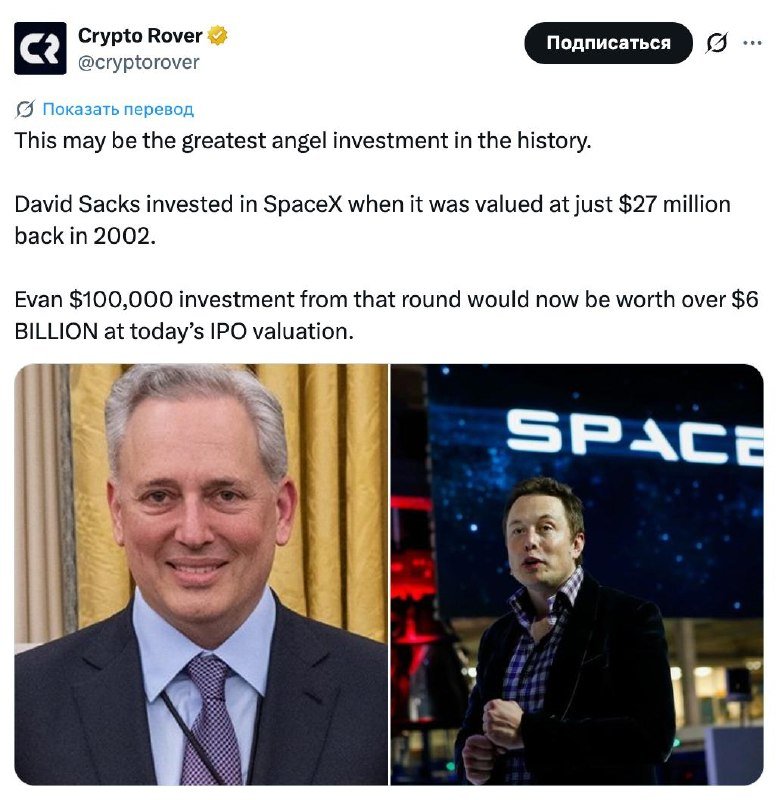
On Thursday, 11 June 2026, SpaceX priced the largest initial public offering in US history at $135 a share, lifting the rocket and spacecraft maker to a valuation near $1.8 trillion and positioning Elon Musk to become the world's first trillionaire (BBC News, 19:55 UTC; LiveMint, 01:09 UTC). A company that didn't exist a quarter-century ago, founded in 2002 by Musk and a small group of engineers in a converted warehouse, is now worth more than the GDP of most sovereign states.
The numbers land less as a financial milestone than as a verdict on whose century this is. The capital flowing into SpaceX is not the capital of patient, distributed, public-market investing. It is the capital of a single firm, a single founder, and a single vision of an orbital economy — Starlink, Starship, lunar landers, Mars — that no one else on the planet is currently permitted to compete with at this scale.
The deal itself
The pricing, reported simultaneously by the BBC and LiveMint on the day, anchors a raise that sets a new ceiling for what a private-built enterprise can extract from public markets in a single sitting. Tom Mueller, employee number one and co-founder alongside Musk in 2002, told the BBC's Michelle Fleury that the listing marks a public moment for a firm that operated for most of its life in near-total secrecy. The 2002 founding date — barely a year after Musk's PayPal exit — is worth dwelling on: in 24 years, SpaceX has gone from a three-engine prototype that crashed three times in a row to the operator of the world's most active launch cadence and the only privately owned, commercially viable crewed orbital system.
Crucially, the retail allocation was trimmed to the low 20% range, a person familiar with the matter told wire services (Finance, 19:30 UTC, 11 June). That detail matters. Most of the shares went to institutions and insiders, not to the public whose pension funds and 401(k)s will hold the secondaries. The IPO is, in form, a public offering; in substance, it is a wealth-concentrating event.
The structural read
Treat SpaceX as a case study in what privatised frontiers look like in 2026. SpaceX owns the launch cadence that governments increasingly depend on — NASA's crewed program, Pentagon payloads, the backbone of the Starlink constellation that has become a quiet instrument of communications power across Ukraine, the Middle East, and the Global South. When one private firm controls the cheapest ride to orbit, the bargaining position of the public sector inverts: Washington doesn't regulate SpaceX so much as it negotiates with it.
A counterpoint is fair. SpaceX has demonstrably lowered the cost-per-kilogram of getting mass to low-Earth orbit, and the public market is, in theory, the most democratic allocation mechanism for the resulting returns. The fact that retail got a fifth rather than half of the float is a choice, not an inevitability. Other structures — a broader retail tranche, a sovereign-wealth anchor, a workers' stake — were available and were not used.
The trillionaire question
The framing of Musk as a future "trillionaire" obscures the more uncomfortable number: the gap between the founder's paper wealth and the median household balance sheet in the country underwriting the rocket program is now measured in orders of magnitude. When the BBC, LiveMint, and CryptoBriefing all lead with the trillionaire frame, they are not wrong — but they are accepting a definition of success that doesn't tax, doesn't diffuse, and doesn't require that the public whose money orbits the firm's satellites get a seat at the table commensurate with the public's dependency on the firm.
The plausible alternative read is that a $1.8 trillion valuation reflects a rational market bet on the orbital economy and Musk's centrality to it, full stop. The dominant framing holds because, to date, no peer has matched SpaceX's reusable-booster economics, its launch cadence, or its vertically integrated satellite business. The structural counter — that this is a private monopoly pricing its own IPO — does not need to be asserted; the low-20% retail tranche is the evidence.
Stakes
If the trajectory continues, the world's first trillionaire will be a man whose firm owns the launchpads, the satellites, the comms backbone, and the most credible lunar program. The public gets discounted secondaries and a small retail slice. Tax regimes will be tested, antitrust will be tested, and the answer will tell the rest of this decade whether the orbital economy is a commons or a private fiefdom.
The sources disagree on tone but not on substance: the IPO priced at $135, the valuation is near $1.8 trillion, retail was allocated roughly a fifth, and the founder is on track to cross a threshold no human has ever held in nominal terms. What the sources do not specify — and what this publication cannot verify from the day's reporting — is what share of the post-IPO float will be available to public-sector anchor investors, sovereign-wealth funds, or employee equity programmes. That detail will determine whether 11 June 2026 is remembered as a triumph of capital markets or as the moment the final frontier became a private estate.
How Monexus framed this: the wires led with the trillionaire milestone. We led with the retail allocation, because the most consequential fact about a $1.8 trillion IPO is who doesn't get to own it.