Strait of Hormuz deal: what Washington and Tehran are reportedly trading, and what the gap still looks like
A reported framework would dismantle Iran's nuclear program, withhold funds until verified, and reopen the strait that carries a fifth of world oil. Iranian state media is already pushing back on the terms.
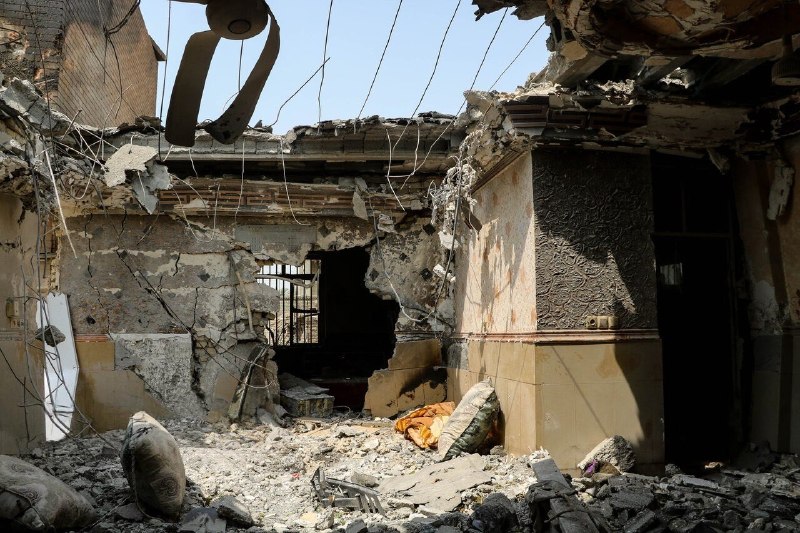
By 17:04 UTC on 12 June 2026, a senior US official had told reporters that Washington and Tehran were within days of signing an arrangement to reopen the Strait of Hormuz and, in the same instrument, dismantle Iran's nuclear program. The disclosure, carried by the South China Morning Post and amplified within hours by prediction-market feeds tracking the file, framed a deal whose ambition is unusually broad: a transit-corridor concession, a verified rollback of enrichment and weapons-related infrastructure, and a money-for-compliance architecture that holds released funds hostage to follow-through. Whether that architecture holds depends on a series of unresolved questions, several of which Iranian state media has already used to narrow what Tehran is willing to accept on its own side of the water.
The headlines, taken together, describe a three-part exchange. The United States would lift a sanctions and enforcement regime that has, for the better part of a year, throttled the flow of crude, condensate and LNG out of the Gulf. Iran would, in turn, allow commercial traffic through the strait to resume on terms that are themselves in dispute, and would dismantle the parts of its nuclear programme that the deal's drafters consider militarily relevant. Funds owed to Iran — frozen oil revenues, escrow balances, the unliquidated residue of earlier deals — would be released only as discrete compliance milestones are met, an arrangement the reporting describes as "withholding of funds until compliance is verified." The structure is not a Joint Comprehensive Plan of Action in miniature; it is closer in spirit to a sequenced escrow agreement, with maritime transit as the visible deliverable and the nuclear file as the substantive one.
The reported framework, in plain terms
The terms circulated on 12 June describe a deal with four moving parts. First, the destruction and removal of nuclear material from declared Iranian sites, with the International Atomic Energy Agency given inspection access on a schedule the drafters have not publicly disclosed. Second, the dismantling of Iran's nuclear programme in the sense that phrase carries in Western capitals — enrichment capacity reduced, centrifuge cascades taken offline, weaponisation-related R&D closed out — rather than in the narrower sense Tehran has historically used, which treats any enrichment above zero as a sovereign right. Third, the release of Iranian funds, in tranches, conditional on verified compliance with each preceding step. Fourth, the resumption of commercial shipping through the Strait of Hormuz, in volumes and under rules that are the most contested element of the package.
The transit piece is where the framework is most exposed. The 12 June reporting indicates that Iran's official news agency IRNA has signalled Tehran will not restore traffic through the strait to pre-war levels, contradicting earlier accounts that commercial shipping would return to normal within a month of signing. The contradiction is not a minor drafting question. Roughly a fifth of the world's traded oil moves through the waterway, and the gap between "reopen" and "reopen to pre-war volumes" is the difference between a market that clears within a quarter and one that carries a structural premium for years. IRNA's framing — the strait returns to a managed flow, calibrated to Iranian interests and to the security situation in the Gulf — implies Tehran intends to retain the corridor as leverage even after the deal is signed.
Why the gap between the two narratives is the story
Two reads of the 12 June reporting are plausible at the same time, and the difference between them is large. The optimistic read, which the Polymarket-tracked official's statement and the South China Morning Post's account both lean toward, is that a deal is genuinely within reach: the architecture has been agreed, the sequencing has been worked out, and the remaining items are operational rather than political. In that reading, IRNA's cooler tone reflects the bargaining posture of a state that needs to appear tough at home, not a substantive objection to the deal's spine. The pessimistic read, which IRNA's own language supports, is that the gap between "reopen" and "reopen fully" is a designed-in feature — that Tehran intends to deliver a partial normalisation of the strait, keep a credible threat of further disruption in reserve, and use that threat as ongoing leverage over both the nuclear file and the broader sanctions architecture.
The reading that fits the evidence best is the unsatisfying one in the middle. The deal's broad strokes have been agreed by negotiators who have spent months on the file. The transit volume and the speed of nuclear dismantlement are the items that will be settled last and renegotiated first. IRNA's positioning is the kind of thing Iranian state media does when a deal is genuinely close but the public framing at home has not yet been completed. The risk is that "close" in this kind of negotiation has a long tail: every missed milestone, every disputed inspection, every cargo held up at the strait becomes a fresh crisis over the terms already on paper.
What the deal is actually buying Washington
For the United States, the strategic logic is unusually clean. A reopened strait, even at reduced volume, relieves the oil-price pressure that has been the most visible cost of the confrontation and the most direct hit to the administration's domestic political position. A dismantled Iranian nuclear programme, even one verified incrementally, removes the single capability that has justified the sanctions architecture in the first place. A fund-release structure that ties money to compliance gives Washington a continued enforcement instrument without the political cost of permanent sanctions relief. Read together, the deal converts an open-ended military confrontation into a managed compliance regime — the kind of arrangement that is easier to defend at home, easier to extend, and easier to wind back if Iran slips.
The cost is that Washington is also accepting, in writing, that Iran retains a sovereign nuclear programme of some kind. The phrase "dismantling of Iran's nuclear program" in the 12 June reporting describes a reduction, not an abolition. Enrichment at some level, on some timetable, under some inspection regime, is the deal's understood residue. Whether that residue is small enough to satisfy Israel, the Gulf monarchies, and the relevant committees in Congress is a separate question from whether it is acceptable to Tehran — and it is the question that will determine whether the deal holds politically in Washington after it is signed.
What Tehran is buying, and what it is not giving up
For Iran, the deal is asymmetric in a different direction. The economic relief is real: even a partial normalisation of the strait, combined with the release of frozen funds, would give the Islamic Republic fiscal headroom it has not had in years. The political cost is also real. Accepting a sequenced, inspection-based dismantlement of the nuclear programme is, in the language of the Iranian street, a concession the reformist camp will be pressed to defend and the conservative camp will be pressed to reject. The IRNA positioning on the strait — "not to pre-war levels" — is best read as the public framing of that domestic battle: a way for the government to claim, plausibly, that the deal preserves Iran's leverage even as it accepts constraints the 2015 arrangement did not impose.
The structural point is that the deal, if it is signed, does not normalise Iran's relationship with the United States. It normalises a specific transaction: transit in exchange for nuclear rollback, with money in escrow as the binding mechanism. Tehran is buying time and money; it is not buying a settlement of the broader conflict. That matters for everyone who has to plan around the deal's lifespan, because it implies the arrangement is, by design, renewable as a source of friction rather than terminal as a resolution.
What remains genuinely uncertain
Three items in the 12 June reporting are not yet pinned down by anything in the public thread. The first is the timetable for the destruction and removal of nuclear material. The framework describes the action; it does not give a calendar. The second is the inspection regime — who inspects, on what cadence, with what access to sites the IAEA has not previously entered. The third, and the most consequential, is the operational definition of "reopen." IRNA's statement that traffic will not return to pre-war levels implies a managed corridor; the senior US official's framing implies something closer to a return to the status quo ante. Those two definitions cannot both be right, and the deal's first crisis will arrive when they collide at the first disputed tanker transit.
What the sources do not yet disclose is the position of the Gulf monarchies and Israel — the two outside actors whose acquiescence or opposition will determine whether the deal, once signed, holds. The reporting on 12 June is Washington-and-Tehran-centric. The architecture may be agreed, but the politics of the agreement, on both sides of the Gulf and in the Knesset and on Capitol Hill, has not yet been litigated. The deal that is reportedly within days of being signed is, on the evidence available, a deal whose real contest is still ahead of it.
This publication tracks Iran file reporting across Reuters, Axios, the South China Morning Post and Iranian state media, and weights IRNA's positioning as a primary source for Tehran's bargaining floor, not as background colour.
Wire provenance
This editorial synthesis draws on the following public wire/social posts:
- https://x.com/polymarket/status/
- https://x.com/unusual_whales/status/
- https://x.com/unusual_whales/status/
- https://t.me/SCMPNews/
- https://en.wikipedia.org/wiki/Strait_of_Hormuz
Follow the event.
These dated source records provide context. They do not retrospectively verify this archive article.
Separate what the nuclear watchdog reported from what it could not determine after the June 2025 strikes.