Strait of Hormuz on a knife edge: drones down, talks alive, oil markets on hold
Two Iranian drones shot down near Hormuz in 24 hours, an Iranian naval intercept of a commercial vessel, and a presidential claim of an imminent war deal have left the world's most consequential shipping lane suspended between escalation and accommodation.
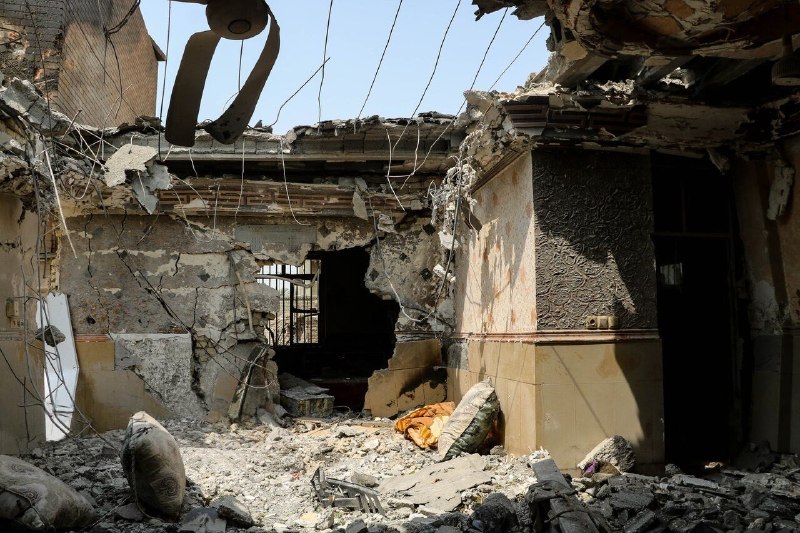
The Strait of Hormuz woke up on Thursday, 12 June 2026, the way it has gone to sleep most nights this spring: armed, twitchy, and short on trust. By 06:19 UTC, the United States military had acknowledged shooting down two Iranian drones in the waterway, the second such incident in twenty-four hours, according to a Middle East Eye live-blog dispatch citing US Central Command. By 06:12 UTC, Iranian state media had carried its own counter-image: naval forces intercepting a commercial vessel in the same stretch of water, an act that, in the choreography of the Gulf, reads as deliberate signalling rather than routine boarding.
The pattern is no longer episodic. It is operational. The two incidents land on the same morning that the US president, Donald Trump, told reporters that a deal to end the war with Iran was "close," and that a separate prediction market had begun pricing a roughly even-money chance that Washington would agree to unfreeze Iranian assets by the end of the month. The Strait of Hormuz — roughly 21 percent of global petroleum liquids pass through it on a normal day — is once again the place where the world's energy supply, the Middle East's balance of power, and an American presidential communications strategy intersect on a single, narrow band of water.
The morning's two incidents, side by side
The asymmetry is the point. The US framing, carried by the Middle East Eye live blog at 06:19 UTC, was defensive: two Iranian drones downed near the strait, a kinetic response to an act of approach. The Iranian framing, carried by the same outlet four minutes earlier citing Iranian state media, was offensive: a vessel intercepted, an assertion of authority over a corridor that Tehran has long treated as its own maritime neighbourhood.
Neither report is dispositive. The US account does not specify the drones' payload, mission profile, or the platform used to shoot them down; the Iranian account, sourced to state outlets, does not name the vessel, its flag, or the legal basis offered for the boarding. What is clear is that both sides are now operating in the same square miles of water with rules of engagement that are being written in real time, and being narrated in real time, in two mutually exclusive grammars.
Trump's "close" — and what prediction markets are saying
The kinetic activity sits on top of a diplomatic track that has its own strange weather. At 05:25 UTC on 12 June, Reuters reported Trump as saying that a war-ending deal with Iran was "close," without elaborating on terms, sequencing, or the Iranian response. The line tracked with a statement the previous evening, reported at 18:24 UTC on 11 June, that Iran could receive "the greatest deal in history" if it "surrenders & declares the U.S. is the greatest power" — a formulation that does not describe a deal so much as a capitulation ceremony.
Markets, which have to take a view, are hedging. Polymarket, the prediction platform, listed at 01:34 UTC and again at 01:21 UTC on 12 June a 51 percent probability that Trump would agree to unfreeze Iranian assets by 30 June — a thin majority that, in a market of this kind, is a coin-flip with commission. The market's question is narrower than the president's rhetoric: not "war or peace," but whether a specific financial lever, asset release, will be pulled in the next eighteen days. That narrow question is, in some ways, the most informative number in the public record, because it forces a view on the operational meaning of "close."
The oil market's silence, and what it isn't telling you
For all the visible fire, the energy market's reaction has been contained. The thread of reporting surfaced here does not include a price move; the absence is itself the data point. Two drone shoot-downs in twenty-four hours would, in any of the last four decades, have lit the Brent tape. The fact that the visible signal is muted suggests one of three things: traders are pricing a high probability of a deal, traders are pricing a high probability of escalation that ends in regime change rather than sustained disruption, or the relevant risk has already been priced over the months of tension that preceded this week.
The most plausible read is a mix of the first and third. The shipping-insurance market — the cleaner signal of all — will tell the truth first; war-risk premia for Hormuz transits in late spring 2026 have, by the standards of past Gulf crises, been elevated but not stratospheric, indicating a market that believes the war is real but that the strait will, on balance, stay open in tranches. That is a defensible read. It is also the read that gets blown up first if the drones start carrying more than sensors.
What Iran wants, what Washington can deliver, and the unfreezing question
The narrowest, most concrete item on the table is the release of Iranian assets frozen in foreign accounts, mostly in Iraq, South Korea, Japan, and several European jurisdictions accumulated under successive US sanctions architectures. The Iranian negotiating position has long been that any durable arrangement requires these funds to move. The American negotiating position, as expressed in Trump's public statements, has been that movement of funds is conditional on concessions on enrichment, missile programme scope, and regional proxy behaviour.
The Polymarket contract is the cleanest available signal because it isolates a single, observable act — agreement to unfreeze — from the larger question of whether the underlying deal holds. A 51 percent price suggests the market believes Washington will move on assets even if the broader settlement is partial, delayed, or stripped of its more ambitious items. That is a reasonable base rate. Asset unfreezes have historically been the early, confidence-building component of US-Iran deals, including the 2015 Joint Plan of Action and its tortured 2015-2018 implementation; they have also been the part most easily reversed by the next administration.
The structural frame: a corridor run by two nervous powers
What is being tested in the Strait of Hormuz this week is not a balance of power so much as a balance of attention. The waterway is, in legal terms, an international strait under the United Nations Convention on the Law of the Sea; transit passage is supposed to be uninhibited. In operational terms, it is a corridor run by two nervous powers, each of which has the capacity to make life difficult for the other, and each of which has an interest in not being the one who shut the door.
Iran's strategy in the strait has, for two decades, been calibrated harassment: boarding commercial vessels, seizing tankers, harassing US Navy helicopters, occasionally capturing crew, and then releasing them after the news cycle peaked. The point was never to close the strait — Iran is the larger neighbour and a closure would damage its own oil exports disproportionately. The point was to remind every importer, every underwriter, every shipowner that the safest tonne of Gulf crude is the one that doesn't transit Hormuz.
The US strategy has been presence, with the periodic escalation. A carrier strike group in the Arabian Sea; shoot-downs of drones; sanctions enforcement; and, on the diplomatic side, a presidential rhetoric that oscillates between "greatest deal in history" and "continue bombing tonight," a 15:17 UTC post on 11 June reported by the Unusual Whales account on X. That is not a coherent negotiating posture. It is, however, an effective one for a domestic political audience that responds to image more than to text.
The counter-narrative: the deal that isn't a deal
The alternative read of the morning's data is that there is no deal in progress at all, and that what we are watching is a managed escalation designed to produce a set-piece signing ceremony that both sides can claim as a win without either having to actually change much. From this view, the drone shoot-downs are the price of admission; the Iranian boardings are the matching Iranian price of admission; the prediction market is a thermometer for a fever that is being sustained rather than broken.
The argument has some force. Iran's regional posture — its network of allies in Lebanon, Iraq, Syria, and Yemen — is not on the table in any deal that the US could sign. Its enrichment programme, whatever its civilian justifications, is the part of its nuclear infrastructure that the JCPOA most constrained and that any successor deal will most constrain; the Iranian domestic politics of accepting a freeze on enrichment after this much pain is severe. A deal in which the United States unfreezes assets and Iran makes cosmetic concessions on paper, with no on-site verification, is the deal both governments are most likely able to sell. It is also the deal most likely to break within a year.
Stakes: who wins, who loses, on what clock
The narrowest stake is the eighteen days between now and 30 June, the window in which the Polymarket contract resolves. If the assets unfreeze, the Iranian government gets a credibility win it badly needs, the Trump administration gets a deliverable for its base, and the oil market gets one fewer thing to worry about. If they do not, the escalatory pattern of the last several weeks — drones, boardings, presidential taunts — becomes the new floor, and the next incident will be priced as a step toward a closer-than-expected kinetic ceiling.
The medium stake is the Gulf's broader security architecture. Saudi Arabia, the United Arab Emirates, and Qatar have, since 2023, conducted a quiet diplomatic opening with Tehran, partly brokered by China. That opening assumed that the US would not be a spoiler. The current American posture, in which the Strait is being treated as a venue for serial incidents, complicates that assumption and pushes Gulf monarchies toward a more explicit hedging posture of their own — including, in extremis, the long-discussed but never-built pipeline corridors that would bypass Hormuz entirely.
The long stake is the question of what a US-Iran war, or a US-Iran deal, means for the global energy transition's timeline. Hormuz at high risk is bullish for renewables and for non-Gulf producers; Hormuz at routine risk is bearish for both. The current ambiguity is, perversely, the worst of both worlds for long-term capital allocation, because it forces a discount rate on Gulf-region investment that the underlying economic fundamentals do not justify.
What remains genuinely uncertain
The public record is thinner than the rhetoric. The two drone incidents reported in the live blog are not, in the materials available, attributed to a named Iranian unit, platform, or commander; the vessel intercepted by Iran is similarly unflagged and unnamed in the cited state-media report. The Reuters line on Trump is a single sentence; the Polymarket price is a single number; the Unusual Whales report is a single post. None of these is a basis on which to build a confident forward view.
What the public record does support is the narrower claim that the Strait of Hormuz in mid-June 2026 is being treated, by both Washington and Tehran, as a venue in which calibrated pressure can be applied at acceptable cost, and that the relevant question for outside observers is not "will there be an incident" — there will be, and there have been — but "what kind of incident, with what payload, on which side of the ledger." On the evidence available this morning, the answer is: small drones, boardings without casualties, rhetoric from both capitals, and a market that is, for now, willing to look through the noise. None of those things are stable equilibria. Each is a phase in a negotiation that has not yet, in any verifiable sense, begun.
How Monexus framed this: the wire's instinct this week is to lead on the kinetic incidents and to treat the Trump "close" line as colour. The structural read is that the two are the same story — a negotiation conducted through military signalling, in a corridor where the signalling can be misread. Monexus treats the prediction market as a serious instrument for a narrow question (asset unfreeze by 30 June) and a poor instrument for the larger one (war or peace), and has reported it accordingly.
Wire provenance
This editorial synthesis draws on the following public wire/social posts:
- http://reut.rs/43PFDw1
Follow the event.
These dated source records provide context. They do not retrospectively verify this archive article.
Separate what the nuclear watchdog reported from what it could not determine after the June 2025 strikes.