Strait of Hormuz incident: what we know — and don't — about the Sirik explosions
Explosions near the southern Iranian port of Sirik on 11 June 2026 have produced competing Iranian and US-aligned accounts of a naval confrontation in the Strait of Hormuz, with oil-market and regional escalation stakes hanging in the balance.
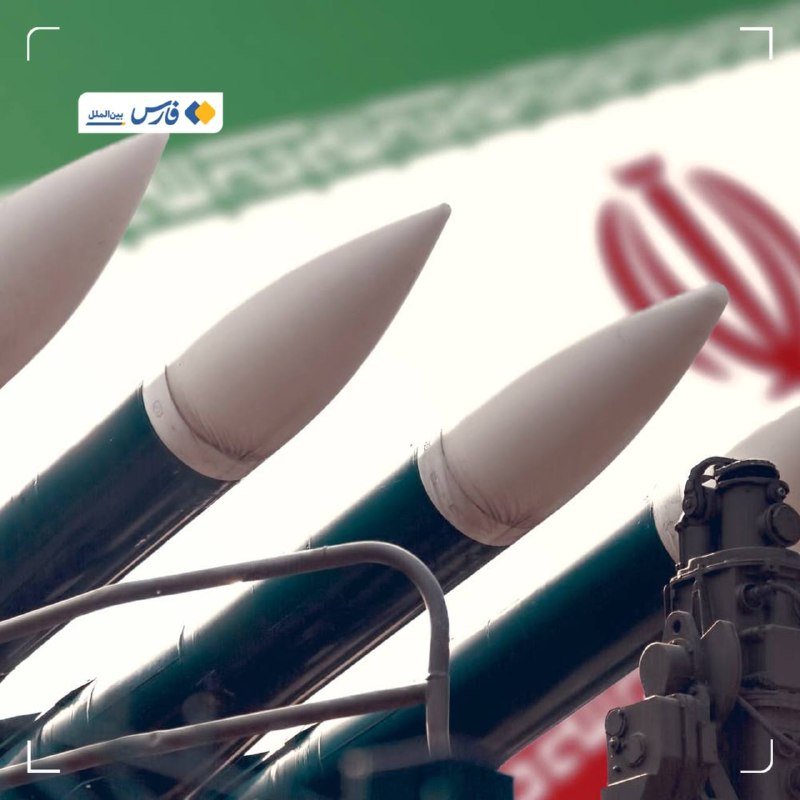
Explosions were heard on the evening of 11 June 2026 near Sirik, a port town in Iran's southern Hormozgan province, and within minutes the world's two main versions of what had happened were already diverging. By 22:27 UTC, Iranian state broadcaster Press TV was reporting that Iranian forces had prevented the passage of an "offending oil tanker" in the Strait of Hormuz. Less than an hour later, at 23:02 UTC, Iranian television cited the Islamic Revolutionary Guard Corps Navy as saying it "will deal very firmly with any ship that attempts to cross" the waterway. Meanwhile, the Telegram channel BellumActaNews, citing the Sirik governor, claimed that the United States Air Force was bombing IRGC Navy vessels in the strait — an account that, if accurate, would represent a dramatic escalation by Washington into a waterway through which roughly a fifth of global oil normally transits.
The episode is the latest reminder that the Strait of Hormuz remains the most over-determined flashpoint in energy geopolitics: a 33-kilometre shipping lane that almost any disruption to can move Brent crude by single-digit percentages within hours, and almost any serious disruption to can move it by double digits. What is unusual this time is the speed with which Iranian state media moved from hedging ("the causes of the explosions in Sirik have not yet become clear," al-Alam Arabic reported at 21:39 UTC) to claiming a successful enforcement operation. The two-step pattern — first disavow knowledge, then narrate a victory — is consistent with how Iranian security institutions have handled previous maritime confrontations, but it is also consistent with the early stage of an information operation designed to set the diplomatic frame before independent verification arrives.
The Iranian account, as state media have built it
The official Iranian version, assembled across al-Alam Arabic and Press TV between roughly 21:39 and 23:02 UTC on 11 June, rests on three claims. First, that the explosions near Sirik were caused by Iranian action against a vessel attempting to cross the Strait of Hormuz in violation of Iranian maritime rules. Second, that the IRGC Navy is the actor conducting that enforcement, and that it is acting in a deliberately visible way to deter further attempts. Third, that any ship that "attempts to cross" will be "dealt with very firmly" — language whose ambiguity is presumably the point.
What the Iranian account conspicuously does not say is whether a vessel was actually struck, what flag it flew, what cargo it carried, or whether there were casualties. Press TV's headline — "Iranian forces prevent passage of offending oil tanker" — describes an intercept, not a sinking. The al-Alam Arabic formulation at 22:58 UTC, attributing the sounds of the explosions in Sirik to "our response to a ship that was trying to cross Hormuz," is more assertive but still falls short of admitting a hit. The framing is enforcement, not engagement.
The US-aligned account, as the Sirik governor reportedly put it
The competing version originates with the Sirik governor and was carried by BellumActaNews at 22:06 UTC. According to that account, US Air Force assets struck IRGC Navy ships in the strait. This is a more escalatory claim on its face — it would put Washington on the offensive, not on the receiving end of an Iranian intercept — and it is also the version that carries the weakest independent sourcing. BellumActaNews is a Telegram channel that aggregates regional reporting; it does not, on its own, constitute a confirmation from either the Pentagon, the Iranian foreign ministry, or a wire service with correspondents in Hormozgan. The Sirik governor's office has not, to the knowledge of the sources available at publication, issued a parallel statement on a verifiable government channel.
The structural point worth holding onto is that the two accounts are not symmetric in credibility. Iranian state media is, on these matters, a primary actor: it speaks for the institution it claims was enforcing the strait. The US-aligned account is, at this stage, a single Telegram relay of a single local official's reported remarks. Both should be reported. Both should be flagged. They should not be weighted equally.
What the Strait of Hormuz actually is — and why this matters
The strait is the chokepoint between the Persian Gulf and the Gulf of Oman, bordered by Iran to the north and Oman to the south. At its narrowest point it is roughly 33 kilometres wide, with shipping lanes reduced to a three-mile-wide buffer in each direction. On a normal day, something close to 21 million barrels of oil pass through it, alongside a large share of the LNG that moves by sea. That is why even the threat of disruption moves prices: the market is pricing an option on a tail event, and the option premium rises with each new round of rhetoric.
Iran's leverage over the strait is real but not unlimited. Tehran can harass shipping, detain vessels (as it did with the Stena Impero in 2019, and with multiple tankers in 2021–22), and mine or fast-attack in extremis. What it cannot do, on most analysts' reading, is close the strait for any sustained period without inflicting damage on its own oil exports and inviting a US response it has so far been careful not to provoke at the level of a kinetic exchange. The IRGC Navy's own doctrine emphasises calibrated escalation — enough to signal, not enough to trigger. The 11 June episode, on the Iranian telling, fits that template. On the US-aligned telling, it does not.
Stakes, and what is still genuinely uncertain
The immediate stakes are concrete: shipping insurance premiums for the strait will likely rise in the coming days, oil benchmarks will probably price in a geopolitical risk premium regardless of how the facts eventually settle, and at least one of the two governments involved is going to face the question of whether the incident is the pretext for the next round of escalation. The US Fifth Fleet, based in Bahrain, has historically maintained a heavy presence in the Gulf and the Gulf of Oman precisely so that incidents can be de-escalated through established communication channels. Whether those channels were used overnight on 11 June is not, on the public record, clear.
What remains genuinely uncertain is substantial. The sources do not specify which vessel, if any, was struck, or of what flag. They do not specify whether there were Iranian or US casualties, or whether the US Air Force was operating in the area at all on the evening in question. The most that can be said with confidence is that explosions occurred near Sirik, that Iranian state media has constructed a narrative of successful enforcement, and that an alternative narrative — of US strikes on IRGC Navy assets — is circulating via a Telegram channel citing a local official. Monexus will update this article as wire reporting, official statements, or independent satellite imagery clarifies which of these accounts, or what combination of them, the night of 11 June 2026 actually contained.
Desk note: Monexus is reporting both the Iranian state-media account and the US-aligned account relayed by BellumActaNews, with explicit attribution and provenance, rather than collapsing them into a single wire-style line. The Iranian account is the primary actor's own claim; the US-aligned account is a second-hand local report that has not yet been confirmed by the Pentagon or by a wire service. Readers should treat the question of which side fired first — and whether firing occurred at all in the kinetic sense — as genuinely open.
Wire provenance
This editorial synthesis draws on the following public wire/social posts:
- https://t.me/alalamarabic
- https://t.me/alalamarabic
- https://t.me/PressTV
- https://t.me/BellumActaNews
- https://t.me/alalamarabic