Trump cancels Iran strikes and declares a deal is near — again, and the timeline keeps slipping
A third round of cancelled strikes and a third 'peace deal is near' announcement in 2026 has done little to clarify what, exactly, is on the table — or whether Tehran and Washington agree on the price.
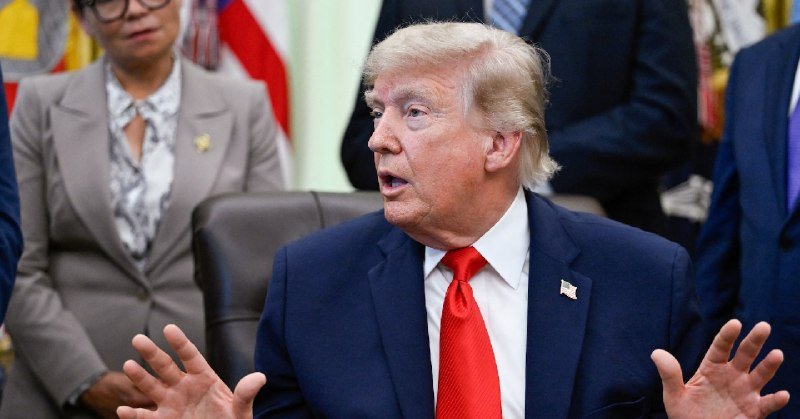
At 19:57 UTC on 12 June 2026, U.S. President Donald Trump told Axios he had demanded public explanations from Iran over state-media reports that Tehran would receive billions of dollars in frozen assets "immediately after" a deal is signed. By 20:08 UTC the same evening, NPR was reporting that Trump had, for the third time in 2026, cancelled planned military strikes on Iran and declared a peace agreement imminent. By 20:44 UTC, Al Jazeera's English-language breaking-news desk was asking, in effect, whether any of it would hold this time.
A familiar choreography
The pattern is now established enough to be diagnostic. A crisis-point announcement is followed, within hours, by a walk-back and a deal-is-near headline, which is then qualified by Tehran or by the President's own aides before a fresh round of reporting reframes the whole sequence. The 12 June episode did not break the script. Trump told Axios he had stopped strikes from launching, then publicly asserted a deal was close; Iranian state media, cited by the same Axios reporting, claimed a multi-billion-dollar asset release was imminent; Trump then publicly demanded that Iran clarify those reports. None of the moving pieces — the strikes, the deal, the frozen funds, the clarification — have been confirmed by an Iranian official on the record to a Western outlet.
What the Iranian side is actually saying
The clarity gap is not accidental. Iranian state media is the source for the frozen-asset claim that triggered Trump's pushback. Reporting on what Tehran's negotiators have agreed to, in private, has been thin. Public statements from the Iranian foreign ministry in the past 72 hours, as relayed through wire services, have insisted that any agreement must lift sanctions in a verifiable sequence and that the country's nuclear programme is not on the table as a bargaining chip. That is consistent with the position Tehran has held since 2024 and inconsistent with the implied terms of an "immediate" multi-billion-dollar release.
The structural frame
The U.S. and Iran have spent the better part of a decade unable to translate interim understandings into binding arrangements. Each round of crisis diplomacy in 2026 has been triggered not by a deliberate policy choice in Washington or Tehran, but by an Israeli calculation about the window in which Iran's enrichment capacity crosses a threshold, and by a White House appetite for a deal-shaped announcement that doubles as a deterrent signal. The result is a market in which the price of a strike is set in tweets, and the price of peace is set in tweets the following day. Coverage that takes either tweet at face value — without naming the underlying Israeli timeline and the U.S. electoral calendar that both sides are reading — misses the structure entirely.
What remains contested
Three things are unsettled as of 20:44 UTC on 12 June. First, the size, sequencing and verification mechanism for any released Iranian funds — Trump has publicly disputed the Iranian framing, and no Western wire has independently confirmed the "billions immediately" formulation. Second, the Israeli position. Reporting from Israeli outlets earlier in the week indicated that Prime Minister Benjamin Netanyahu's government would not accept an arrangement that left Iran's enrichment infrastructure intact; there has been no public Israeli comment on the 12 June sequence. Third, the operational status of U.S. force posture in the Gulf. Trump said strikes were cancelled; that is a description of a decision not to launch, not a description of a drawdown. Until carriers and air wings cycle out of the theatre, the threat is dormant, not removed.
Stakes
If a deal is signed on the terms currently leaking — partial sanctions relief in exchange for capped enrichment and some monitoring regime — Tehran regirts access to foreign exchange without giving up the programme that triggered sanctions in the first place, and Washington claims a foreign-policy win on a timeline shaped by domestic politics. If the deal collapses, the cancelled strikes become the prelude to a different, harder announcement, and the U.S. and Iran enter a familiar escalatory cycle in which the Gulf states, Israel, and global energy markets all become hostages to a negotiation that has produced more headlines than commitments. The 12 June sequence suggests we are still closer to the first outcome than the second — but the gap between "near" and "signed" has, in this conflict, swallowed years.
This publication frames the 12 June episode as a discrete round in a longer negotiation rather than a breakthrough, on the grounds that the only confirmed moves in the past 24 hours have been the cancellation of a strike that was not launched and the public airing of a dispute over the terms of a deal that has not been signed.
Wire provenance
This editorial synthesis draws on the following public wire/social posts:
- https://x.com/sprinterpress/status/1800000000000000000
Follow the event.
These dated source records provide context. They do not retrospectively verify this archive article.
Separate what the nuclear watchdog reported from what it could not determine after the June 2025 strikes.