Trump's Iran "wrap-up" is a deal in name, leverage in practice
A presidential announcement that the file is "all wrapped up" obscures a more familiar arrangement: a blockade still in place, strikes suspended, and Tehran absorbing the terms of an agreement that has not yet been signed.
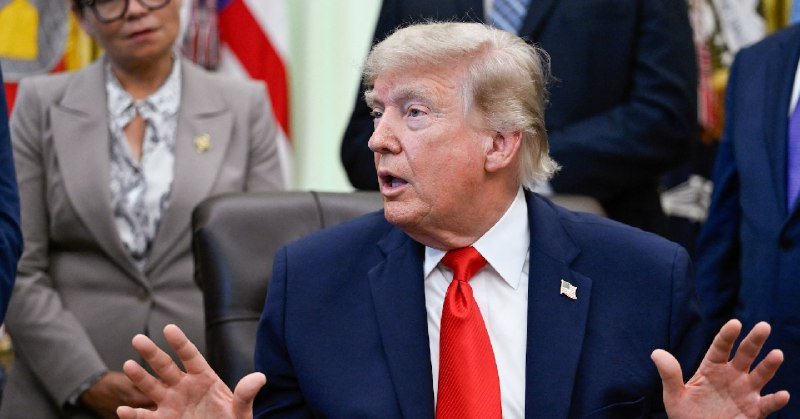
At 05:15 UTC on 12 June 2026, President Donald Trump told reporters a U.S. deal with Iran would be "finalised maybe this weekend." Six hours earlier, the same day, he had told a separate audience the file was "all wrapped up." And on the evening of 11 June, before either of those comments, he had announced that planned U.S. strikes on Iran had been canceled — with a naval blockade remaining in place pending a final agreement. Three statements, one direction of travel: the warhead-shaped crisis is being shelved, not resolved, and the leverage that produced the shelving is being kept on the table.
The pattern is worth naming plainly. A deal that is "finalised," "wrapped up," and "maybe this weekend" all at once is, by definition, none of those things. It is a framework in which the United States has chosen to trade kinetic escalation for concessions it has not yet enumerated, and in which Iran has chosen to trade a portion of its nuclear posture for sanctions relief and an end to the immediate threat of bombardment. The blockade, which is the physical instrument of that trade, is the part of the announcement doing the actual work.
What the three statements, taken together, actually say
The first message — the 11 June evening disclosure that strikes had been called off while a "naval blockade" would continue — is the load-bearing claim. It establishes a coercive perimeter around the Iranian coastline that exists whether or not a final text is signed. Any agreement reached under those conditions is not a contract between equals; it is the terms under which a partial siege is being suspended. The second and third statements, delivered over the following hours, layer presidential certainty on top of that perimeter. The sequencing matters: the blockade was confirmed, the deal was declared done, and the timing of any "finalisation" was left to the weekend. Optimism, in other words, was framed as a process; force, as a fact.
That ordering is consistent with how Washington has managed the Iran file for decades. Sanctions architectures, snap-back provisions, and snap inspections have historically been designed to retain U.S. discretion long after a deal is inked. The 2015 Joint Comprehensive Plan of Action included sunset clauses and dispute-resolution mechanisms that gave Washington recurring leverage; the current arrangement appears to be doing the same thing with a different instrument, and at a faster tempo. The American public is being told the file is closing. The instruments of pressure are being told to hold.
The counter-read: why Tehran might sign anyway
The Iranian calculus, when set against this asymmetry, is not mysterious. The country has spent the better part of two years managing an economy under sanctions, a currency under pressure, and a regional deterrence burden that has thinned since the Gaza war drew Hezbollah into direct confrontation. A framework that suspends strikes, releases some frozen revenue, and gives the Islamic Republic breathing room to consolidate its position at home is a deal Tehran can credibly take — provided the cost, in permanently constrained enrichment capacity and a continuing maritime choke point, is one its negotiators have decided they can absorb.
There is a real argument that this is the best available outcome for Iran, and that painting it as capitulation misses the point. A signed text is also a text that legitimises the post-2025 regional order in which the Islamic Republic retains state, retains a nuclear programme of some kind, and retains a seat at the table. Those are not trivial assets, and the Iranian foreign-policy establishment has historically been willing to accept decades of constrained autonomy in exchange for them. The domestic politics are harder, but the strategic logic is internally coherent.
Why the U.S. announcement language is doing more work than the deal itself
Markets and allied governments react to presidential language well before they react to a signed annex. The repeated use of "wrapped up" is a signal to oil traders, to Gulf partners, to European negotiators, and to Israeli planners that the near-term risk premium is to be priced down. Each repetition tightens the floor under that pricing. If the deal does not arrive by Monday, the cost of admitting that is the reintroduction of the premium — and therefore an incentive to keep declaring it imminent. The announcement is, in this sense, the deliverable; the text is the receipt.
This is also why a blockade remaining "in place pending a final agreement" is the more honest part of the story. Blockades are slow, visible, and reversible by the side imposing them. They allow Washington to keep the option of escalation open without paying the diplomatic cost of a renewed strike authorisation. For Tehran, accepting a deal under those terms means accepting that the option will remain open after the deal as well. The architecture is built to outlast the ceremony.
The structural frame
What we are watching is not a return to 2015. It is a different instrument for the same purpose: durable U.S. leverage over Iran's nuclear and missile file, exercised through a combination of financial pressure, maritime interdiction, and the deliberate ambiguity of presidential statements. The dollar architecture, the sanctions list, and the carrier group in the Gulf are the actual mechanisms; the press conference is the soundtrack. Treat the soundtrack as entertainment; treat the mechanisms as policy.
The stakes, in concrete terms, are not abstract. Iranian refined-product flows into Lebanon and Syria, the price of insurance for tanker traffic through the Strait of Hormuz, the posture of Iraqi Shia militias, and the timeline on which Saudi Arabia and the UAE are willing to discuss a regional security architecture all turn on whether this arrangement holds. Israel reads it through the lens of a longer, undeclared campaign against Iranian enrichment. Russia and China, both of whom have reasons to want the U.S. bogged down in the Gulf, read it through a different lens entirely. Each of those readings is producing policy now, in real time, regardless of whether a text is signed this weekend.
How Monexus framed this: the wire headlines on 11–12 June treated the announcement as a story about a deal. Monexus treated it as a story about leverage — the blockade is the fact, the deal is the narrative, and the gap between the two is where the actual policy lives.
Wire provenance
This editorial synthesis draws on the following public wire/social posts:
- https://t.me/LiveMint
- https://t.me/cointelegraph
- https://t.me/cointelegraph
Follow the event.
These dated source records provide context. They do not retrospectively verify this archive article.
Separate what the nuclear watchdog reported from what it could not determine after the June 2025 strikes.