Trump's Iran deal tease meets an old pattern: the headline outruns the text
A draft memorandum is reportedly days away. Tehran's leaked account is already public, the White House is calling it false, and the original war aims — denuclearisation, missile rollback, regional proxy containment — remain on the table. Markets and the $TRUMP meme coin are pricing the optics harder than the substance.
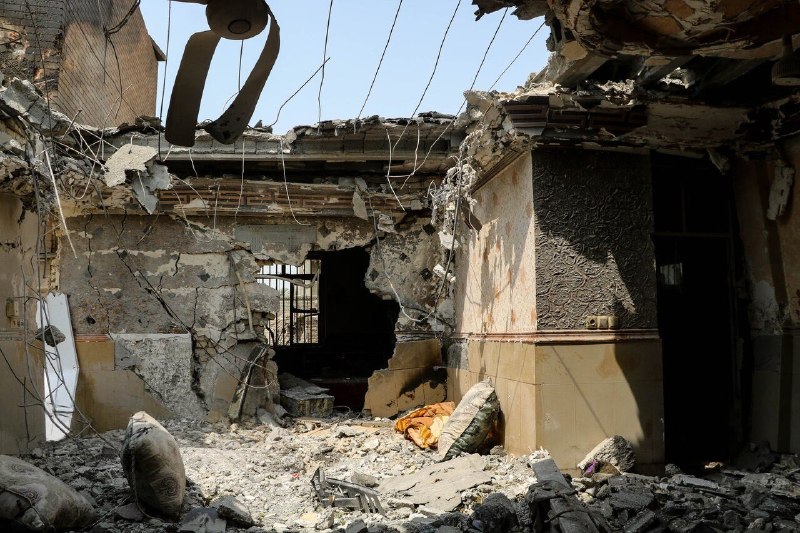
On 12 June 2026, at 19:56 UTC, the Telegram channel ourwarstoday carried the line that has since defined the afternoon's news cycle: Donald Trump saying the United States is close to signing a deal with Iran, a memorandum of understanding to be inked, a war to be wound down. Thirty minutes earlier, an X account associated with the trading-research outlet Unusual Whales reported the Trump administration describing a deal signing as "likely in coming days" while insisting the outcome was not "100%" certain. By 14:20 UTC, Polymarket's news wire had Trump on the record rejecting Iran's leaked version of the agreement, a statement that his office cast as bearing "no relation to the truth." Six minutes later, the same wire carried his warning to Tehran to "get their act together, and fast." By 13:00 UTC, the $TRUMP meme coin was up 22% on the day, a market that has become an unofficial barometer of how seriously the political class — and a slice of the crypto-native right — takes each presidential headline.
The story is not what is being signed. The story is the gap between the announcement and the document, a gap that the war in Iran has made unusually wide and unusually consequential. Each round of US-Iran diplomacy since the Joint Comprehensive Plan of Action collapsed in 2018 has produced a similar choreography: a presidential declaration that a deal is imminent, a leak from Tehran describing a different and more limited arrangement, mutual recriminations about which side moved first, and a market — gold, oil, the rial, or, this cycle, a meme coin — pricing the optics harder than the substance. What is distinct in June 2026 is the speed. The interim deal under discussion appears to be a memorandum rather than a final accord, and the signalling is being conducted as much through prediction markets and trading accounts as through official state channels.
The shape of the MOU, as far as anyone can see
The public footprint of the prospective agreement is narrow. The 12 June ourwarstoday item, drawn from a wire summary, describes only a memorandum of understanding intended to "wind down the war," with the specifics undisclosed. The Polymarket wires from the same day supply the only two verifiable direct quotes from Trump on the record: his denial of Iran's account and his admonition to Tehran. No text has been published by either government. No third-party readout from a Gulf intermediary, Oman, Qatar, or Switzerland — has been confirmed. The Unusual Whales account adds the qualifier that administration officials are not certain the signing will happen at all, a hedge that political reporters will recognise as a routine feature of pre-announcement diplomacy and that financial markets will recognise as a tell.
What is known is what the deal is not. It is not a comprehensive nuclear agreement. The original US war aims in the Iran conflict, the set of objectives the administration set out at the start of hostilities, have not been publicly met in any communiqué, and the ourwarstoday summary explicitly frames the prospective MOU as leaving "key goals … unmet." That phrasing, drawn from the wire item itself, is the most important line in the day's reporting: it is the administration signalling, through a friendly channel, that a deal is coming and that the deal is going to be smaller than the war was fought for.
The competing accounts
The information war around the text is already underway. On one side is the Trump administration, with the president personally rejecting the Iranian account of the agreement as bearing "no relation to the truth." On the other is a leak from Tehran that the White House did not need to name, because the Polymarket wire named it for them. The pattern is familiar from earlier rounds: a draft, a leak, a denial, a hardening of positions inside Iran. The Islamic Republic's strategic interest in such a leak is to lock the United States into a softer text, and the Trump administration's interest in denying the leak is to preserve room to walk away. The market, in this case Polymarket itself, has effectively become a venue for the dispute, with probability feeds moving on each new line attributed to either side.
This is not a new information environment so much as an accelerated one. In 2015, similar gaps took weeks to surface in the press. In 2026, they surface in minutes on trading platforms, with the implication that the political cost of any post-signing surprise has been pre-priced by the people most exposed to it. $TRUMP's 22% move on the day is the most visible artefact of that acceleration, but it is not the most consequential one. The more consequential one is the implicit confirmation, on the record, that the original war aims will not all be met, and that the MOU is being sold as a success in spite of that fact.
Why the goals were never going to be met
The structural problem is older than this administration. The original objectives of the US campaign against Iran, as set out in the run-up to hostilities, included denuclearisation, the rollback of Iran's ballistic missile programme, and a reduction of Iranian support for regional armed formations. None of these are reachable through an MOU, a non-binding instrument that, by design, records convergence on a process rather than on outcomes. MOUs can be useful. They can extend timelines, reopen inspectors, free frozen funds, or schedule the next round of talks. They do not, on their own, dismantle a missile programme or rewrite a state's security doctrine. The history of US-Iran diplomacy is largely the history of mistaking one for the other.
The reporting on 12 June does not specify which subset of the original war aims is being conceded or deferred, and the source items do not name the issues. But the wire language — the deal will "wind down the war," the goals are "unmet" — strongly suggests the MOU is being framed as an exit from active hostilities, with the substantive items moved into a longer negotiation that the deal itself does not commit either side to complete. That is a defensible choice for an administration that wants the war off the front pages and a precedent it can cite. It is a less defensible choice for anyone who set out the original goals and described them as non-negotiable.
Stakes, who wins, who loses
The near-term winners are the actors for whom a signed MOU is itself a deliverable. The Trump administration gets a political win, even a partial one, and the price of that win is visible in the meme-coin ticker: the constituency that treats $TRUMP as a sentiment gauge has been given something to celebrate. Iran's clerical establishment gets sanctions relief, however limited, and the political cover of a deal that is, by construction, narrower than the war. The Gulf monarchies, who are not named in the source items but who are the regional parties most exposed to an indefinite war, get an exit ramp and a chance to resume the cross-Gulf investment flows that the conflict has frozen. The prediction-market ecosystem, Polymarket included, gets continued volume and a high-profile referendum-style instrument to trade.
The near-term losers are the harder cases. The Iranian opposition, in exile and at home, gets a deal that formalises the existing regime's survival without a democratic opening. The original hawks in Washington, who staked their credibility on a maximalist outcome, get the kind of MOU they would have mocked in 2024. And the longer-term credibility of US non-proliferation policy gets another data point, accumulated on top of the JCPOA withdrawal and the subsequent collapse of the inspections regime, that the United States will use force against a nuclear-threshold state, accept a partial settlement, and call it a win. The market, that is to say the rest of the world, watches and updates its priors.
The mid-term question is whether the MOU holds long enough to function. MOUs are not treaties, and they can be repudiated by either side with relatively little diplomatic cost. The Polymarket quote about Iran needing to "get their act together" is a reminder that the window in which the deal can be sold as successful is narrow. If the text is leaked in full and turns out to be thin, the administration will face a credibility problem at home. If the text is leaked in full and turns out to be more substantive than its critics expected, Iran's regional adversaries will face a different credibility problem of their own. The most likely scenario, on past form, is that the MOU holds for a quarter or two, then is renegotiated around a fresh crisis, with the original war aims quietly retired.
What the sources do not say
It is worth being explicit about the limits of the day's reporting. The source items from 12 June confirm three things and leave the rest open. They confirm that a deal is, in the words of the administration, "likely in coming days." They confirm that Trump's view of the deal differs from at least one leaked Iranian account of it. And they confirm that the war's original goals are not, on the available evidence, being met by the document. They do not confirm the text. They do not name the counterparties beyond Trump and the Islamic Republic. They do not name the mediators, the financial terms, the inspection regime, or the missile provisions. They do not specify whether the deal is signed by the president personally or by a deputy. They do not address what happens to US forces in the region, to the oil price, or to the global LNG market, all of which will be affected.
A reasonable reader, given only the source items, can conclude that a deal is imminent, that it is contested, that it is partial, and that it is being priced accordingly. The reader cannot conclude, on this evidence, that it is comprehensive, that it is durable, or that it is the deal the war was fought for. The pattern is the pattern of the last decade, executed faster, with more variables, and watched more closely by markets that did not exist the last time this cycle ran. That is itself a story. The headline is not, yet, the text.
Desk note: Monexus is framing this as an MOU-against-unmet-goals story rather than a deal-or-no-deal story, on the strength of the wire language itself. The competing-reads beat is being carried by the Polymarket attribution and by Trump's direct quotes; the structural frame is the gap between war aims and the non-binding instrument being used to wind the war down. The $TRUMP move is being read as a sentiment artefact, not as policy news.
Wire provenance
This editorial synthesis draws on the following public wire/social posts:
- https://t.me/ourwarstoday
- https://en.wikipedia.org/wiki/Joint_Comprehensive_Plan_of_Action
- https://en.wikipedia.org/wiki/2025%E2%80%9326_United_States%E2%80%93Iran_crisis
- https://en.wikipedia.org/wiki/Memorandum_of_understanding
Follow the event.
These dated source records provide context. They do not retrospectively verify this archive article.
Separate what the nuclear watchdog reported from what it could not determine after the June 2025 strikes.