Deal-or-Strike Week: Inside the 48 Hours When Trump Talked Down a Ground War on Iran
Within a single Thursday, President Trump told Axios a deal was days away, told CNN he had pulled back from a ground operation, and Iranian state media accused the United States of striking residential areas. The week crystallises a question that has followed the Iran file for two decades: is the White House negotiating, signalling, or both at once?
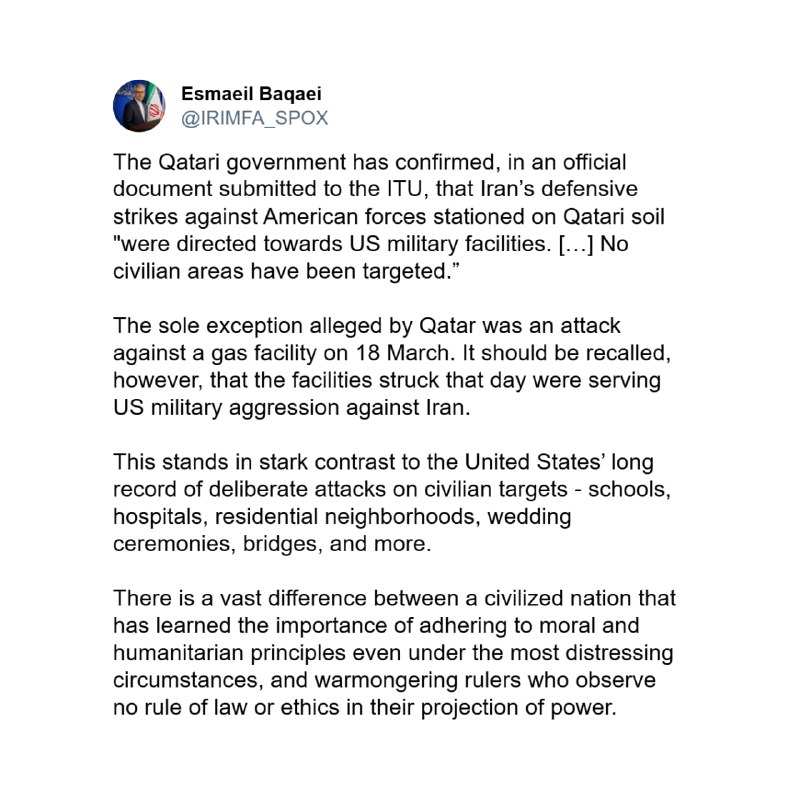
By 17:56 UTC on Thursday 12 June 2026, the day's three competing storylines on the United States and Iran had each found a venue. Iranian state agency Tasnim, writing in English on its Telegram channel, declared that there were "no compliments to those who think that the enemy did not attack residential areas" — a frame that, even as negotiations reportedly continued in third-party capitals, treated the previous night's exchanges as an established atrocity. Hours earlier, at 17:02 UTC, the same Tasnim English channel had headlined a CNN report saying President Donald Trump had halted a planned ground mission against Iran over fears of mass casualties. And at 16:57–16:58 UTC, two further wires — Axios via Clash Report and the Geopolitical Watch feed — carried a Trump interview in which the president said he still believed a deal with Iran could be signed "over the weekend or on Monday."
Three messages, all on a single Thursday, all nominally about the same crisis. Read together, they are not a contradiction. They are the operating logic of a Middle East file in which the gap between an off-camera diplomatic track and an on-camera threat track has been weaponised by every principal involved.
The pattern now playing out — explicit deal talk inside a 72-hour window, paired with an active bombing campaign and an active public refusal to rule out escalation — is the most concentrated version of the Iran playbook Washington has run since 2018. It is also the first time in this negotiation cycle that the gap between Trump's domestic political incentives and his diplomatic incentives has been on such public display. The question is not whether a deal will be signed. The question is which Trump — the dealmaker who told Axios's Barak Ravid he wanted an agreement "this weekend," or the commander-in-chief who has spent the previous night striking Iranian territory — is doing the talking.
What happened in the 48 hours before 12 June
According to the Telegram feeds circulating on Thursday afternoon, the run-up to the day had been heavy with kinetic action and equally heavy with rhetorical escalation. Tasnim's English wire, at 17:02 UTC, led with a CNN report that Trump had halted a planned ground operation against Iran out of concern for mass casualties. The Tasnim framing was characteristically stark: the headline did not say "the United States considered a ground operation and reconsidered." It said Trump "halts" it, and it attributed the decision to "fear" — a word choice that puts the moral weight on Washington rather than on Tehran.
That the story is sourced through Tasnim matters. Tasnim is an Iranian state-affiliated outlet and its English channel frames coverage in a way that positions the Islamic Republic as the wronged party. The same channel's 17:56 UTC item on "residential areas" is the corollary: if Trump halted a ground operation out of fear of mass casualties, the implicit Tasnim argument runs, the air campaign that continues has been producing those casualties all along.
The diplomatic counter-melody was carried by Axios and republished in the Telegram ecosystem by both Clash Report and Geopolitical Watch within minutes of each other on Thursday afternoon. According to the Axios scoop, as relayed by those channels, Trump told the outlet he still believed a deal could be signed "over the weekend or on Monday." The wording is precise. It is the kind of statement a White House puts out when it wants to keep a negotiating channel open without committing to a specific deliverable, and it is the kind of statement Tehran's own mediators will treat as a reading of how much pressure the United States is willing to absorb before walking away.
Why the two tracks are not in tension
The first instinct, in Western editorial writing, is to treat the deal-talk and the strike-talk as competing claims. They are not. They are complementary instruments of a single negotiating posture. Strikes, or the threat of strikes, raise the cost of non-agreement for Tehran. Deal-talk lowers the political cost of climbing down for Washington, by giving the president a domestic narrative in which escalation produced a diplomatic return. Iranian negotiators understand this, and they have used the symmetric playbook for years: project resolve in public, keep a back channel open, and use every kinetic event as both a leverage point and a public-relations vehicle.
The CNN report, as relayed by Tasnim, is itself an instrument of that game. A sitting US president does not normally confirm, through a US network, that he has halted a ground operation against a nuclear-armed-adjacent state. The fact that CNN had the story and that Iran's English-language wire led with it tells you that the news value, on both sides, was the disclosure of restraint. Tehran's propaganda utility in quoting CNN is to demonstrate that the United States blinked. Washington's utility in confirming the disclosure is to keep a future ground option alive while signalling to Gulf partners and to Israel that the cost-benefit arithmetic still favours restraint.
The Axios interview sits inside the same frame. By telling Ravid, on the record, that a deal was days away, Trump is buying himself political cover for whatever happens next. If a deal is signed, he can claim the maximum-pressure-plus-strike approach worked. If talks collapse, the same interview can be repurposed as evidence that he was the reasonable party and Iran walked away. This is the standard operating procedure of any White House negotiating under deadline pressure; what is unusual is the speed at which the public posture is rotating within a single news cycle.
The counter-narrative inside Iran
It would be a mistake to treat the Iranian position as a unitary propaganda voice. Inside Iran, the official line that the United States attacked residential areas — the thrust of Tasnim's 17:56 UTC item — competes with a long-standing domestic constituency that is sceptical of any deal on offer. Iranian state media, in this kind of week, performs two jobs at once: it speaks to a domestic audience that has lived under sanctions and intermittent escalation for two decades, and it speaks to a global audience that consumes Tasnim's English wire as one of the more reliable proxies for what the Islamic Republic's security services want foreigners to hear.
The "residential areas" framing sits inside a pattern. When Iranian cities are struck, the official narrative is that civilians were hit and the international community has been silent. When Iranian proxies strike Israeli or Gulf targets, the framing is that those strikes are responses to occupation or to the broader regional posture. The two are not inconsistent inside the Iranian information ecosystem; they are sequential justifications. The 12 June framing slots into the first half of the sequence.
What is harder to verify from outside the country is how much of the official framing is believed inside Iran. Anecdotal reporting from the diaspora and the occasional dissident channel suggests a deep reservoir of scepticism toward official statements of all kinds. But the structural fact is that the Tasnim framing is the framing the Iranian state wants foreign negotiators to absorb in real time. Whether or not it is true in every particular, it is the version of events that will be on the table in the next round of talks.
The structural picture in plain editorial terms
What is happening this week is best understood as a third-order test of the maximum-pressure architecture the United States has been running on Iran since 2018. The first order of the architecture was economic: secondary sanctions, oil-export restrictions, banking isolation. The second order was diplomatic: a near-global expectation that any Iranian nuclear work past a defined threshold would be met with force. The third order, the one being tested now, is whether kinetic action and deal-making can be sequenced tightly enough that the threat of further action does the work of actual action.
That architecture has always had a built-in instability. The threat of force works only if the party on the receiving end believes the force will actually be used. Once a sitting US president publicly confirms, through a US cable outlet, that he has held a ground operation back "due to fear of mass casualties," the credibility of the threat recedes. The next time the threat is issued, the Iranian side will discount it. This is the core dilemma of coercive diplomacy: the same act that demonstrates willingness to strike — actual strikes — also demonstrates the cost of striking, and once that cost is on the record, it can be priced in.
The plain-language structural point is this. Coercive diplomacy is a finite resource. The United States has spent a large amount of it in the run-up to 12 June 2026. Whether the deal is signed "this weekend or on Monday," as Trump told Axios, or whether talks collapse and a wider regional confrontation follows, the same basic fact will obtain: the gap between a credible threat and a non-credible threat is what Tehran's negotiators have spent the past two decades learning to measure.
Stakes and what comes next
The immediate stakes, by 17:56 UTC on 12 June 2026, are concrete. If a deal is signed in the 72-to-96-hour window Trump described to Axios, the most likely shape is a mutual de-escalation: Iran freezes or rolls back specified nuclear work; the United States releases frozen Iranian funds, loosens a defined set of sanctions, and reframes its regional posture for a domestic audience that has been told for two decades that any such deal is capitulation. If no deal is signed and the weekend passes without a diplomatic deliverable, the kinetic track resumes. The CNN report, as relayed by Tasnim, suggests the ground option is currently off the table — but the air campaign, by the same reporting, has been producing the kind of "residential area" strikes that make a return to the table harder for Tehran's negotiators to justify domestically.
The longer-horizon stakes run through three corridors. The first is the Gulf. Saudi Arabia, the United Arab Emirates and Qatar have each spent the past five years hedging between the United States and Iran; a successful deal, even a partial one, would reweight that hedge in favour of the United States, because it would suggest that Washington is still capable of managing the regional order. A collapse would push the Gulf states further toward a posture of strategic autonomy, including the China-brokered normalisation track that has been under discussion since 2023.
The second is the nuclear non-proliferation regime. Iran's enrichment work, its stockpile of near-20-percent material, and its stockpile of 60-percent material are not reset by a deal in the way that the 2015 agreement envisaged. Even a successful 2026 deal would be a partial deal, and a partial deal leaves in place the structural incentives for the next Iranian government to resume work when the political winds shift. The third is the United States' own credibility in the non-proliferation space. The sequence of deals struck, abandoned, partially reinstated, and re-abandoned over the past decade is the throughline. A 2026 deal that is signed this weekend and survives to 2027 would be a partial restoration. A deal that is signed and then allowed to lapse, the way the 2015 deal lapsed, would accelerate the slide toward a regional order in which multiple states are nuclear-latent, and in which the formal non-proliferation regime is a legal fiction maintained for diplomatic convenience.
What remains uncertain
The sources do not specify, in the thread material available to this publication, the precise location or scale of the strikes Tasnim referenced in its 17:56 UTC item. They do not specify whether the ground operation CNN reported on was an active plan, a planning exercise, or a posture statement that was always going to be rolled back. They do not specify the names of the Iranian negotiators in the current round, the third-party capital in which the talks are being held, or the specific sanctions or nuclear commitments that would form the spine of a deal. They do not specify the position of the Israeli government, beyond the fact that Israeli security concerns about any deal are an established and ongoing pressure point on the White House.
What is verifiable is the public posture: Trump told Axios he expects a deal in days; CNN, as relayed by Tasnim, reported a ground operation was halted out of fear of mass casualties; Iranian state media is running a civilian-casualty frame for the air campaign. The rest is between the negotiators, the third-party capitals, and the next 72 hours.
This article was assembled from Telegram-channel relays of Axios, CNN and Iranian state wire reporting available as of 18:00 UTC on 12 June 2026. Monexus has not independently confirmed the casualty figures implied in the Tasnim framing, the precise location of the strikes, or the text of any deal framework. Where claims are not in the public record, they have been left out.
Wire provenance
This editorial synthesis draws on the following public wire/social posts:
- https://t.me/tasnimnews_en
- https://t.me/tasnimnews_en
- https://t.me/ClashReport
- https://t.me/GeoPWatch
- https://en.wikipedia.org/wiki/Joint_Comprehensive_Plan_of_Action
- https://en.wikipedia.org/wiki/Iran%E2%80%93United_States_relations
- https://en.wikipedia.org/wiki/Tasnim_News_Agency
- https://en.wikipedia.org/wiki/Axios_(website)
Follow the event.
These dated source records provide context. They do not retrospectively verify this archive article.
Separate what the nuclear watchdog reported from what it could not determine after the June 2025 strikes.
- https://t.me/tasnimnews_en
- https://t.me/tasnimnews_en
- https://t.me/ClashReport
- https://t.me/GeoPWatch
- https://en.wikipedia.org/wiki/Joint_Comprehensive_Plan_of_Action
- https://en.wikipedia.org/wiki/Iran%E2%80%93United_States_relations
- https://en.wikipedia.org/wiki/Tasnim_News_Agency
- https://en.wikipedia.org/wiki/Axios_(website