'Very close, very close, very close': Inside the rhetorical lifecycle of a US-Iran deal
As US bombs fall on Iranian cities and the White House claims a historic surrender, a steady drip of presidential declarations has hardened into a single, testable question: is there a deal at all, or only the appearance of one?
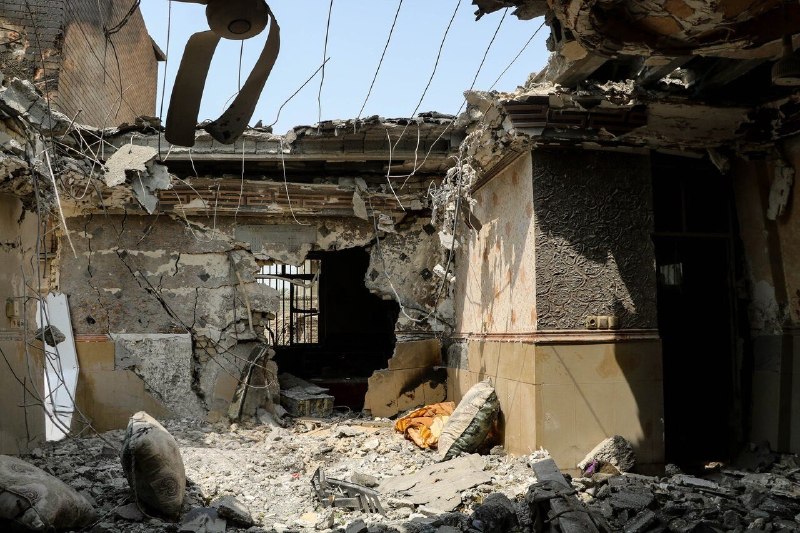
On the morning of 12 June 2026, the United States was bombing Iran for the eleventh day, the Strait of Hormuz was effectively closed to commercial traffic, and the President of the United States was on television telling the country the war was over. A CNN compilation, surfaced the same day by the Beirut-based outlet The Cradle, catalogued a string of recent presidential moments in which Donald Trump declared a deal with Tehran to be imminent, signed, or already the greatest in history — a montage of confidence pitched at an audience that could hear, in the background, the air-defence batteries of a fifth Iranian city firing back [Cradle Media, 12 June 2026, 08:14 UTC]. The contradiction is no longer a matter of spin. It is now the substance of the story.
The pattern, taken in full, amounts to more than rhetorical excess. It is a negotiating doctrine being run live: announce that the other side is desperate, announce that a deal is essentially complete, raise the ante, then announce again. Each cycle resets the baseline against which any future outcome — including a bad one — can be claimed as victory. The risk, after eleven days of strikes and a sealed-off waterway through which roughly a fifth of the world's oil normally moves, is that the doctrine has begun to consume the policy it was meant to serve.
Eleven days in, '95% of the task'
The war itself, in the language the White House now uses, was launched on 28 February 2026. That is the date cited by The Cradle's compilation as the start of the US-Israeli campaign against Iran, and the date Trump has been invoking on air ever since as the clock against which progress is measured. The President's claim, captured on 12 June in a clip circulated by the X account @sprinterpress, is unusually direct: "Today we ended the war with Iran, and they agreed to never possess nuclear weapons — that's what we insisted on. That was the whole purpose. That was 95% of the whole task" [@sprinterpress, 12 June 2026, 07:13 UTC]. The arithmetic leaves five per cent of the war's stated purpose unaccounted for, and the question of which five per cent has, at this writing, no public answer.
The 28 February date is significant because it predates by several months the present escalation. If the campaign began in late February, the intervening period was, in the official telling, a phase of conditional bombing, sanctions pressure, and intermittent diplomacy. The first weeks were framed by the administration as a successful coercion, with the President repeatedly suggesting Iran was on the brink of capitulation. The Cradle's compilation is, in effect, a record of how often that brink was declared crossed.
The agreement that may or may not exist
Two visuals of the supposed deal have been circulating in parallel. On 12 June, @sprinterpress posted a photograph of a single-page document that purports to be the agreement referenced in the President's remarks [@sprinterpress, 12 June 2026, 06:53 UTC]. The text, to the extent it can be read in the image, contains broad commitments on nuclear non-proliferation and a reference to lifting certain economic measures, but no signature block, no date, no counterpart identifier, and no schedule for implementation. Iranian state media, which would be the natural venue for any Tehran concession, has not, as of the available reporting, confirmed the document's contents.
The market, meanwhile, has made its own judgment. Polymarket, the prediction platform, registered a new contract on 11 June trading on whether Iran would accept Trump's framing of a deal that requires it to "surrender and declare the U.S. is the greatest power" [@Polymarket, 11 June 2026, 18:24 UTC]. That market has, historically, been a faster aggregator of elite and quasi-elite opinion than cable news. Its existence is, in itself, a measure of how unsettled the diplomatic record is: a contract trades only when there is genuine uncertainty about the outcome.
The bombardment that 'continues tonight'
If a deal is in hand, it is being executed in an unusual manner. On 11 June, the account @unusual_whales, which tracks administration-adjacent commentary, recorded the President stating that the United States "will continue bombing Iran tonight" [@unusual_whales, 11 June 2026, 15:17 UTC]. Twelve hours later, Polymarket was pricing a contract on whether Tehran would accept a surrender formula. Eight hours after that, the President's clip claiming the war had ended and 95 per cent of the mission was accomplished was on the wire.
The sequence is the story. There is no version of a concluded deal, in any prior conflict the United States has fought, in which the side declaring victory is, on the same day, scheduling the next strike package. The most charitable reading is that the bombardment is aimed at the residual five per cent — the undeclared remainder of the war's purpose — and that the deal refers only to a discrete subset of the conflict. The less charitable reading is that the deal is, at present, a script the administration is reading from, and the bombs are the actual policy.
Closing Hormuz, opening the question
The structural stakes are denominated in oil. The Strait of Hormuz is the single chokepoint through which the bulk of Gulf crude reaches Asian and European markets; its effective closure for any sustained period forces a global repricing that no central bank can neutralise. Eleven days of active combat in Iran's immediate neighbourhood, combined with Iranian naval and aerial denial activity, is functionally that closure. The economic consequences — premium gasoline prices, shipping insurance spikes, secondary sanctions on insurers that touch Iranian tankers — are already feeding back into the domestic political economy of every country that imports Gulf crude. China and India, the two largest single buyers, are now in the position of having to choose between accepting the US-framework deal and continuing to receive Iranian flows. They have not, on the available record, been offered a public role at the table.
That omission is itself a clue. The President's formulation — that Iran should declare the United States the greatest power — is a demand no sovereign government can publicly accept and survive politically. It is, instead, the kind of statement useful inside a domestic audience: a confirmation of the pre-eminence the audience already believes it possesses. Tehran's response, when it comes, will be read against that demand. Whatever Tehran does will be characterised, in Washington, as either compliance or defiance, and the rhetorical scaffolding is already in place to make that characterisation self-fulfilling.
What the evidence does and does not show
The most defensible claim on the public record is the narrowest one. A war that began, in the administration's own dating, on 28 February 2026 is, on 12 June 2026, in its eleventh day of an intensified air campaign. The President has, on multiple recorded occasions, described a deal as imminent, concluded, or 95 per cent complete. A document purporting to be that deal has been photographed and circulated, and its provenance has not been independently confirmed by either the Iranian government or any non-aligned third party. A prediction market is actively trading the question of whether Iran will accept the deal's terms. And the bombing, by the President's own statement, will continue.
What is not on the public record is also worth listing. There is no verified text of the agreement, no confirmed Iranian signature or counter-signature, no joint communiqué, no third-party guarantor, no enforcement mechanism, no schedule for the release of frozen Iranian assets, and no public acknowledgment from Tehran of the "95 per cent" framing. The structural reason each of these is missing may be simple: deals of this scope normally take weeks or months of quiet diplomacy to ratify, and the administration appears to be speaking as if the ratification were already complete.
The plausible alternative reads of the present moment come down to two. In the first, there is a real document, a real negotiation, and a real endgame — the President is simply moving faster than the diplomatic record can confirm, and the bombing is a tightly bounded coda. In the second, the document is a prop, the deal is a posture, and the bombing is the policy. Both are consistent with the available evidence. The market, the Iranian silence, and the absence of any counterpart signature are, on balance, more consistent with the second. The next seventy-two hours — the window in which the next strike package and the next televised declaration will either converge or contradict each other — should resolve the question, one way or the other.
This article was filed from the wire. Monexus treats Polymarket, Telegram channels, and X-thread excerpts as research scaffolding; the named primary-source statements in this piece are taken from clips and images those channels circulated on 11–12 June 2026, and the structural reading is Monexus's own.
Wire provenance
This editorial synthesis draws on the following public wire/social posts:
- https://t.me/thecradlemedia
Follow the event.
These dated source records provide context. They do not retrospectively verify this archive article.
Separate what the nuclear watchdog reported from what it could not determine after the June 2025 strikes.