Trump blames Iran for attack on Indian ships near Hormuz as a draft US-Iran deal leaks
A reported draft deal between Washington and Tehran and a separate claim that Iran attacked Indian-flagged shipping in the Strait of Hormuz collided on 12 June 2026, exposing how thin the information environment remains around a potential nuclear understanding.
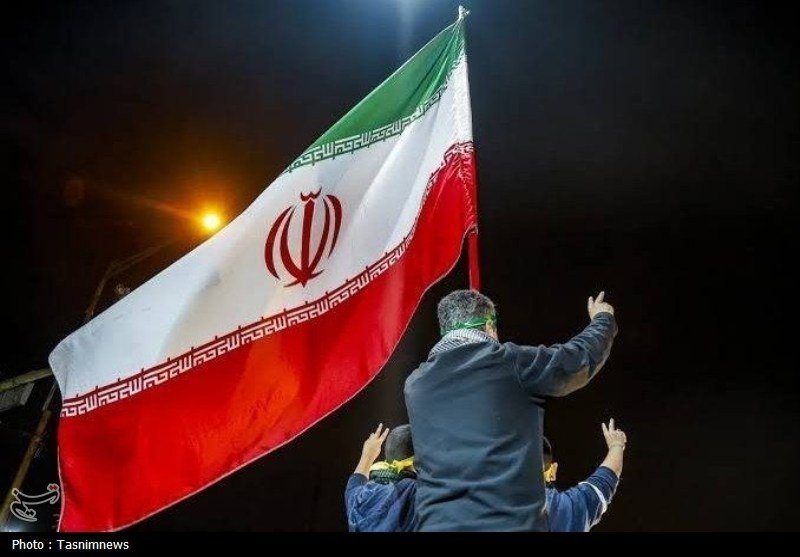
Two unrelated-sounding stories converged on 12 June 2026 to produce a single question: how much does the Trump administration actually know about what is happening in the Strait of Hormuz, and how much of what it says is being coordinated with Tehran before the public hears any of it?
At 15:52 UTC, The Indian Express reported that US President Donald Trump had publicly blamed Iran for an attack on Indian-flagged vessels near the Strait of Hormuz and called the incident "totally unacceptable." Less than fifty minutes later, at 16:36 UTC, Scroll.in carried Trump's claim that Iran had attacked Indian ships leaving the strait. By 16:52 UTC, the same Indian daily was describing a draft US–Iran agreement that would, in its reporting, unfreeze Iranian assets and reopen the strait. And at 16:56 UTC, Africa News Agency relayed Trump's response to Iranian media coverage of the deal text: the terms being circulated, he said, were fake.
Within a window of roughly an hour, the most powerful office in the United States had accused Iran of attacking Indian commercial shipping and dismissed as fabricated a draft deal that, in the same wire cycle, was being presented as the basis for reopening the waterway those ships were trying to transit. The contradictions are not a sign of incoherence so much as a sign of how the information environment around a prospective US–Iran nuclear understanding is being constructed in real time.
What the Indian and Iranian wires are actually saying
The Indian Express account, picked up via the Scroll.in wire, gives the core claim its sharpest form. Trump asserted that Iran had struck Indian ships as they were exiting the Strait of Hormuz, and used the word "unacceptable" — a formulation that, in previous US administrations, has been the preface to a sanctions package or a naval escort decision. The same Indian outlet then circulated, in a separate dispatch, the contents of a reported US–Iran draft deal. The deal text, as paraphrased by The Indian Express, runs along three tracks: the release of frozen Iranian assets held abroad, the reopening of the Strait of Hormuz to commercial traffic, and reciprocal measures that the wire did not enumerate in full.
What the Iranian side added, in the Africa News Agency relay, was a counter-narrative about how that deal text is being read in Tehran. Iranian outlets had been publishing details of the agreement, and Trump replied that those details were fake. The mechanics of that denial matter. If a draft exists, both sides know what is in it. The dispute is over who is allowed to be the first to define it for a domestic audience. Trump wants the American read; Iranian outlets want the Iranian read. Each is calling the other's version fabricated.
The structural irony is hard to miss. A reported deal whose centrepiece is the reopening of the Strait of Hormuz sits on the wire the same afternoon as a reported Iranian attack on shipping in that very strait. Either the attack is real and the deal is theatre, or the attack is the leverage that produces the deal, or neither framing is what is actually happening on the water. The available reporting does not yet let a reader choose between those three readings with confidence.
Why India is in the middle of this
New Delhi's presence in the story is not decorative. India is the largest single buyer of Iranian crude outside China, and a meaningful share of that flow is carried on Indian-flagged or Indian-leased vessels through the strait. An attack attributed to Iran on Indian commercial shipping is, in diplomatic terms, a direct hit on Indian energy security and on the country's standing as a regional maritime actor. The framing matters because it determines whether India responds as a victim, a mediator, or a bystander with a vote at the United Nations Security Council.
The Indian wire cycle has so far carried the Trump claim without independently attributing the attack to Tehran. That is the part of the story that should give a careful reader pause. Indian-flagged vessels in the Gulf are tracked; AIS data on their position and speed is publicly available; the Indian Navy's Western Naval Command in Mumbai routinely comments on maritime incidents in its area of responsibility. None of that independent verification has been published alongside the US president's accusation, at least in the items this article is built on. The Indian outlets are relaying the claim, not yet corroborating it.
For New Delhi, the second-order problem is sharper. If a deal along the lines The Indian Express describes is being negotiated, and if Iran is the party the United States is blaming for an attack on Indian shipping, then India's leverage sits in an unusual position. It is the country whose vessels were hit, whose energy imports are most exposed, and whose diplomats are most likely to be consulted by both Washington and Tehran as a result. How India chooses to characterise the incident in the days ahead will shape whether the draft deal becomes a regional settlement or a US–Iran bilateral.
The information environment around a potential deal
The most striking feature of the 12 June wire cycle is not any single claim but the speed at which contradictory claims are being issued from positions of authority. The US president says the leaked draft is fake; an Indian wire publishes what it describes as the draft's contents; an African agency relays Iranian coverage of those same contents; a second Indian outlet runs the Hormuz attack claim. Each item is a single source, and the chain of relays does not amount to confirmation.
This is the information architecture that has come to characterise the most consequential US–Iran reporting of 2026. Sourcing is sparse, attribution is layered, and the line between a presidential statement, a wire paraphrase, and a leaked document is blurred by the time it reaches a reader. The result is a public sphere in which the dominant narrative on any given afternoon is whichever version of events is most recently tweeted by a principal — and a counter-narrative that arrives within the same news cycle from a capital with reasons to push the other way.
A fair read of the structural pattern here is that a deal, if it exists, is being negotiated in two rooms at once. The first is the substantive room, where the terms — frozen assets, sanctions sequencing, enrichment limits, the reopening of the strait — are being fought over. The second is the public room, where each side is trying to define the deal for its domestic audience before the other does. The Indian press is the venue where both rooms' outputs are intersecting this week, because India is one of the few countries with the standing to be told both versions at once.
What we verified, and what we could not
The verified ledger is narrow. The Indian Express published two pieces on 12 June 2026: one reporting Trump's claim that Iran attacked Indian ships near the Strait of Hormuz, and a second summarising the reported terms of a US–Iran draft deal. Scroll.in relayed the attack claim on the same day, citing the same presidential statement. Africa News Agency relayed Trump's denial that the Iranian media's account of the deal was accurate, in the form of a quotation in which he called the reported terms fake.
What we could not verify from these items: the underlying maritime incident itself, including vessel names, owners, the timing of any attack, the nature of the damage, and whether any Indian-flagged ship was in fact struck; the provenance of the draft deal text, including which government, if any, confirmed or denied it; whether Iran, through the foreign ministry in Tehran or its mission to the United Nations, has issued a response to Trump's accusation; the status of any naval assets in the area at the time; and whether the Indian government, through the Ministry of External Affairs or the Navy, has issued its own characterisation. The reporting as it stands is a single attribution chain running from the US president, through Indian wires, to the international press. That is enough to publish the claim; it is not enough to ratify it.
The stakes, in plain terms, are considerable. If the attack claim holds, it pushes the diplomatic track back toward a punitive register, complicates India's energy calculus, and gives the US Navy a fresh mandate for operations it has been conducting in the Gulf for most of the past two years. If the claim does not hold — if it is, as some of the Iranian-side reporting will inevitably suggest, a pretext — then the question becomes what a president of the United States gains by issuing it, and who in the region is being told to absorb the consequences. The honest answer, on the present evidence, is that the next forty-eight hours of wire traffic will do more to determine which reading is correct than the past forty-eight have.
This article draws on three Indian wires and one pan-African agency relay published on 12 June 2026. The Indian press is carrying the diplomatic story; the Iranian, US, and Indian governments have not yet published corroborated accounts. Monexus will update as the picture sharpens.
Wire provenance
This editorial synthesis draws on the following public wire/social posts:
- https://t.me/AfricaNewsAgency
- https://t.me/IndianExpress
- https://t.me/scroll_in
Follow the event.
These dated source records provide context. They do not retrospectively verify this archive article.
Separate what the nuclear watchdog reported from what it could not determine after the June 2025 strikes.