Trump's Iran war of words: Kharg Island threats, oil spikes, and the limits of brinkmanship
A week of contradictory signals from Washington — invasion threats, surrender offers, and crypto-friendly de-escalation — has turned the Strait of Hormuz into a stress test for American credibility and the petrodollar system it underwrites.
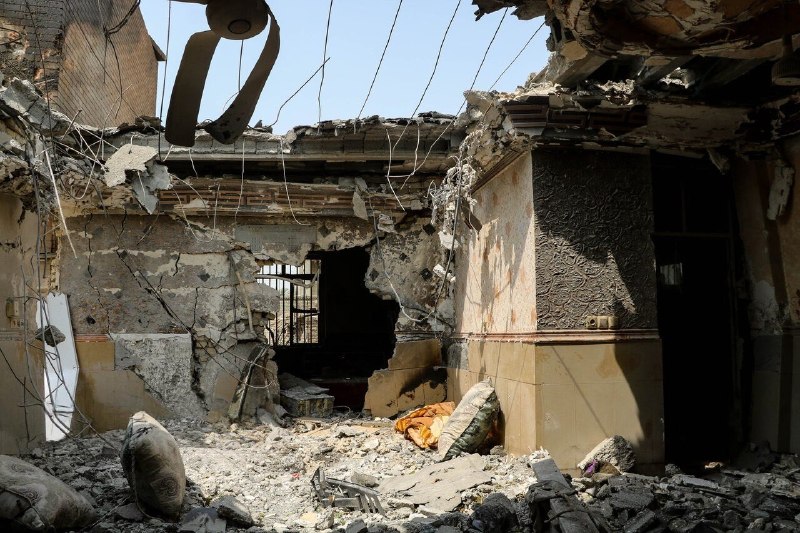
At 10:00 UTC on 12 June 2026, Donald Trump publicly raised the prospect of a US ground operation against Iran's Kharg Island — the Persian Gulf terminal that processes the overwhelming majority of the Islamic Republic's crude exports — and within hours suggested that American voters lacked the appetite to see it through. The contradiction, delivered inside the same news cycle, captured the bind that has defined his second-term Iran policy: threats calibrated for the cameras, escalation language that moves crude and crypto in real time, and an underlying reluctance to commit the military and political capital that a strike on Iranian soil would require.
That bind is no longer rhetorical. Over the past week, the Iran file has become a live variable in global asset prices, in Gulf state diplomacy, and in the political economy of an American president who treats the oil market as both a foreign-policy instrument and a personal polling instrument. What follows is a reading of how those threads have knotted together — and what the contradiction at the centre of it suggests about the limits of brinkmanship that does not have to be backed by force.
The week the threats accelerated
The escalation began in earnest in the days after 5 June 2026, when Israeli and US strikes on Iranian nuclear and military infrastructure triggered the first direct US-Iran exchange of the second Trump term. By the morning of 11 June, Trump was telling reporters — and the prediction market Polymarket — that Iran could secure "the greatest deal in history" if it surrendered, and that the United States was "the greatest power." The framing, captured by Polymarket's news desk at 18:24 UTC on 11 June, was vintage transactional Trump: maximalist demand, gilded inducement, and a claim of absolute primacy layered on top.
Twelve hours later, Middle East Eye reported Trump's explicit invocation of Kharg Island — the loading terminal in the northern Gulf through which the bulk of Iranian crude reaches market — and his suggestion that ordinary Americans did not have "the stomach" for a ground operation. The juxtaposition was deliberate. The threat, the outlet noted, came paired with the implicit acknowledgement that the threat could not be carried out. That kind of signalling is not a negotiation tactic that survives contact with a sovereign adversary; it is a market signal, and it is being received as one.
How the markets read the contradiction
The clearest evidence that traders were not buying the escalation came not from the oil futures curve but from the crypto order book. CoinDesk reported at 05:14 UTC on 12 June that bitcoin had climbed back into positive territory as Trump signalled an end to the Iran war; the same session saw oil pull back and global equities firm. The pattern is now familiar from earlier 2025–26 episodes: when the President speaks of de-escalation, risk assets rally; when he speaks of Kharg Island, they sell off. The reversals have become rapid enough that algorithmic desks have built them into their intraday models.
That feedback loop is doing two things at once. It is giving Trump a near-instantaneous scoreboard for the market impact of his rhetoric — a feedback mechanism the first-term Trump White House did not have at this resolution. And it is disciplining the Iranian negotiating posture, because Tehran can read the same tape. A leadership in Tehran that watches oil futures move six percent on a single Trump Truth Social post has every incentive to wait out the cycle, absorbing the headlines, betting that the gap between the threat and the follow-through will widen rather than narrow.
The oil market is, in this sense, the honest interpreter of the policy. If traders believed a Kharg Island operation were a serious near-term possibility, dated Brent would be pricing in a multi-week disruption premium and shipping insurance rates for the Strait of Hormuz would already be spiking into the high single digits. The reported moves suggest the consensus read is closer to: rhetoric without reach, for now.
The structural problem: a petrodollar system under stress
What makes the contradiction more than a curiosity is the structural setting. The United States has, for half a century, anchored its Middle East posture on two propositions: that it will defend the free flow of Gulf energy, and that oil will continue to clear overwhelmingly in dollars. The first proposition requires the credible willingness to use force. The second requires that the countries whose oil flows through Hormuz — including Iran, Saudi Arabia, the UAE and Iraq — continue to recycle petrodollar surpluses through the US financial system rather than build parallel rails.
Trump's Kharg Island rhetoric, followed by his admission of American limit, weakens the first proposition. His transactional deal-making framing — the same approach he has applied to a possible US-Ukraine minerals arrangement and to tariff negotiations with Beijing — weakens the second, because it tells every Gulf capital that US protection is conditional on bilateral optics rather than systemic commitment. The Chinese and Russian read is straightforward: the more the United States appears to oscillate between threat and retreat, the more attractive the alternative architecture — yuan-denominated oil contracts, mBridge, expanded BRICS settlement arrangements — becomes for any Gulf state thinking about optionality.
None of this is to say the petrodollar is about to collapse. Reserve currency transitions are measured in decades, not news cycles. But the credibility discount the United States is currently running on its Middle East commitments is real, and it is being priced.
The counter-read: deterrence by tweet, again
The Trump-aligned counter-narrative, voiced by commentators from the Heritage Foundation to the editorial page of the Wall Street Journal, is that the oscillation is itself the strategy. The argument runs that by raising and lowering the temperature publicly, the President forces Tehran to hedge, drains Iranian hard currency as oil traders price in tail risk, and produces the conditions for a deal that Iran would not have accepted at the outset. There is precedent for the theory: the 2018–19 Trump maximum-pressure campaign did produce tactical Iranian concessions, and the North Korea summits of 2018–19 produced at least a freeze in testing.
The counter to the counter is that both of those episodes ended with the adversary closer to its threshold capability, not further from it. Iran's enrichment capacity in 2026 is more dispersed, more deeply buried, and more credibly protected than it was in 2018. The 2026 Kharg Island threat is, in other words, a louder signal sent into a quieter, harder target.
The Polymarket read and the prediction economy
A striking feature of the past 72 hours has been the role of prediction markets in adjudicating the rhetoric in real time. Polymarket's Iran contract has seen volumes consistent with what one would expect from a serious geopolitical instrument rather than a novelty bet. The market is not pricing US ground invasion of Kharg as a base case; it is pricing some form of negotiated outcome — a deal, a freeze, a managed rollback — as the modal scenario. The President's own statements, read against that implied probability, are closer to negotiating theatre than to strategic doctrine.
That is the most uncomfortable implication for Tehran, and the most useful one for the White House: prediction markets are now the third party at the table. Whatever Trump ultimately does on Iran, the move will be made against an asset-price backdrop that is, in effect, taking bets on the move. The market has not yet decided that the President is bluffing, but it has decided that the bluff is contained.
What the next ten days look like
The narrow path runs through a face-saving interim arrangement: an Iranian rollback of enrichment at declared sites in exchange for sanctions relief on a defined list of civilian-use accounts, structured so that both Trump and Iran's leadership can claim victory. The wider path runs through a miscalculation — an Israeli strike on Natanz, an Iranian retaliation against a Gulf tanker, a hot incident in the Strait — that converts the President's rhetoric into a force allocation he has not authorised. The probability-weighted path, judging from the market and from Gulf state behaviour, runs through the narrow corridor. But corridors close fast when the public signalling is this noisy.
For Iran, the strategic logic of the moment is to avoid giving Washington a casus belli while continuing to advance the parts of its nuclear, missile and proxy architecture that are not easily reversed by a deal. For the United States, the logic is to extract as much political capital as possible from a position whose military logic is constrained. For the oil market, the logic is to keep one eye on the rhetoric and the other on the inventories. For everyone else, the lesson is the older one: when the hegemon signals that it may not use the force it claims to monopolise, the architecture it underwrites begins, slowly and then all at once, to look optional.
Desk note: the wire coverage of the Trump Kharg comments has emphasised the invasion threat and underplayed the simultaneous admission of American political limit; this publication has read the two halves of the signal together, against the oil and crypto tape, to argue that the credible reading of the week is escalation-without-reach.
Wire provenance
This editorial synthesis draws on the following public wire/social posts:
- https://x.com/Polymarket/status/
Follow the event.
These dated source records provide context. They do not retrospectively verify this archive article.
Separate what the nuclear watchdog reported from what it could not determine after the June 2025 strikes.