Trump's Iran ‘Settlement’ and the Stench of Surrender
A ‘great settlement’ announced in under 24 hours, a cancelled strike, and US ‘total control’ of Iranian oil markets: the deal on the table in Washington is not a peace — it is a transfer of sovereignty at gunpoint.
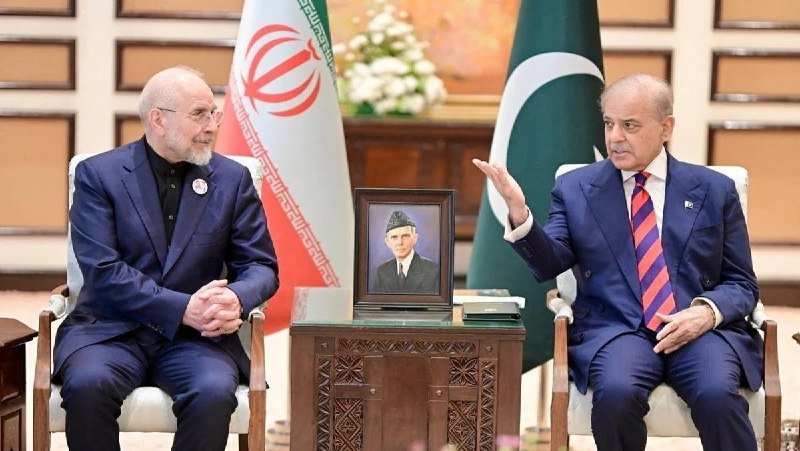
By 2026-06-11T23:29Z, the official line out of Washington was triumphal: a "great settlement" with Iran, paperwork being finalised, a wider war averted. Within hours, the same White House had announced the United States would take "total control" of Iran's oil and gas markets, including the Kharg Island export terminal — the single most important piece of energy infrastructure in the Persian Gulf. By 2026-06-12T01:13Z, President Donald Trump was confirming he had personally cancelled strikes on Iran that had been scheduled for that Thursday evening. The 24-hour sequence — a deal, a cancellation, and an announcement of resource seizure — should be read together, not in fragments.
The shape of what is being negotiated is now visible. This is not a ceasefire in the conventional sense. It is a surrender instrument disguised as a peace deal, in which the sanctions regime that has been used to discipline Iran for two decades is converted into direct US operational control over the country's hydrocarbon revenues. If that is the final text, the regime in Tehran does not lose a war — it loses its treasury. The Iranian negotiating position, by contrast, has been to argue that any return to compliance with the non-proliferation framework requires the unfreezing of assets and verifiable guarantees against future aggression. Neither of those conditions appears in the announcements so far. Until the text is public, the framing should be treated with the scepticism it has earned.
The 24 hours that redrew the negotiation
What happened between Tuesday evening and Thursday morning is a masterclass in coercive bargaining. Al Jazeera reported on 2026-06-11 that Trump had claimed a "great settlement" with Tehran was being finalised. Within hours, the Trump account @Polymarket posted that the US would take "total control" of Iran's oil and gas markets, naming Kharg Island specifically. Then, on the morning of 2026-06-12, Trump announced — and the war channel Wars of Our Time relayed — that strikes planned for that same Thursday evening had been called off. The sequencing is the message: the threat of force was used to produce a concession, the concession was announced as victory, and the wider war was paused long enough for the document to be drawn up.
This is the negotiating style that has come to define the second Trump administration's Middle East portfolio. The Kharg Island piece in The Indian Express on 2026-06-12 spells out the geography of the threat: Kharg handles the overwhelming majority of Iran's crude exports, and any sustained attack on it would not only wreck the Iranian economy but roil global energy markets and risk drawing in the Gulf monarchies. That is leverage, not negotiation. Using the threat of an attack that would also punish the US's Gulf partners is the kind of escalation that produces headline agreements and long-term strategic wreckage.
The Iranian counter-position deserves airtime
The Iranian position, as reported by Middle East Eye on 2026-06-12, is that both sides have signalled a potential breakthrough and an agreement to end the war and begin wider negotiations could be signed in the coming days. That is the official line from Tehran. It is a long way from the Polymarket-posted claim of US "total control" of Iranian hydrocarbons. MintPress News, in a separate post on 2026-06-12, framed the political pressure differently: from threatening the team to blocking fans from coming, the US has done everything to stop Iran participating in international life. The point is structural. A settlement in which Iran is simultaneously told it has peace and is excluded from the global institutions, sports federations, and energy markets that peace is supposed to restore is not a settlement — it is conditional surrender with a marketing department.
A serious read of the deal has to ask whether the Iranian regime, having absorbed decades of sanctions, two full-scale escalations, and the assassination of senior security figures, will sign a document that hands the keys of its export terminal to Washington. The history of coercive deals with Iran — from the Algiers Accord of 1981 through the Joint Comprehensive Plan of Action — is that they hold only as long as both sides find them less painful than the alternative. A document whose central provision is US operational control of Kharg Island will be tested the moment a Republican successor decides enforcement is too soft.
What the wider pattern looks like
This is what resource diplomacy looks like when the dollar remains the pricing currency of the global oil trade. The US does not need to occupy Kharg Island in the traditional colonial sense; it needs the terms of trade, the settlement currency, and the sanctioning architecture that allow it to determine who buys Iranian crude, at what discount, and through which bank. "Total control" in that context is a financial claim dressed up as a territorial one. It is also a warning to every other sanctioned state: the precedent on offer is that a sufficiently long sanctions campaign, combined with a credible threat of force, can convert economic warfare into an asset seizure under a different name. The Gulf monarchies, the Venezuelan government, and any state sitting on a US-targeted resource base should be reading the same documents.
Stakes, and what remains unresolved
The winners in the announced framework are US firms positioned to take the upstream and midstream contracts that would accompany American operational control of Iranian export infrastructure, the Gulf monarchies whose security the US is reaffirming, and the Israeli government, which has long argued that any deal with Tehran must structurally constrain rather than merely slow the Iranian programme. The losers are the Iranian state, which loses fiscal sovereignty; Iranian civil society, which loses the national wealth that funds subsidies and public employment; and the credibility of the non-proliferation regime, which is being rewritten as a tool of US economic policy rather than a neutral verification framework. The time horizon on which this matters is not the next news cycle — it is the next decade of energy markets and Middle East security architecture.
What remains genuinely uncertain is the text itself. No document has been published. The two leading claims — a "great settlement" and US "total control" of Iranian oil and gas — are not the same deal, and the gap between them is the space in which the next escalation, or the next climbdown, will be negotiated. The 24-hour sequence that produced this moment is also the sequence that could produce its reversal: a single leak, a single Iranian counter-announcement, a single Gulf monarch expressing displeasure, and the cancelled strikes return to the schedule. The deal is not done. It is a headline looking for a paragraph to hide inside.
Monexus framed this around the sequencing of the 24-hour cycle and the structural meaning of Kharg Island, rather than the triumphalist "great settlement" line carried by the wire services.
Wire provenance
This editorial synthesis draws on the following public wire/social posts:
- https://t.me/ourwarstoday
Follow the event.
These dated source records provide context. They do not retrospectively verify this archive article.
Separate what the nuclear watchdog reported from what it could not determine after the June 2025 strikes.