Trump declares Iran war "ended," markets rally, CNN counts 39 "close to a deal" claims
Stocks surged on 12 June 2026 after Donald Trump said the United States had "ended the war with Iran today." CNN's parallel compilation of the president's statements since mid-March is sharpening the credibility fight.
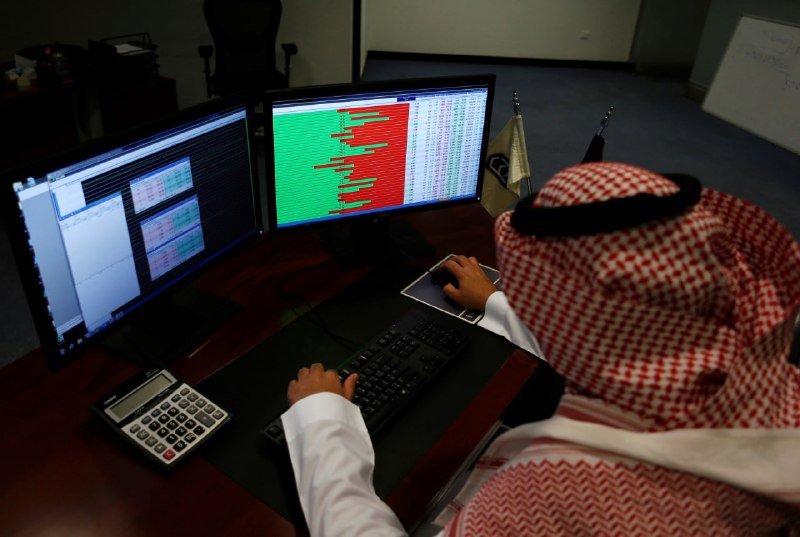
At 06:25 UTC on 12 June 2026, President Donald Trump used his own voice to tell a US audience that the United States had ended hostilities with the Islamic Republic of Iran. Markets heard it the same way they have heard every claim of an imminent deal in this cycle: as a signal. Equities rose sharply in early European trade, with several major indices up by midday in Europe, after Trump signalled that a planned US strike on Iranian facilities had been pulled back. The episode is the most kinetic moment yet in a months-long pattern in which the White House's public statements on Iran have repeatedly outrun any verifiable underlying agreement — a gap that CNN chose on 12 June to put on the record in a single number.
The substance, as best the public record can establish it, is a presidential assertion, a market reaction, and a media self-audit running in parallel. Read in that order, the day looks less like a diplomatic breakthrough than the latest instalment of a credibility contest with a real cost.
A presidential declaration, a market response
Trump's statement, captured on his own platform and relayed by the Middle East Eye live blog at 06:17 UTC and 06:25 UTC, framed the episode as a concluded conflict: "We ended the war with Iran today and they agreed that they will never have nuclear weapons – that was 95% of it." The 95% figure is notable: it implicitly concedes that a residual 5% remains unresolved, but the framing presents the larger share as a closed book. The same Middle East Eye entry, timestamped 07:06 UTC, reported that stocks had surged after the president signalled the end of the planned strike.
The market behaviour is consistent with what traders have learned to do around this White House. Equities react not to a confirmed diplomatic text — no joint communiqué has been published — but to the prospect that a kinetic alternative has been deferred. The price action is itself a kind of commentary: the market is paying for the absence of a strike, not for a deal.
A counter-narrative, also on the record
At 06:56 UTC, the English-language Telegram account of Abu Ali Express relayed a CNN compilation counting 39 separate statements by Trump since 15 March 2026 in which he asserted that the United States was close to a deal with Iran. The same compilation was pushed through a parallel channel at 06:42 UTC, confirming the underlying reporting. A "close to a deal" claim repeated 39 times in roughly twelve weeks is not, on its own, evidence of bad faith — presidents are entitled to negotiate publicly. But once a single declaration ("we ended the war today") is layered on top of 39 prior declarations of imminent resolution, the standard journalistic question stops being whether the president is wrong and becomes whether the audience has any reliable signal left.
CNN's choice to publish the count is itself the story. The network did not assert that the deal is illusory. It asserted that the pattern of claims, taken together, warrants documentation. That is a narrower and more defensible editorial move than declaring the deal dead — and it leaves the White House the room to prove the count wrong by producing the agreement.
What "95%" actually means
The structural problem is that a presidential claim to have "ended a war" carries no operational meaning without a counterpart signature, a verified dismantlement, and a sanctions architecture to match. None of those are on the public record as of 12 June 2026. Iranian state-aligned messaging has not, in the materials available, confirmed the 95% frame. The claim therefore functions as a unilateral narrative, in the same way a strike announcement would: a fait accompli projected into the news cycle, inviting either confirmation or contradiction over the days that follow.
The structural read, in plain terms, is that Washington is conducting Iran policy through a sequence of presidential utterances, each calibrated to move a market, freeze a planned military action, or pre-empt a hostile announcement from Tehran. The diplomatic text — the binding document that would actually end a state of hostilities — is conspicuous by its absence. Iran's "never have nuclear weapons" commitment, if it exists, has not been published; the verification mechanism, if one has been agreed, has not been named. The 5% the president did not claim is, in practice, the entire verification architecture.
Stakes and what to watch
If the pattern holds, the next 72 hours will produce one of three outcomes. The first is a published framework — a joint statement, an agreed verification mechanism, a sanctions sequencing — that retroactively justifies the 95% claim. The second is an Iranian counter-narration that reopens the file: a statement from Tehran asserting, for example, that enrichment continues or that no nuclear-capability constraint has been accepted. The third is a return to the baseline pattern: another "close to a deal" claim, another market move, another increment of audience fatigue.
The losers in any of the three scenarios are the same: the credibility of US presidential communications on the Iran file, and the ability of journalists and analysts to anchor reporting in a verifiable document rather than a stream of posts. The winners are more contingent. A genuine deal would be a win for the diplomatic channel and a quiet vindication of Trump's negotiating style. A return to the baseline would be a win for the no-strike faction inside the US national-security establishment and a relief for Tehran, which has learned to live with statements that do not bind. The market, for now, is pricing the middle scenario — no strike, no signed deal — and calling it peace.
What remains genuinely uncertain, on the evidence available to this publication on 12 June 2026, is whether any document exists behind the 95% claim, whether Iran's public posture will converge with Trump's, and whether the next CNN count, when it comes, will run in single digits or in the hundreds.
This article was framed against the Middle East Eye live wire and the Telegram aggregation layer; Monexus treats the 39-statement count as CNN's documented tally, not an independent verification.
Wire provenance
This editorial synthesis draws on the following public wire/social posts:
- https://t.me/englishabuali
- https://t.me/abualiexpress
- https://t.me/englishabuali
- https://t.me/abualiexpress
Follow the event.
These dated source records provide context. They do not retrospectively verify this archive article.
Separate what the nuclear watchdog reported from what it could not determine after the June 2025 strikes.