Trump's 'war is over' claim and Iran's denial: a 24-hour credibility test for the next phase of the US-Iran confrontation
Within minutes of President Donald Trump declaring on 11 June 2026 that 'we ended the war with Iran today,' Iranian state media broadcast a senior military commander accusing Washington of 'a pattern of deception, lies and mixed messages.' The gap between those two statements is now the story.
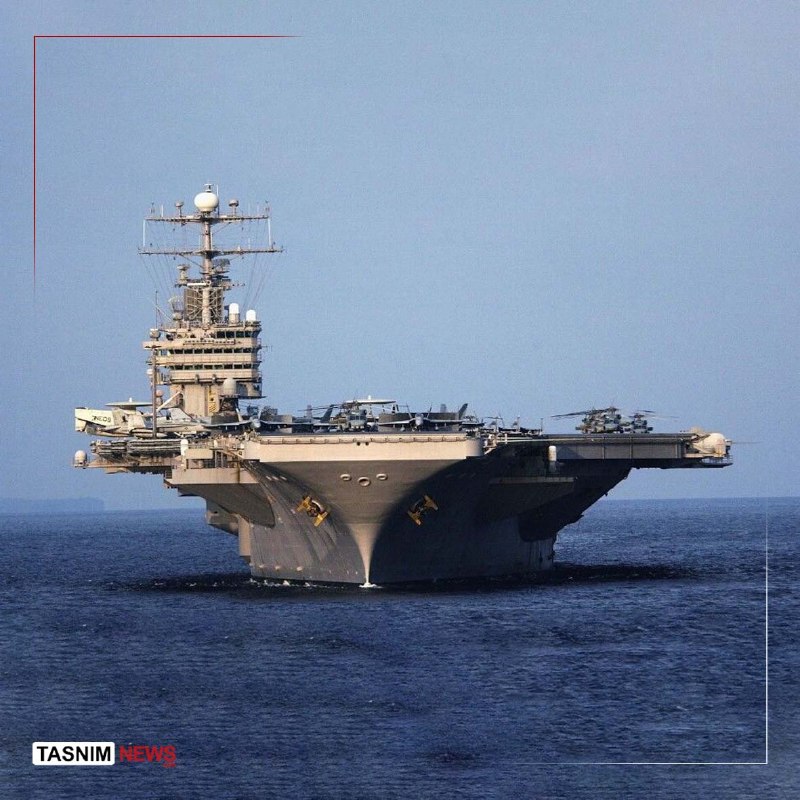
At 23:54 UTC on 11 June 2026, US President Donald Trump told a televised audience that the United States had ended its war with Iran "today," and that Tehran had agreed never to develop a nuclear weapon. The clip, circulated within minutes by Telegram channels tracking open-source intelligence, was the third major US presidential statement on the Iran file inside a 24-hour window, and the most consequential. It also arrived, almost simultaneously, into a Tehran that was already broadcasting the opposite message: a senior Iranian military commander warning Washington against what Iranian state television described as "a pattern of deception, lies and mixed messages."
The two statements, aired within seconds of each other on different sides of an information war that has been running for decades, are the cleanest illustration yet of what the next phase of the US-Iran confrontation now rests on: not firepower, not sanctions architecture, but the credibility of the words that each capital is willing to put on the record. Every other variable — the nuclear file, regional proxy networks, the Strait of Hormuz, the Israeli file, the price of oil — flows from how that credibility gap is read by markets, by Middle Eastern foreign ministries, and by the Iranian negotiating team in whatever room they next sit down in.
What Trump actually said, and to whom
The operative sentence, repeated across three Telegram posts from the open-source channel Open Source Intel between 23:54 and 00:24 UTC on 12 June 2026, is short: "I don't know if you heard, but we ended the war with Iran today, and they have agreed never to have a nuclear weapon." A separate post, attributed by the same channel to Al Jazeera's breaking-news wire, frames the same claim differently: a "great settlement" between Washington and Tehran, with documents being "finalised." A third post, from the channel Insider Paper, carries the headline form of the line — "We ended the war with Iran today" — without yet the diplomatic scaffolding a confirmation of that scale normally requires.
The phrasing matters. "We ended the war" is a present-tense declaration of termination, not an announcement that hostilities are about to be wound down. "They have agreed" is a present-perfect construction that implies a completed, signed act of consent — not a framework, not an understanding, not a common read-out, but an agreement. Al Jazeera's "great settlement" formulation, by contrast, leaves room for a less categorical status, in which the documents still being finalised could amount to a framework, a memorandum, or a joint statement of intent rather than a binding bilateral instrument. The two formulations are not the same announcement dressed in different clothes. They describe different states of the world.
What is not in any of the three posts is the counter-signature. No Iranian official, no foreign minister, no office of the president, is named as having joined the statement. No text is reproduced. No third-party witness — Omani, Qatari, Swiss, Chinese, Russian — is cited as having facilitated or endorsed the deal. The architecture of a settlement of this magnitude normally requires at least one of those signals inside the first hour. By 00:24 UTC on 12 June 2026, none had appeared.
What Iran said back
The Iranian response, also timestamped to 23:54 UTC on 11 June 2026, was carried by Press TV and relayed by Open Source Intel. It is attributed by Iranian state media to "Iran's top military commander," who "warns Trump against what he called a pattern of deception, lies and mixed messages." The wording is significant on two counts. First, the source: Press TV is an Iranian state broadcaster, and the warning is therefore the line Tehran has chosen to put on the official record. Second, the content: a top military commander, not a diplomat, is the named voice, and the framing — pattern, deception, mixed messages — is a denial of the settlement claim and a warning of further escalation if the US reading of the moment prevails.
The asymmetry of the two communications is itself a story. Washington, on the record at 23:54 UTC, is announcing the end of a war and the signing of a nuclear concession. Tehran, on the record at 23:54 UTC, is rejecting the framing of the announcement and accusing its author of bad faith. The most plausible single explanation is that the American statement was a presidential statement, and the Iranian statement was a bargaining posture, and the two are operating on different clocks and different audiences. The other plausible explanation is that there is no agreement, and that what was announced in Washington was an aspiration, a tactic, or a misunderstanding elevated to a press line. The next 48 hours will determine which.
The information architecture around the announcement
Coverage of the announcement, as of 00:24 UTC on 12 June 2026, runs almost entirely through Telegram channels that aggregate social media — Open Source Intel, Insider Paper — and through Al Jazeera's breaking-news wire. The two-channel pattern is not unusual for the first hour of a major Middle Eastern story; the absence of a State Department read-out, a White House transcript, or a Treasury OFAC notice is. A settlement of the size implied by Trump's words would, in normal practice, generate a US government primary document inside the same news cycle. None has been cited by any of the channels in the thread as of writing.
This matters for the reading of the event. Telegram aggregators are useful as a real-time firehose, but they inherit the framing of the accounts they relay. When an American presidential clip is the sole primary input, the wire that surrounds it tends to mirror the American framing; when an Iranian military statement is added inside the same hour, the wire is forced into a contested frame. The fact that the Iranian response reached Telegram via Press TV, an Iranian state outlet, and the American response reached it via direct clip circulation, means the two inputs do not sit on a level evidentiary footing — and the channel of transmission, in this case, is doing a lot of the framing work.
For an editor trying to assess what is actually on the table, the open question is whether any third-party capital — Muscat, Doha, Riyadh, Beijing, Moscow, Brussels — has corroborated the "agreement" framing inside the first 24 hours. None of the Telegram items in the thread, and none of the Al Jazeera item, names one. If such corroboration emerges, the credibility of the Trump statement rises sharply. If it does not, the most defensible editorial read at 00:30 UTC on 12 June 2026 is that the US side has declared an end to a war that the Iranian side has not acknowledged ending, and that the gap between those two positions is itself the story.
Why the gap is structural, not just tactical
The pattern of one capital announcing a settlement and the other denying the framing is not new to the US-Iran file. The 2015 Joint Comprehensive Plan of Action took more than two years of contested public claims before it was confirmed by parallel read-outs from Tehran, Washington, and the European Union. Earlier rounds, including the 2013 interim deal and the prisoner-exchange arrangements of 2016 and 2023, were negotiated under formal information-management protocols in which neither side announced a result until both had agreed on a text. What is unusual about the 11 June 2026 sequence is the speed: an American presidential declaration of termination, followed inside the same minute by an Iranian military denial, with no intermediate diplomatic scaffolding.
The most plausible structural reading is that the two sides are again talking, and that the talking is producing real movement on the nuclear file, but that the public-diplomacy phase of any settlement is being run by each side for its own audience. Washington is signalling to a domestic audience — and to Gulf partners — that the confrontation is winding down. Tehran is signalling to its own base that any deal is being negotiated from a position of strength, and that the US cannot be trusted to honour its own words. The credibility of the eventual settlement, if there is one, will rest less on what either side said at 23:54 UTC on 11 June 2026 than on what is signed, by whom, and verified by which inspectorate, in the days that follow.
For the rest of the region, the practical read is that the risk premium on Iran — embedded in oil prices, in shipping insurance for the Strait of Hormuz, in the bond spreads of Lebanese and Iraqi sovereigns — is unlikely to fall on the basis of a single presidential clip. It will fall when a third party confirms the agreement, when sanctions relief is sequenced, and when the IAEA is given the access its inspectors have been requesting. Until then, the gap between Washington's announcement and Tehran's denial is, for traders and for foreign ministries, a reason to wait, not to act.
What remains uncertain — and what the next 48 hours will tell us
The honest editorial position at the time of writing is that several things are not yet known. The text of any agreement is not in the public record. The identity of the Iranian counterpart — president, foreign minister, military figure — who would be named as a co-signatory is not. The role of any third-party facilitator is not. The status of the IAEA file, the fate of the sanctions architecture, and the question of whether any "agreement" amounts to a nuclear-restraint undertaking or a more limited confidence-building measure, are all unresolved.
The single most informative piece of evidence, over the next 48 hours, will be whether an Iranian official on the record — foreign minister, president, or spokesperson — uses present-perfect language matching Trump's "they have agreed," or whether Tehran's position remains that of the Press TV statement, accusing the US of deception. A second informative signal will be whether any Gulf, European, or Chinese government corroborates the settlement in language that goes beyond noting that talks are progressing. A third will be whether the IAEA director general, Rafael Grossi, is named in any read-out as having been briefed, given access, or asked to prepare a verification protocol. None of these signals is yet present in the source material available at the time of writing.
The 11 June 2026 clip, in other words, is best read not as the announcement of a settlement but as the opening of a credibility test. The war's status will not be settled by a sentence spoken in Washington, however prominently. It will be settled by the architecture that follows — the text, the signatures, the inspectors, the sanctions sequencing — and by whether Iran's denial at 23:54 UTC gives way, inside a week, to the same present-tense language that the US side is already using. Until that happens, the most defensible position for an editor is the narrow one: that a US president has claimed a settlement, that an Iranian military commander has rejected the framing, and that the actual state of the file is, at 00:30 UTC on 12 June 2026, genuinely contested.
This publication treats the US-Iran file with the same evidentiary standard it applies elsewhere: a presidential claim is a claim, a denial by a named military commander on Iranian state media is a denial, and the difference between the two is not a stylistic nuance but the substance of the story.
Wire provenance
This editorial synthesis draws on the following public wire/social posts:
- https://twitter.com/Osint613/status/20652
- https://t.me/insiderpaper
- https://t.me/osintlive
- https://t.me/osintlive
Follow the event.
These dated source records provide context. They do not retrospectively verify this archive article.
Separate what the nuclear watchdog reported from what it could not determine after the June 2025 strikes.