Trump's Kharg Island threat exposes the oil arithmetic behind the war talk
The most dangerous escalation of the year is being justified, in public, as a real-estate transaction. Strip away the bravado and the target is a terminal that handles a fifth of seaborne crude.
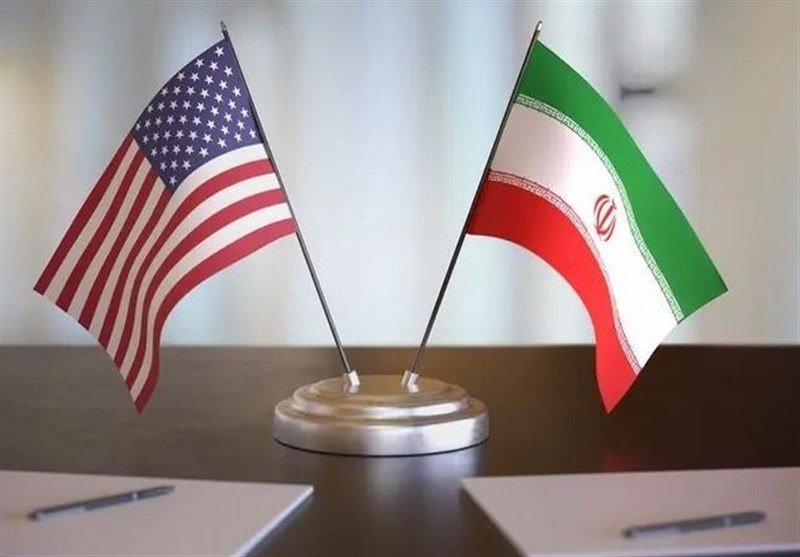
At 18:24 UTC on 11 June 2026, a US president told the world Iran could secure "the greatest deal in history" — provided it surrendered. By 12:34 UTC the same day, the same mouth announced the United States would take "total control" of Iran's oil and gas markets, Kharg Island included. By 15:46 UTC, Tehran's reply was on the wire: a "crushing, painful" response to any move on the terminal. Within twelve hours, the narrowest strait on the global oil map had become the most dangerous piece of real estate on it.
This is not diplomacy. It is a coercive auction staged in public, and the prize on the block is the loading jetty at Kharg.
What Kharg actually is
Kharg Island sits roughly 25 kilometres off Iran's Bushehr coast in the northern Persian Gulf. It is not a symbolic target. According to reporting carried by The Indian Express on 12 June 2026, the island handles the overwhelming majority of Iran's seaborne crude exports — a share analysts routinely place near four-fifths of total volumes. Disable the terminal and you do not merely damage an economy; you remove a country from the priced oil market almost overnight.
The tactical picture is uglier than the political one. By 15:17 UTC on 11 June, the Polymarket news desk was carrying reports that Iran had deployed MANPADS along Kharg's shoreline and was laying mines in the approaches. A terminal that size cannot be moved or hidden. It is, in the literal sense, a fixed asset exposed to the world's most concentrated naval firepower — and to the world's most concentrated insurance premiums the moment the rhetoric crosses a line.
The arithmetic the speeches are not saying out loud
A US president does not threaten total control of a foreign energy export system unless he has decided the political cost of trying to seize it is lower than the political cost of leaving it. By 15:17 UTC on 11 June he had already told the cameras he would continue bombing Iran "tonight," and by 15:46 UTC Tehran had publicly replied. What changed between sunrise and sunset was not intelligence but framing: the operation was rebranded from a strike campaign into a property transaction.
That framing matters because oil is priced on expectations, not on physical barrels. The moment traders believe Kharg is genuinely at risk, the risk premium flows into the global benchmark within hours, regardless of whether a single round has been fired at the jetty. The wager is that Tehran, watching the futures curve bend, will choose to bargain rather than bleed.
It is a wager with historical precedent, and the precedent is unforgiving. Coercive energy diplomacy has a poor record of producing durable deals when the target state can absorb the short-term pain and the consumer states can absorb the short-term price. The structural counter-narrative from Tehran — that the Gulf's shipping lanes are a shared commons, and that mines and missiles are cheap relative to the insurance value of the strait — has the virtue of being mechanically true.
What the counter-narrative looks like from Tehran's side
Iran's public posture across 11 June walked a familiar line. Surrender is rejected; the deal is held out as possible; the threat is held out as credible. The Polymarket feed captured the same duality in a single news cycle: maximalist threats from Washington, maximalist warnings from Tehran, and a parallel offer of negotiation that neither side can afford to be seen rejecting.
The most under-covered element of the day was the absence of any Iranian request for de-escalation. A state preparing to surrender asks for a channel; a state preparing to fight mines its own shore. Iran is mining its own shore. Read that as a signal: the regime has concluded that the cost of a deal on Washington's terms is higher than the cost of a fight on its own.
The structural frame, in plain language
Strip the personality from the moment and what is left is a familiar pattern. An incumbent power, watching its preferred price for energy drift against a sanctioned rival, escalates in public to reset the bargaining range. The escalation is not aimed at the rival's army; it is aimed at the rival's customers, creditors, and elite consensus. The bet is that the cost of the rally is borne by the world, not by Washington. The rival's counter-bet is that the cost of the rally is bearable long enough to outlast a single news cycle.
This is the game that has been running in slow motion around Russian crude for three years, around Venezuelan crude for a decade, and now openly around Iranian crude. The variable that changes from cycle to cycle is not the underlying logic but the size of the marginal barrel.
What remains genuinely uncertain
Three things the day's reporting cannot settle. First, whether the US has the force posture, the allied support, and the legal cover to actually attempt a sustained blockade or seizure of Kharg — statements of intent are not statements of capability. Second, whether Iran's mine and MANPADS deployment is a deterrent or a preparation, and whether the regime has decided the threshold has already been crossed. Third, what the Gulf's other customers — China and India principally — are privately telling Washington, because their reaction is the variable that determines whether this remains a bilateral coercive auction or becomes a wider confrontation.
The sources do not specify any of these. They specify only the public choreography, and the choreography is unusually fast. Twelve hours from "greatest deal in history" to "total control" to "crushing, painful" is not the pace of diplomacy. It is the pace of a market being repriced in real time.
Desk note: wire coverage of the 11 June escalation is fragmented across social and aggregator feeds; this piece reads those inputs alongside The Indian Express's longer analysis of Kharg's strategic role rather than any single network's framing.
Wire provenance
This editorial synthesis draws on the following public wire/social posts:
- https://x.com/Polymarket/status/
- https://x.com/Polymarket/status/
- https://x.com/Polymarket/status/
- https://x.com/Polymarket/status/
- https://x.com/unusual_whales/status/
Follow the event.
These dated source records provide context. They do not retrospectively verify this archive article.
Separate what the nuclear watchdog reported from what it could not determine after the June 2025 strikes.