Two proclamations, one pattern: Trump's Pacific and Iran gambits converge
Within hours on 11 June, the administration cancelled strikes on Iranian infrastructure, signed a proclamation reopening vast Pacific waters to commercial fishing, and watched a prediction market put the odds of unfreezing Iranian assets above 50%. The sequencing is the story.
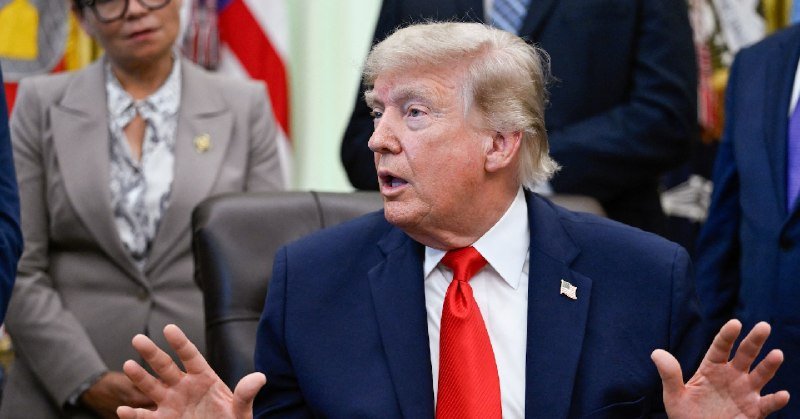
At 17:33 UTC on 11 June 2026, word circulated that Donald Trump had called off planned operations against Iranian infrastructure. By 01:21 UTC on 12 June, a prediction market was pricing the chance he would agree to unfreeze Iranian assets by month-end at 51%. By 02:54 UTC, the same day, he had signed a proclamation reopening nearly 500,000 square miles of the Pacific to commercial fishing. Three moves in nine hours. Read separately, each is a discrete policy event. Read together, they sketch a pattern — one in which the second-term administration is trading kinetic pressure for transactional deal-making, while using openings in extractive sectors to keep constituencies at home onside.
The pivot is most legible on the Iran file. The cancellation of strikes on Iranian infrastructure is itself the news; the market reaction is the confirmation. The Polymarket contract tracking which Iranian demands Trump will accept by 30 June now lists "unfreeze Iranian assets" at a 51% probability, a coin-flip with an upward lean. That is not how a presidency committed to maximum pressure behaves two months after a near-miss at war. It is how a presidency that has decided the asset-freeze lever is worth more in hand than in headline behaves.
The new transactional grammar
The Pacific fisheries proclamation belongs to the same grammar. Commercial fishing access in the eastern Pacific was curtailed in earlier administrations over conservation concerns; reopening half a million square miles is a sizeable transfer of resource access back to industry in a single signature. It also happens to be a policy that costs the federal government nothing, annoys the environmental NGO circuit, and is cheered by the domestic fleet. It is exactly the kind of low-cost, high-noise concession an embattled White House likes to stack against harder political days.
This is not a novel observation — every modern presidency mixes foreign-policy and domestic-distribution moves to manage coalition pressure. What is novel is the speed and the substitution effect. The Iran and Pacific files are not being run by parallel teams that happen to land in the same news cycle. They are being run as if the White House has a daily allowance of political capital, and is now spending it on opening moves (Pacific) while banking other moves (Iran) for when the counterparty is ready to move.
What the prediction market sees
Prediction-market pricing is not a vote count, but it is a useful tell. A 51% probability on Iranian-asset unfreezing inside nineteen days implies the market believes the administration has already made an internal decision and is now negotiating price. A probability below 30% would imply the demand is a non-starter. A probability near 51% is consistent with active, late-stage talks in which a known concession is on the table and the question is sequencing.
The structural read is straightforward. The US has spent four decades building the dollar-cleared sanctions architecture, and the central promise of that architecture is that frozen assets stay frozen until political conditions are met. An unfreezing — even a partial one — is a public signal to every other counterparty watching the system that the gates can open for the right deal. That is leverage, but it is also a one-time asset. Once spent, it is harder to threaten the next time.
The counter-read, and why it probably does not hold
A plausible alternative reading: the Polymarket line is thin liquidity reacting to a single headline, and the strike cancellation is a one-off de-escalation rather than a pivot. The 51% figure is, after all, a coin-flip with a one-point lean. The Pacific proclamation is unrelated to Iran, even if the calendar aligns. The administration's Iran policy remains maximum pressure; the asset-freeze question is a footnote.
That reading does not survive contact with the timing. The strike cancellation arrived hours before the market repriced the unfreezing line, and the proclamation followed in the same news cycle. These are not the movements of a team that is holding the line by accident. The market is reading the calendar. The administration is reading the market. Both are pricing the same trade.
Stakes
If the trajectory continues, three constituencies feel it first. Iran's frozen assets become a working counter in a renewed negotiation track, and Tehran gains a credible channel to argue for further releases on a rolling basis. The US domestic fishing fleet gains immediate, if contested, access to a large Pacific tract — and the environmental and indigenous-coastal constituencies that lost the fight get a precedent they will have to litigate downstream. And the broader sanctions architecture absorbs its most visible haircut since the 2015 JPOA, with downstream effects on how the dollar-cleared system prices political concessions going forward. The remaining uncertainty is narrow but real: the sources do not specify the scale of any unfreezing, the conditions attached, or which Iranian demands beyond the asset question the administration has signalled willingness to meet. Those details will determine whether 30 June marks a tactical thaw or the start of a structural reset.
Wire provenance
This editorial synthesis draws on the following public wire/social posts:
- https://x.com/polymarket/status/2063347627647705088
- https://x.com/polymarket/status/2063347627647705088
- https://x.com/polymarket/status/2063347627647705088
Follow the event.
These dated source records provide context. They do not retrospectively verify this archive article.
Separate what the nuclear watchdog reported from what it could not determine after the June 2025 strikes.