Trump rejects Iran's leaked deal terms as negotiations enter credibility crisis
On 12 June 2026, Donald Trump publicly disowned the Iranian version of a draft agreement, accusing Tehran of negotiating in bad faith and warning that the leaked text bears no relation to the deal actually concluded in writing.
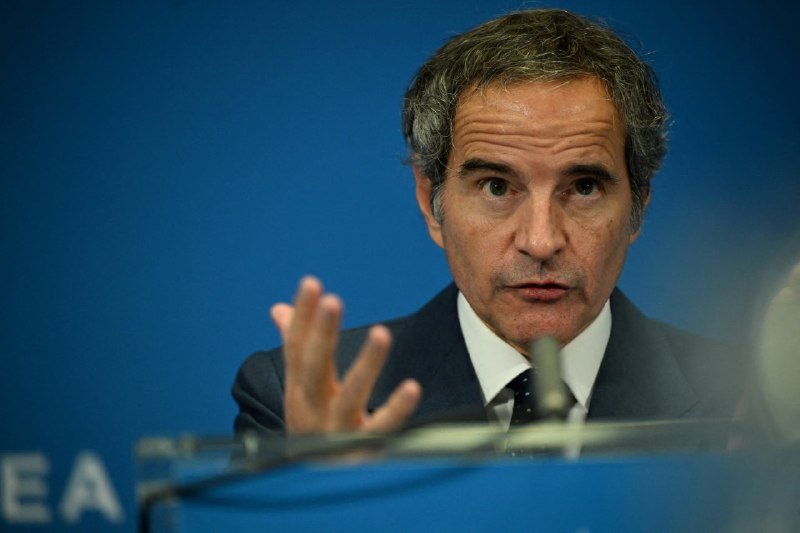
Donald Trump has publicly repudiated the version of a US-Iran agreement that Tehran has been circulating, telling reporters on 12 June 2026 that the leaked terms "have nothing to do" with the arrangement he says was actually committed to writing. The remarks, captured on camera and amplified by The Cradle and Reuters in the early afternoon UTC, mark the sharpest public rupture in the latest US-Iran diplomatic track and turn a credibility dispute over a single document into an open question about whether the two sides ever agreed on the same thing at all.
The accusation is that Tehran is negotiating in bad faith, and that Iranian public statements about the deal are not to be believed. Trump framed the dispute as one of authorship: a written accord exists, he insists, and the text Iran is putting out does not match it. Reuters reported the exchange under the headline "Trump says Iran's leaked deal terms are untrue" on 12 June 2026, summarising the president's position that the Iranian reading of the deal is not the deal he signed. The Cradle's own channel carried the same remarks, characterising Trump as claiming the leaked terms have "nothing to do" with the agreement reached in writing and accusing Tehran of bad-faith bargaining.
The dispute is not, on the face of it, about substance so much as about which text counts. The pattern is familiar: in negotiations conducted partly through intermediaries and partly through public signalling, each side produces its own summary, and the summaries diverge. What is unusual is the speed at which the US side has moved from diplomatic ambiguity to outright repudiation. Within a single news cycle on 12 June 2026, Trump dismissed the Iranian text, accused Tehran of misrepresenting the deal, and signalled that further movement depends on Tehran coming back to what he says is the genuine version.
What the Iranian leak actually claimed
Details of the Iranian version have been recirculating through regional channels since the draft surfaced, and Deutsche Welle's same-day explainer, headlined "Iran-US deal: What are the main sticking points?", walks readers through the fault lines. The piece sets out the issues that observers say still separate the two sides even before the latest credibility rupture, and frames Trump's claim of an imminent breakthrough against the gaps that any final text would have to close. The DW analysis, distributed on 12 June 2026, treats the deal as a work in progress rather than a fait accompli, and underlines that several core questions remain unresolved even on the most generous reading of the public statements.
The takeaway from the Welle's read is that the Iranian version and the US version were never going to be identical, and that the leak was always likely to provoke a counter-leak or a flat denial. What Trump has chosen, however, is neither: he has dismissed the Iranian text outright, on the record, in front of cameras. That is a more confrontational posture than the careful ambiguity that has characterised this track in recent weeks.
Why the US side is pushing back so hard
Two pressures are visible underneath Trump's remarks. The first is domestic. Any deal with Tehran will be read in Washington as either too soft or too tough, and the safest political position for the White House is to be able to say, in the event of a collapse, that the document on the table is not the document the United States ever accepted. By publicly disowning the Iranian version before any final text is signed, the administration reserves the option of walking away and blaming Tehran for the breakdown.
The second pressure is the Israeli file. Israeli security concerns are a permanent backdrop to US-Iran diplomacy, and any arrangement that does not credibly address them is unlikely to survive the inter-agency process in Washington. The Cradle, which tracks the regional conversation closely, has consistently framed the leak-and-rebuttal sequence as a contest over who gets to define the deal for outside audiences. The harder the US pushes back on Iran's preferred framing, the less room Tehran has to present the agreement at home as a diplomatic win.
The structural problem: two texts, one claim
The deeper issue is procedural. When two parties disagree on the text of an agreement, the agreement does not exist in any operational sense. There is no neutral arbiter in this negotiation; the most that can be said is that the United States and Iran have, at various points, signalled willingness to keep talking. Trump's complaint is that the Iranian side is now asserting a written deal whose contents the US side does not recognise. From Tehran's vantage point, the complaint runs the other way: the deal is the deal, and the United States is trying to rewrite the terms after the fact to suit a different political audience.
Both readings can be true at once, and the dispute therefore tells us less about who is right than about how unstable the current format is. Negotiations conducted through leaks, social-media diplomacy, and televised denunciations are not designed to produce durable documents. They produce talking points. The 12 June episode is the moment that limitation became visible to a wider audience.
What is still uncertain
The sources available do not specify which clauses of the leaked Iranian text the United States most objects to, nor do they confirm whether a fully agreed written instrument exists in any form. Reuters' brief, The Cradle's reporting, and the Welle explainer all point to a credibility dispute, but none of them publishes a side-by-side comparison of the two texts. The threshold question — whether there is, in fact, a single document that both sides have signed — is not answered by the public material. Treat any claim that a final deal is imminent with caution until that question is resolved.
What can be said is that the public posture on 12 June 2026 is confrontational rather than conciliatory. Trump has accused Tehran of bad faith, Tehran is continuing to circulate its version, and the diplomatic track is, for the moment, defined by the gap between the two stories rather than by any shared text. The next move belongs to Tehran: either produce a document the US side will recognise, or accept that the deal, as currently framed, is not the deal Washington agreed to.
— Monexus framed this as a credibility dispute, not as a deal collapse, because the sources do not yet establish that a final accord was within reach. The wire line (Reuters, DW) reads the episode as a disagreement over a text; the regional line (The Cradle) reads it as a US-led effort to reassert control of the narrative. Both frames sit inside the same evidentiary record.
Wire provenance
This editorial synthesis draws on the following public wire/social posts:
- http://reut.rs/4aLPM0i
- https://t.me/thecradlemedia
- https://t.me/TheCradleMedia
Follow the event.
These dated source records provide context. They do not retrospectively verify this archive article.
Separate what the nuclear watchdog reported from what it could not determine after the June 2025 strikes.