Ukraine's long arm reaches the Volga: a refinery strike in Tatarstan and the slow strangulation of Russian oil
A night-time attack on the Taneko refinery in Nizhnekamsk is the latest sign that Kyiv's long-range campaign against Russian energy infrastructure is now reaching deep into the republics, not just the borderlands.
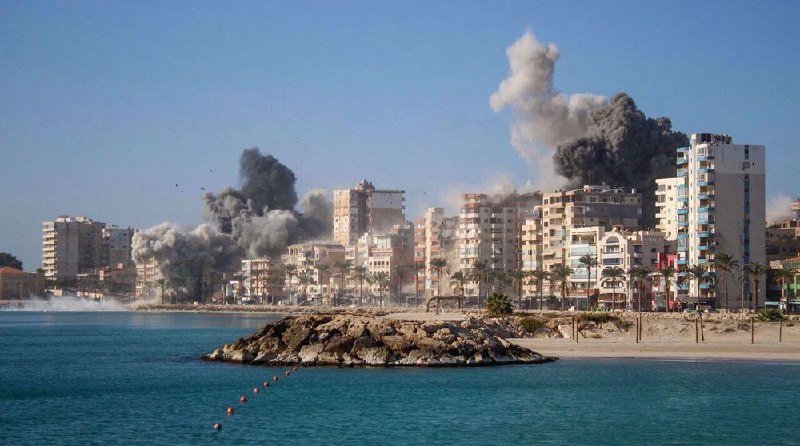
For the first time in this war, a Ukrainian strike has put a Russian oil refinery in Tatarstan on the operational casualty list. According to translations posted by the open-source monitor WarTranslated on 12 June 2026 (UTC), the Taneco complex in Nizhnekamsk — one of the largest refineries in the Volga heartland and a flagship of Tatarstan's industrial sovereignty — was hit overnight, with a local correspondent cited as claiming the facility was struck 58 times. The phrasing carries the marks of social-media fog-of-war ("or maybe a young patriot just lost count"), and the count should be treated as preliminary, but the underlying fact — a Ukrainian drone campaign is now reaching roughly a thousand kilometres from the front line into a Russian republic that has, until now, largely watched the war on television — is not in dispute.
What is unfolding is less a single audacious raid than the slow, methodical extension of Ukraine's long-range strike campaign into the energy heart of the Russian Federation. The Taneco plant sits on the left bank of the Kama, in a republic that produces more crude than Iraq and ships it west through the Druzhba pipeline system. Striking it is not symbolic; it is structural.
What we know, and what we don't
The reporting, all of it funnelled through WarTranslated's overnight aggregation on 12 June 2026, is consistent on the broad outlines and inconsistent on the particulars. The target is the Taneco refinery in Nizhnekamsk, Tatarstan. The operator is a Ukrainian special-operations cell working with the "Chernaya Iskra" ("Black Spark") resistance network inside Russia. The time window is the night of 11–12 June 2026. The mechanism is drones.
The contested number is the strike count. "58 times," attributed to a local correspondent, is the figure floating through Telegram channels; it should be read as a witness impression rather than a confirmed ordnance tally. The image in circulation shows a single large fire on the refinery perimeter, not 58 distinct impact points. Independent verification of unit damage, downtime and production loss has not been published by the plant's operator, the regional government, or the Russian Ministry of Energy at the time of writing. The Russian defence ministry has not, as of 12 June 2026 08:30 UTC, released a confirmation or denial.
That gap is itself a story. Russian authorities have become noticeably more selective about what they confirm in public when the target is a deep-lying industrial site, because the admissions have an effect on global crude benchmarks, on insurance premiums for Russian tanker cargoes, and on the political standing of regional elites — in Tatarstan's case, on the carefully managed autonomy that has long allowed the republic to keep a larger share of its own tax base than any other subject of the federation.
The counter-narrative, stated fairly
The Russian framing of these strikes is that they are a terrorist campaign against civilian energy infrastructure, designed to choke the population into political collapse. The argument is not without weight: refineries feed domestic gasoline markets as well as export terminals, and a sustained campaign does carry a measurable cost for Russian consumers at the pump, particularly in regions far from alternative supply.
Against that, the Western and Ukrainian framing — that Russia has used the revenues from these same refineries, year on year, to underwrite the invasion of a neighbour recognised as such by the International Court of Justice, and that degrading the war-making revenue stream is a legitimate countermeasure under the recognised doctrine of attacks on the enemy's war-sustaining economy — is also coherent and is the dominant read in Kyiv, in London and in the G7 capitals. The two readings are not symmetrical in the analytical sense, however: one argues about means, the other about ends, and the legal tradition since the 1977 Additional Protocols has consistently treated attacks on objects that sustain a belligerent's war effort as lawful so long as civilian harm is proportionate.
What sits behind the headlines
Strip the rhetoric away and the structural picture is straightforward. Ukraine, denied deep strike platforms in the early years of the war, has built, drone by drone, a layered long-range capability that now reaches the Volga Federal District. Each successful raid extends the insurance and logistics perimeter that Russia has to defend. Each pause in Russian air-defence interception, each moment when a refinery control room has to weigh whether to keep running in a strike corridor, imposes a real cost on a fiscal model that depends on crude-by-pipeline cash flow. The Taneco strike is not a miracle; it is a milestone on a curve that has been visible for at least eighteen months.
The wider question is whether this curve can be sustained. Ukrainian long-range production is finite. Russian air-defence, by all credible open-source accounts, is being reorganised to prioritise the energy grid, the capital, and a shrinking ring of high-value industrial assets. The next six to twelve months will determine whether Taneko is the first Volga-region refinery on the operational casualty list, or the high-water mark of a campaign that has now been countered.
The stakes, plainly stated
For Kyiv, the campaign is a way of converting a deficit in mass and materiel into a tax on Russian revenue. For Moscow, every week a Volga refinery runs at reduced throughput is a week in which the bargain at the heart of the war economy — barrels sold, rubles collected, soldiers paid — is renegotiated downward. For Tatarstan, the strike lands on a republic that has spent three decades cultivating the image of a model region: economically confident, politically loyal, but distinctly Tatar. The harder the war presses on the republic's flagship plant, the more loudly the question of regional leverage inside a federation at war will be asked in Kazan.
What remains genuinely uncertain, and where the evidence thins, is the operational impact. Refineries in Russia have a documented capacity to absorb damage, run reduced units, and recover throughput within weeks. The Taneco complex is large and modern, with parallel processing trains. A single overnight raid, however dramatic, does not by itself move the needle on Russian federal revenue. The campaign is the policy; the raid is one data point on the curve. The next several will tell us whether Kyiv is changing the arithmetic, or simply making the noise louder.
Desk note: the wire services have largely held this story to brief overnight mentions; the granular detail here is drawn from the WarTranslated aggregator feed and should be read as the open-source consensus, not as the final word on damage assessment.
Wire provenance
This editorial synthesis draws on the following public wire/social posts:
- https://twitter.com/wartranslated/status/2065337724798677399
- https://twitter.com/wartranslated/status/2065337724798677399/photo/1
- https://t.me/wartranslated
- https://t.me/osintlive
Follow the event.
These dated source records provide context. They do not retrospectively verify this archive article.
A dated voting record is evidence of one decision. Use the original UN record before turning it into an alignment label.
Visual explainer · historical vote of 2022-03-02 →