What the 14-point US–Iran draft actually says — and what it leaves out
A 14-point memorandum circulating in Tehran claims to lock in a permanent ceasefire across all fronts, including Lebanon. The text, its provenance, and the open questions are larger than the headlines suggest.
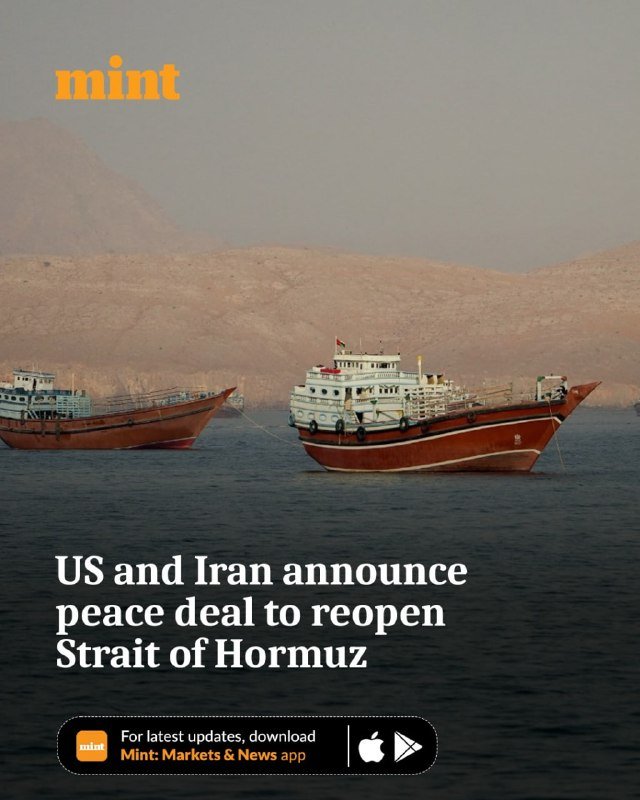
The text landed on Telegram at 09:19 UTC on 12 June 2026, attributed to the open-source channel Clash Report, and within thirteen minutes had been republished by GeoPolitics Watch and the Russia-affiliated intelligence channel RN Intel. It is, on its face, a draft memorandum of understanding between Washington and Tehran — fourteen numbered points, framed as a working document rather than a communiqué. The version in circulation is in English translation; the Iranian outlet Mehr News is the primary domestic source for the clauses. As of this publication, neither the US State Department nor the Iranian foreign ministry has publicly confirmed or denied the text.
The first clause alone explains why the document is moving fast. It commits both sides to a "permanent and immediate cessation of war on all fronts, including Lebanon" — language broad enough to cover the Hezbollah–Israel exchanges that have, at intervals over the past twenty months, pulled the wider region toward a wider conflagration. The second clause commits the United States to non-interference in Iran's internal affairs and to the recognition of Iranian sovereignty, a formulation Iranian negotiators have insisted on for at least a decade in off-record exchanges. The remaining twelve points, as published by Clash Report, deal with nuclear constraints, sanctions sequencing, the fate of Iranian funds held in third-country escrow, and maritime security in the Strait of Hormuz.
What the text commits, point by point
Reading the four most consequential clauses carefully, the document is closer to a framework than a treaty. The ceasefire language is absolute in tone — "permanent and immediate" — but silent on the verification mechanism. The sovereignty clause echoes the language of the 2015 Joint Comprehensive Plan of Action without naming it. The nuclear clauses, in the excerpts published, refer to a cap on enrichment rather than a roll-back, a meaningful distinction for Tehran, which frames any domestic enrichment capacity as a sovereign right. The sanctions clauses, as summarised in the Mehr News reading, envisage a phased return of frozen assets rather than a single transfer.
The Lebanon clause is the one that has travelled furthest in the regional press. A ceasefire that explicitly includes Lebanon binds the document to the security calculations of Hezbollah, Israel, and the Lebanese state simultaneously. None of those three is a signatory in the version currently circulating; the document frames them as covered parties rather than co-negotiators. That is a deliberate drafting choice, and one that has not yet drawn a public response from Tel Aviv, Beirut, or the UN Special Coordinator's office.
Why the leak, and why now
There is no recent precedent for a US–Iran text of this granularity to be released on Telegram before either side has put it on the record. The most plausible read is that the leak is itself a negotiating instrument: a draft, published, allows each side to claim credit for the concessions that survive contact with the press, and to back away from the ones that do not. The publication window — twelve hours after the most recent round of indirect talks in Muscat, according to the framing in RN Intel's repost — suggests the document is recent. The provenance, however, is Iranian: the only outlet that has been named in connection with the text is Mehr News, an outlet affiliated with the reformist wing of the Iranian press, and Telegram channels with a known interest in amplifying Tehran's diplomatic positioning.
That is not the same as saying the text is invented. Mehr News has previously carried the outlines of unofficial drafts in moments when the Iranian foreign ministry wanted to set a public floor for negotiations, and the structural similarity of the fourteen points to drafts reported by Western outlets in 2025 is high enough to give the document a baseline of plausibility. But plausibility is not confirmation. The sources do not specify whether the text was transmitted to the United States, whether it was authored in Tehran or in a third capital, or whether the numbered points represent the current state of play or a maximalist opening.
What is missing from the text
Three things that would normally appear in a US–Iran instrument of this scope do not, in the published excerpts. There is no mention of regional ballistic-missile programmes, no mention of Iranian support for armed groups beyond the ceasefire language on Lebanon, and no reference to human-rights provisions or prisoner-exchange language. The absence of all three is consistent with a document designed to be small enough to survive the political process in Washington and Tehran, and large enough to claim a diplomatic win on both sides. It is also consistent with a text that is genuinely preliminary.
The second clause — the non-interference commitment — is the one that, if it survives, does the most work. It does not undo the existing sanctions architecture. It does not reopen the UN file. It does, however, raise the political cost in Washington of any unilateral action that could be read as regime-targeting, and it does the same in Tehran for any action that could be read as a violation of the ceasefire. The clause is, in other words, a re-statement of the diplomatic floor both sides have been operating on for the past nine months. Its elevation to the top of a written document is the news, not its content.
The structural frame, in plain language
A reading of the moment that is more useful than the headlines: the United States and Iran have both concluded, on independent reasoning, that a re-escalation in the second half of 2026 is more costly to their respective political economies than a managed arrangement is. The arrangement does not need to be a peace. It needs to be a ceasefire with a sanctions-off-ramp, and it needs to include the Lebanese front, because the Lebanese front is the one that escalates fastest when nothing else holds. The 14-point text, if it is real, is the operationalisation of that logic. If it is not real, it is what each side would want the other to think the operationalisation looks like. Both readings point in the same direction: a deal is closer than it was three months ago, and the parties know they cannot afford to miss it.
Stakes and what to watch
A genuine text of this scope would be the most consequential US–Iran diplomatic document since the 2015 nuclear agreement. It would also be the first to explicitly bind the Lebanese theatre. The losers in that scenario are the actors who have built political capital on the assumption that the regional order is incapable of producing such a text — the hardline press on both sides, the arms-sale lobbies that have priced in continued tension, and the regional armed groups whose operational latitude would narrow sharply under a permanent ceasefire. The winners are the oil market, the Iranian state balance sheet, and any Lebanese faction that has been arguing for de-escalation on economic grounds. The time horizon is weeks, not months: if the text is real, it will either be confirmed by a State Department statement or quietly dropped, and the answer will come before the end of the current quarter.
The single largest uncertainty is the Israeli response. The document speaks of Lebanon as a covered front, not as a consulted party. Tel Aviv has historically refused to accept arrangements negotiated in capitals it considers hostile. The text, in other words, assumes an Israeli acquiescence that is not guaranteed, and on which the sources are silent. A serious regional deal in 2026 cannot be built on that assumption. Whether the drafters are betting that the assumption will hold, or have a separate track for it, is the question the next ten days will answer.
Monexus ran the leak in full so the wording can be audited by readers against the wire cycle, rather than digested through the editorial filters of any single capital.
Wire provenance
This editorial synthesis draws on the following public wire/social posts:
- https://t.me/ClashReport
- https://t.me/GeoPWatch
- https://t.me/rnintel
- https://en.wikipedia.org/wiki/Iran%E2%80%93United_States_relations
- https://en.wikipedia.org/wiki/Joint_Comprehensive_Plan_of_Action
- https://en.wikipedia.org/wiki/2025%E2%80%932026_Iran%E2%80%93United_States_negotiations
Follow the event.
These dated source records provide context. They do not retrospectively verify this archive article.
Separate what the nuclear watchdog reported from what it could not determine after the June 2025 strikes.