From ultimatum to handshake: how a 36-hour US-Iranian cycle broke the Strait
Inside the 36 hours that took the region from threatened strikes on Iranian infrastructure to a framework deal that includes sanctions relief, a US military withdrawal, and an end to the naval blockade.
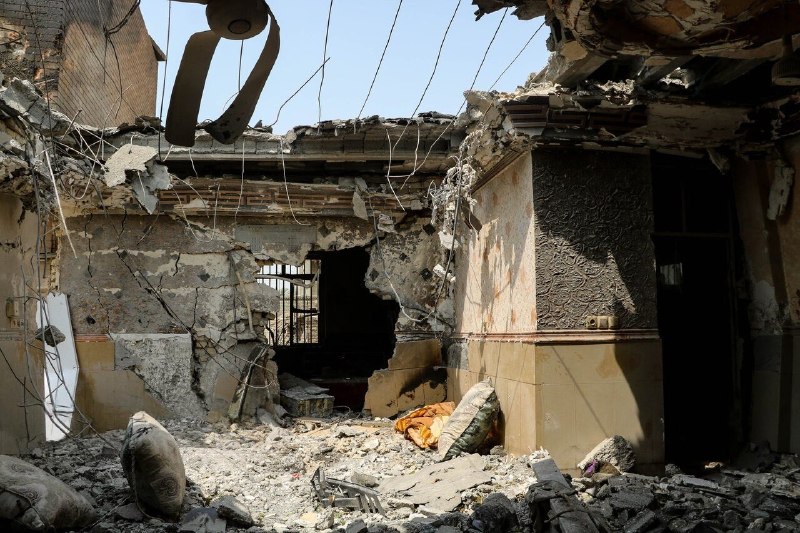
For roughly thirty-six hours between 11 and 12 June 2026, the US-Iranian confrontation compressed into a single trading week the kind of escalation-and-de-escalation sequence that normally takes months. By the close of 12 June 2026, Iranian state media was reporting that a deal with Washington was "largely finalized" — language the foreign minister's office has not used publicly in this cycle — and that the agreement included three structural concessions: the lifting of US sanctions, a withdrawal of US military forces from positions around Iran, and an end to the naval blockade that had bottled up shipping in the Strait of Hormuz for the preceding weeks. The framework, if it holds, marks the first time in this episode that the United States has committed in writing, even in preliminary form, to retrench militarily from the Persian Gulf while Tehran has agreed to make verifiable nuclear concessions.
The speed is the story. On 11 June 2026 at 17:33 UTC, Polymarket's news desk reported that the President had cancelled that night's planned operations on Iranian infrastructure; at 19:48 UTC, CryptoBriefing's wire service reported that US stocks had pushed to session highs on the same headline; at 23:03 UTC, the President told reporters the United States was "pretty close" to a deal. By 12 June 2026 at 04:31 UTC, public messaging had hardened again — the same office that had announced a near-deal was accusing Iran of stalling peace talks and warning that "we're going to hit them again hard today," according to Unusual Whales' live feed. Four hours later, at 08:05 UTC, Iranian state media confirmed a deal was in place; fifty-two minutes after that, at 08:57 UTC, Tehran upgraded its characterization to "largely finalized."
The pattern is worth naming, because it is the pattern this administration has run in every crisis since the spring: maximum-pressure language, a market-moving operational pause, an interim optimism window, a relapse into threat, and then a final structured announcement from the counterpart. The cycle is not random. Each phase is calibrated to move a different audience — equity desks, Gulf state capitals, Tehran's negotiating team, and the domestic political base — and each phase costs the other side something the next phase will try to recover.
What changed between 17:33 UTC and 08:57 UTC
The single most consequential decision in the cycle was the 11 June 2026 17:33 UTC cancellation of strikes on Iranian infrastructure. Polymarket's market-moving headline was the first public confirmation that kinetic action was off the table for the evening, and it landed on a US trading floor that had been pricing in a strike since the previous week's maritime incidents. CryptoBriefing's wire captured the equity reaction in real time: stocks pushed to session highs within minutes of the headline crossing terminals, with energy names reversing their premonth trajectory and tanker stocks giving back premium.
What the headlines did not say — and what the Iranian readout at 12 June 2026 08:05 UTC made explicit — was the price of that cancellation. The deal under discussion reportedly includes three pillars: (1) lifting US sanctions on the Iranian financial system and on Iranian energy exports, presumably in tranches tied to verification; (2) a withdrawal of US military forces from positions around Iran, which by early June had included a Carrier Strike Group in the Arabian Sea, B-2 sorties operating out of Diego Garcia, and a layered missile-defence architecture covering the Gulf; and (3) an end to the naval blockade that had effectively closed the Strait of Hormuz to non-excepted traffic since mid-May. By the time the BRICS News Telegram channel carried the 08:05 UTC Iranian state-media confirmation, the operational geometry of the Gulf had already begun to shift, with commercial shipping advisories noting that coalition naval task forces had begun standing down intercept postures.
The 12 June 2026 04:31 UTC relapse into strike language is best read not as a fresh turn toward war but as a negotiating posture, and Unusual Whales' live quote — "We hit them hard yesterday, and we're going to hit them again hard today" — sits in the same rhetorical register as prior deadlines in this cycle that ultimately resolved into framework agreements. Tehran's 08:57 UTC "largely finalized" language, by contrast, signals that the substantive text is closer to signature than to negotiation. The remaining gap is procedural: verification protocols for any nuclear rollback, the sequencing of sanctions relief against concrete Iranian steps, and the legal architecture for unfreezing Iranian oil revenues currently held in third-country escrow.
The naval blockade, and why the Strait mattered
For roughly a month before the 12 June announcement, the operational pressure point was the Strait of Hormuz, not the Iranian homeland. The naval blockade — the exact legal character of which the US Fifth Fleet has not formally characterised in public — had two effects. It throttled Iranian oil export revenue, which depends on maritime access for an estimated 80-90% of outbound crude. And it raised the global insurance premium for tanker traffic through the Strait, which carries close to a fifth of seaborne oil and a comparable share of LNG, to a level that several Gulf and Asian importers had begun to publicly flag as unsustainable.
The blockade therefore made a deal possible in a way that pure sanctions escalation had not, because it imposed costs on third parties — South Korean, Japanese, Indian, and Chinese refiners above all — who had begun to press their own governments to intervene. Tehran's negotiating leverage in the last week has rested less on its own military position than on the political cost to Washington of strangling allies' energy supply. The reported deal, by ending the blockade, returns the cost of the crisis to the Iranian domestic balance sheet and to the Iranian nuclear file, which is where the Iranian negotiating team has consistently said it is willing to trade.
That structural read is reinforced by the order in which the Iranian readout listed the three concessions. Sanctions relief is the headline that Iranian state media led with — predictable, given the domestic political weight of the rial and the price of basic goods. The US military withdrawal is the second pillar, framed in Tehran as the restoration of sovereignty. The end of the blockade is listed third, but is in practice the most economically consequential of the three for Tehran, and the most strategically consequential for the Gulf monarchies who had benefited from a constrained Iranian export volume. The sequence is itself a clue to the internal Iranian bargaining: the foreign minister's office will sell the sanctions win at home, the military leadership will sell the withdrawal, and the energy ministry will absorb the blockade's end as a structural adjustment.
What the Western wire is under-reporting
The dominant English-language frame on the 12 June 2026 cycle is the swing-factor narrative: a US President veering between escalation and restraint, with markets whipsawed by tweet-by-tweet posture. That frame is not wrong, but it leaves out two things. First, it under-states the agency of third-party capitals — Tokyo, Seoul, New Delhi, and Beijing — whose energy ministries had spent the preceding week publicly and privately warning Washington that the blockade's continuation was producing non-linear economic damage. Second, it treats the deal as a bilateral US-Iran transaction rather than as a regional rebalancing, in which the Gulf monarchies, Israel, and Iraq all have standing.
A second, more sceptical reading is also available. It is possible that the 12 June "largely finalized" Iranian readout is a negotiating posture, designed to lock in the equity rally and the US domestic "peace through strength" narrative ahead of an actual signing ceremony that may be weeks away. The asymmetry in language between "largely finalized" (Tehran) and "pretty close" (Washington) is consistent with that read: each side is trying to lock in the other before details harden. The Polymarket contract on whether a deal will be signed by 30 June 2026, which had drifted toward "no" in the days before the 11 June strikes cancellation, repriced sharply higher on the 12 June headlines but did not settle — a signal that informed money is treating the 36-hour cycle as a major move in a longer game, not as the end of it.
A third reading, less charitable to both sides, is that the cycle is performing the visual grammar of a deal without yet having built the verification architecture that would make it durable. The 2015 JCPOA collapsed, in part, because the inspection regime that was supposed to make Iranian compliance verifiable ran into political opposition in Washington before it ran into Iranian non-compliance. The architecture for verifying the deal reportedly under discussion on 12 June — and the specific role of the IAEA, which has not been named in any of the public readouts — is the variable that will determine whether this cycle closes or reopens.
The structural frame, in plain terms
Two patterns sit underneath the cycle. The first is that energy chokepoints have become the primary US coercive instrument against producer states, displacing the financial-sanctions architecture that dominated the 2010s. A naval blockade produces measurable economic pain in days; a sanctions regime produces it in quarters. The shift means that the cost of US-Iranian confrontation now falls, in its first weeks, on third-party importers — and therefore that the political coalition for de-escalation forms faster, and on different terms, than it did under the old sanctions-led model.
The second is that the deal-cycle's sequencing — strike threat, market reaction, cancellation, framework announcement — has become a recognisable tradable event. Equity desks now position around the cycle; tanker and shipping insurance markets reprice inside it; Polymarket and similar contracts price the binary. The fact that the cycle is now legible to markets is itself a constraint on how far any administration can push it before the economic cost of brinkmanship exceeds the political return. The 11 June 2026 17:33 UTC cancellation is best read as the moment that constraint bit.
What remains uncertain
The most important open variable is verification. None of the public readouts on 11-12 June 2026 specify the inspection regime, the role of the IAEA, or the timeline for sanctions-relief tranches. The second is the fate of the Iranian nuclear archive and of any undeclared facilities — the technical core of the 2015 deal's later collapse. The third is the regional response: whether Israel, which has historically treated any US-Iranian framework as a security setback, treats this one as a base case or as a temporary pause. The fourth is the Strait itself. The reported end of the naval blockade will not be verifiable in real time from public commercial-traffic data, and a partial implementation — an end to US-led intercept operations without a corresponding demilitarisation of the Iranian shore-based anti-ship missile batteries — is a plausible interim state that would satisfy the headline without restoring the pre-blockade norm.
The cycle that produced the 12 June 2026 framework will be tested in the days after this article publishes. The text of the deal, when it becomes public, will be the first durable artefact. The shape of the verification regime will be the second. The reaction of third-party capitals will be the third. Until all three are on the record, the 36 hours between 17:33 UTC on 11 June and 08:57 UTC on 12 June remain best read as the most consequential and the most reversible US-Iranian move of this cycle — and, for now, a deal in motion rather than a deal in hand.
This publication treats the 11-12 June 2026 US-Iranian cycle as a market-moving event sequence, not as a concluded diplomatic settlement. We have led with Iranian state-media readouts (via BRICS News) for the substantive content of the deal, with Polymarket and CryptoBriefing for the trading-day timing, and with the Unusual Whales feed for the parallel strike-language track. Where the public record is silent on verification, sequencing, and third-party positions, this article has said so explicitly rather than filling the gap with speculation.
Wire provenance
This editorial synthesis draws on the following public wire/social posts:
- https://t.me/bricsnews
- https://t.me/bricsnews
- https://t.me/CryptoBriefing
Follow the event.
These dated source records provide context. They do not retrospectively verify this archive article.
Separate what the nuclear watchdog reported from what it could not determine after the June 2025 strikes.