The 'greatest deal in history' that is also being bombed: parsing the US–Iran charade
Donald Trump is threatening to keep bombing Iran while also promising Tehran the deal of the century. The contradiction is not a glitch — it is the negotiating posture.
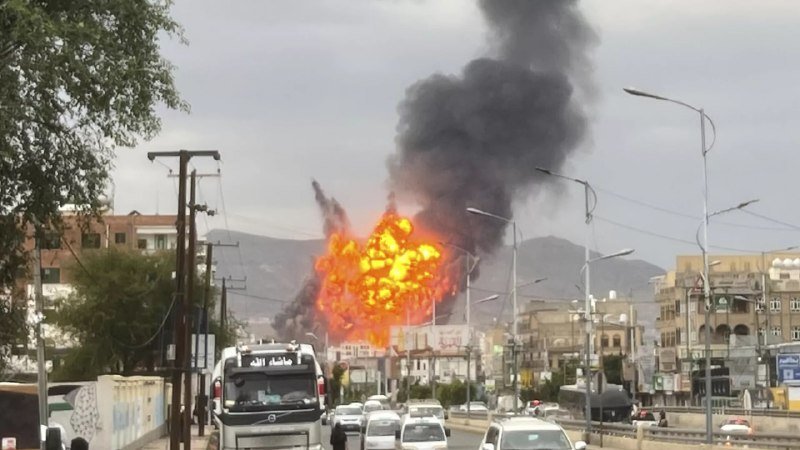
On 12 June 2026, with a draft text already circulating on messaging apps and the US President himself telling reporters a deal could be finalised "maybe this weekend," the same presidency was, in the President's own words, preparing to keep bombing Iran tonight. The two positions — pen and fire — are being run by the same White House in the same news cycle, and treating them as contradictory misses the point. They are the same instrument.
A staff-writer reading of the available reporting is straightforward: the United States is using kinetic pressure as the closing leverage on a sanctions-relief package. That is not a moral judgement, it is a description of a documented negotiating pattern. The Iranian state outlet Mehr, citing the draft text now in circulation, lists the US-side concessions under consideration: lifting key sanctions on oil exports, releasing Iran's frozen assets abroad, and taking steps to reintegrate the Islamic Republic into the global financial and energy system. (Mehr, via the Telegram channel ClashReport, 12 June 2026, 08:08 UTC.) Those are not minor items. They are the substantive core of what Tehran has demanded since the collapse of the Joint Comprehensive Plan of Action.
The deal that isn't, and is
The most telling line in the current reporting is also the most casually delivered. On 11 June 2026 at 18:24 UTC, a public post captured the President's framing of the offer: Iran could receive "the greatest deal in history" — if it surrenders and declares the United States the greatest power. (Polymarket, X post, 11 June 2026, 18:24 UTC.) Strip away the theatre and the conditional is real: the financial and security architecture being dangled in front of Tehran is gated on a public acknowledgement of US primacy that no Iranian government, of any faction, can issue without ending itself. The structure of the offer is the message.
That is why the kinetic track is not a distraction from diplomacy. It is the only thing that gives the diplomatic text any purchase. Sanctions relief of the scale Mehr describes — oil licences, asset releases, reintegration into dollar-clearing — is, on the US side, a discretionary act by the Treasury's Office of Foreign Assets Control. It can be granted, suspended, or rescinded at the stroke of a pen. Tehran knows that, because it has lived through four years of "maximum pressure" and is living through the bombing that the same President confirmed he intends to continue on the evening of 11 June 2026 (Unusual Whales, X post, 11 June 2026, 15:17 UTC). The Iranian negotiating position is therefore not "please give us a deal." It is: show us a deal that survives the next news cycle.
What the draft actually contains
Read against the Iranian framing, the Mehr-circulated draft is more interesting for what it normalises than for what it concedes. Lifting oil-export sanctions is a structural change in the global energy market. Iran holds the world's third- and fourth-largest proven oil and gas reserves, sits on top of a developed tanker-export infrastructure, and has, even under sanctions, kept roughly 1.3 to 1.8 million barrels a day moving through opaque channels. Full reintegration would not just refill Iranian state coffers; it would, over a six-to-eighteen-month horizon, alter the marginal supply curve for Brent crude and the discount structure on Urals and other heavy grades. The dollar-denomination of those flows is itself a US lever: a reintegrated Iran is, in the first instance, a country selling oil into a system whose plumbing Washington controls.
The release of frozen assets is the second-order concession and, from Tehran's perspective, the more humiliating one to accept. Frozen Iranian funds, held in escrow arrangements from the 2015 deal and from subsequent hostage-and-prisoner exchanges, are functionally a pile of money that the United States has, in effect, been using as off-balance-sheet negotiating collateral. Returning them is not a gift; it is a recognition that the collateral has now done its job. Reintegration into the global economy is the slowest of the three promises and the easiest to back-slide on. SWIFT access, correspondent-banking relationships, and reinsurance are all private-sector decisions that follow political signals — but the signal can be reversed the next time an IRGC-affiliated vessel is detained in the Strait of Hormuz.
The counter-read: why Tehran may still sign
The most plausible counter-reading is that the Iranian side has concluded it has more to lose from the open-ended bombing track than from a deal whose terms are, in the medium term, reversible. The Islamic Republic is running out of easy workarounds for the sanctions regime that has now spanned three US presidencies, and the domestic fiscal arithmetic is narrowing its options. The President of the United States, for his part, has a domestic political incentive to deliver a tangible, photographable "deal" with a long-standing adversary, and the joint incentives meet in the middle. Both sides can sell a text they have not yet implemented, and both sides can resume the war if the other side is the first to claim credit for the photography.
That is the structural frame, stated plainly. The deal is a deal about the terms on which the bombing can be suspended, and the bombing is the instrument by which the deal's terms will, in practice, be enforced. There is no contradiction. There is a public-private contract written in oil prices and drone footage, with a sunset clause of one American news cycle.
What remains genuinely uncertain
The reporting available on 12 June 2026 does not yet specify who on the Iranian side has signed off on the draft, what verification mechanism is being proposed for any nuclear or missile constraints, or whether the "this weekend" timeline reflects a substantive agreement or a staged photo opportunity timed to a domestic political calendar. The photograph circulating on X (sprinterpress, 12 June 2026, 06:53 UTC) and shown in media on the same day is described in the captioning as the agreement Trump referenced, but a photograph of a document is not a signature on a document. Readers should treat the existence of a draft as confirmed and the conclusion of a deal as, at this hour, not.
The historical lesson is also simple. Sanctions relief in US foreign policy is rarely permanent; it is conditional, renewable, and revocable on a Treasury list. Tehran knows this. Washington knows Tehran knows this. The negotiation, when it concludes, will not be the end of the pressure — it will be its re-rating.
This publication treats the US–Iran exchange on 11–12 June 2026 as a single, integrated news event: the diplomacy and the bombing are the same negotiating surface, photographed from two angles. The framing above is Monexus's; the underlying texts and statements are sourced below.
Wire provenance
This editorial synthesis draws on the following public wire/social posts:
- https://t.me/ClashReport
- https://x.com/sprinterpress/status/
- https://t.me/LiveMint
- https://x.com/polymarket/status/
- https://x.com/unusual_whales/status/