The Lebanon question: how a US-Iran deal put a Mediterranean state back on the table
A reported US-Iran framework now stretches to Beirut. The shape of any deal, and what Hezbollah expects from it, will determine whether Lebanon escapes the orbit of the wider confrontation or is pulled deeper into it.
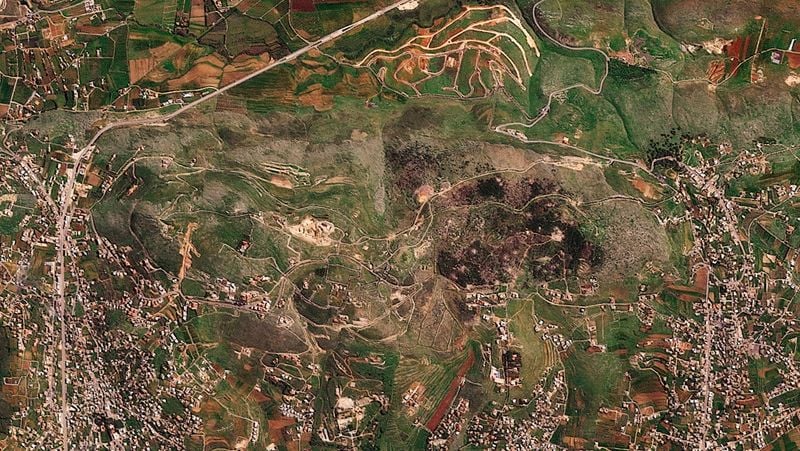
The diplomatic track between Washington and Tehran has, in the space of forty-eight hours, acquired a Mediterranean coastline. A US official told AFP on Friday, 12 June 2026 at 17:43 UTC that a proposed deal to end the confrontation over Iran's nuclear programme now includes Lebanon in its scope. The disclosure arrived on the same day CNN reported that the Pentagon had prepared, and President Donald Trump had paused, a ground operation into Iran to seize enriched uranium stocks. Within hours, a Hezbollah politician told Reuters that the movement was confident any settlement would extend to Beirut. The trajectory, in other words, is no longer just a nuclear file: it is becoming an architecture for the entire US-Iran relationship, with every allied and proxy relationship in the region re-priced against it.
What is being negotiated, in plain terms, is whether the United States can extract a verifiable limit on Iran's enrichment capacity while leaving in place a wider regional equilibrium that the Islamic Republic's partners are willing to accept. The Lebanese component is the test case. If Beirut is folded into a deal, Hezbollah expects its own deterrent and political weight in Lebanon to be acknowledged; if Beirut is excluded, the movement has signalled it will treat the package as illegitimate from the outset.
A framework widens, on and off the record
The public scaffolding of the deal is still hazy. The AFP dispatch, relayed by the BRICS News Telegram channel at 17:43 UTC on 12 June, summarises the position of a single US official: that the proposal under discussion contains provisions on Lebanon. No text has been published. The Reuters report filed at 17:35 UTC carries the counterweight — a Hezbollah politician, unnamed in the wire, asserting that the movement is confident Lebanon will be addressed. The two statements do not, on their face, contradict each other. They sketch a process in which the United States believes it can put Lebanon on the table and Hezbollah believes the table will, one way or another, end up including it.
What sits between the two is the Iranian negotiating position. Iranian state-aligned channels have, in recent days, leaked elements of a prospective agreement that Trump publicly rejected on Friday, telling reporters that Iran's account "bears no relation to the truth" — a remark carried on the Polymarket news wire at 14:20 UTC. The denial is itself informative: both sides are now managing expectations through selective disclosure, and both are treating the Lebanese question as a marker of seriousness. A deal that ignores Beirut, from Tehran's vantage point, would amount to a partial settlement — a pause in the nuclear file that leaves the wider regional architecture untouched.
The military backdrop: a paused ground option
The CNN reporting, aggregated by the BRICS News feed at 16:46 UTC, raises the cost of the diplomatic track by describing its alternative. According to the network, the US military had planned a ground incursion into Iran intended to seize highly enriched uranium stocks; Trump paused the option. The credibility of that option is, in part, what gives the current negotiations their weight. A diplomatic process that proceeds in the shadow of a prepared — though halted — ground operation is not the same animal as one conducted against the mere threat of air strikes. The political economy of the negotiation is set by the willingness of the United States to use force, and by the willingness of Iran to accept limits that make the use of force unnecessary.
This dual track is now standard in the region. The May 2025 US strikes on Iranian nuclear facilities at Fordow, Natanz and Isfahan — a campaign in which the United States used GBU-57 bunker-busters against deeply buried enrichment halls — demonstrated that the American operational menu extends beyond standoff munitions. The reported plan to put boots on the ground to physically secure enriched material is the next rung. That it was prepared and then paused is a signal about how the White House intends to use the threat: as leverage, not as policy.
The Hezbollah variable
Hezbollah's confidence, as reported by Reuters, is not bluster. The movement fought a bruising war with Israel in late 2024 and emerged diminished but intact; its leadership survived, its rocket and drone inventories have been rebuilt with Iranian assistance, and its position inside Lebanon's political system, while contested, has not been erased. A US-Iran deal that did not address the Lebanese file would, in effect, leave the movement's status as a non-state armed actor untouched — and that, from Washington's perspective, is the point. From Tehran's, the same omission is a tell that the United States is not serious about a regional settlement.
The arithmetic is straightforward. If Iran agrees to constrain enrichment, ship out material, or accept intrusive inspections, it will demand something in return beyond sanctions relief. The most valuable concession it can extract, in its own strategic logic, is an end to the infrastructure of US-Israeli strikes on its partners. That infrastructure runs through Lebanon, through Syria, through Iraq. Beirut is the most legible piece of it. A deal that names Lebanon — even in a side letter, even in a vague commitment to "de-escalation" — gives Tehran a political asset to hand to its allies. A deal that does not name Lebanon hands Hezbollah an argument for why the deal itself is a capitulation.
The Lebanese state's capacity to absorb any of this is the part of the picture the wire reporting does not address. Beirut's government, even in its more functional iterations, does not control Hezbollah's arsenal. It does not control the Iranian supply lines that cross Syrian territory. It does not control the southern suburbs of the capital or the southern periphery of the country, both of which sit inside the movement's operational footprint. A diplomatic agreement that mentions Lebanon in passing will land on a state that is in no position to deliver on it. That gap — between what is signed in Washington or Muscat or Doha, and what is enforceable in Beirut — is the seam this deal will, in all probability, tear open.
What the reporting does not yet say
Three points of uncertainty deserve flagging. First, the AFP-sourced claim that Lebanon is "included" in the proposed deal is, at the time of writing, the position of one US official relayed through one wire. There is no published text, no joint statement, no Iranian confirmation. Second, the CNN account of a planned ground operation is similarly single-sourced, and the timing of its pause — measured in days, not weeks — leaves open the question of whether the option has been shelved or merely deferred. Third, the Hezbollah politician cited by Reuters is not named in the dispatch, which makes the assessment of internal movement debate impossible. The confidence being expressed may be the confidence of the political wing; the assessment of the military wing may differ.
What can be said is that the Lebanese file is no longer adjunct to the nuclear file. It has migrated, in the space of a week, from background to foreground. The American side is signalling that it intends to negotiate the regional architecture, not just the enrichment programme. The Iranian side is signalling, through the polite form of allowing its account to be leaked and then publicly disputed, that it expects to be paid in regional terms. The Lebanese state, which has not been asked whether it consents to this arrangement, is the object of the negotiation rather than a party to it. That is the asymmetry the coming weeks will have to absorb.
Stakes
The stakes line up cleanly. For the United States, a deal that includes Lebanon is a deal that tries to convert a single-file arms-control outcome into a regional one. If it works, the model generalises: subsequent negotiations with Iran become conversations about the entire US-Iran relationship, and the regional order that emerges is one in which Washington's writ runs from the Mediterranean to the Gulf. If it does not work, the ground option returns, the nuclear programme re-expands, and Lebanon becomes a theatre of renewed confrontation.
For Iran, the stakes are symmetric and inverse. A deal that names Lebanon is a deal that gives Tehran a face-saving regional concession in exchange for a substantive nuclear concession. The internal political economy of such an outcome — selling a climbdown to a base that has been told, for forty years, that the revolution is irreversible — depends on that regional concession being real.
For Hezbollah, the calculation is existential. A deal that acknowledges its weight, in any form, is a deal that legitimises the political outcome of the 2024 war. A deal that does not acknowledge it is a deal that pushes the movement back toward the only leverage it has ever reliably possessed: the threat of renewed fighting.
For Lebanon, the calculus is grimmer still. The country has spent the better part of two decades being negotiated around, in or over. A settlement in which its name appears in a US-Iran communiqué but its government has no seat at the table is, in form, more of the same.
The desk framed this against two competing reads. The Western-wire line, in AFP and CNN, treats Lebanon as a manageable addition to the nuclear file. The Iranian-aligned line, filtered through the Reuters dispatch from a Hezbollah source, treats the nuclear file as a manageable addition to the regional one. The Monexus read is that the latter is closer to the structure of the negotiation: the United States may have walked in with a single-file brief, but it will walk out with a regional one, because that is the only currency the other side accepts.
Wire provenance
This editorial synthesis draws on the following public wire/social posts:
- https://t.me/bricsnews
- http://reut.rs/4usDNMd
- https://t.me/bricsnews
Follow the event.
These dated source records provide context. They do not retrospectively verify this archive article.
Separate what the nuclear watchdog reported from what it could not determine after the June 2025 strikes.