USMNT's golden cohort faces the harshest test: a World Cup on home soil
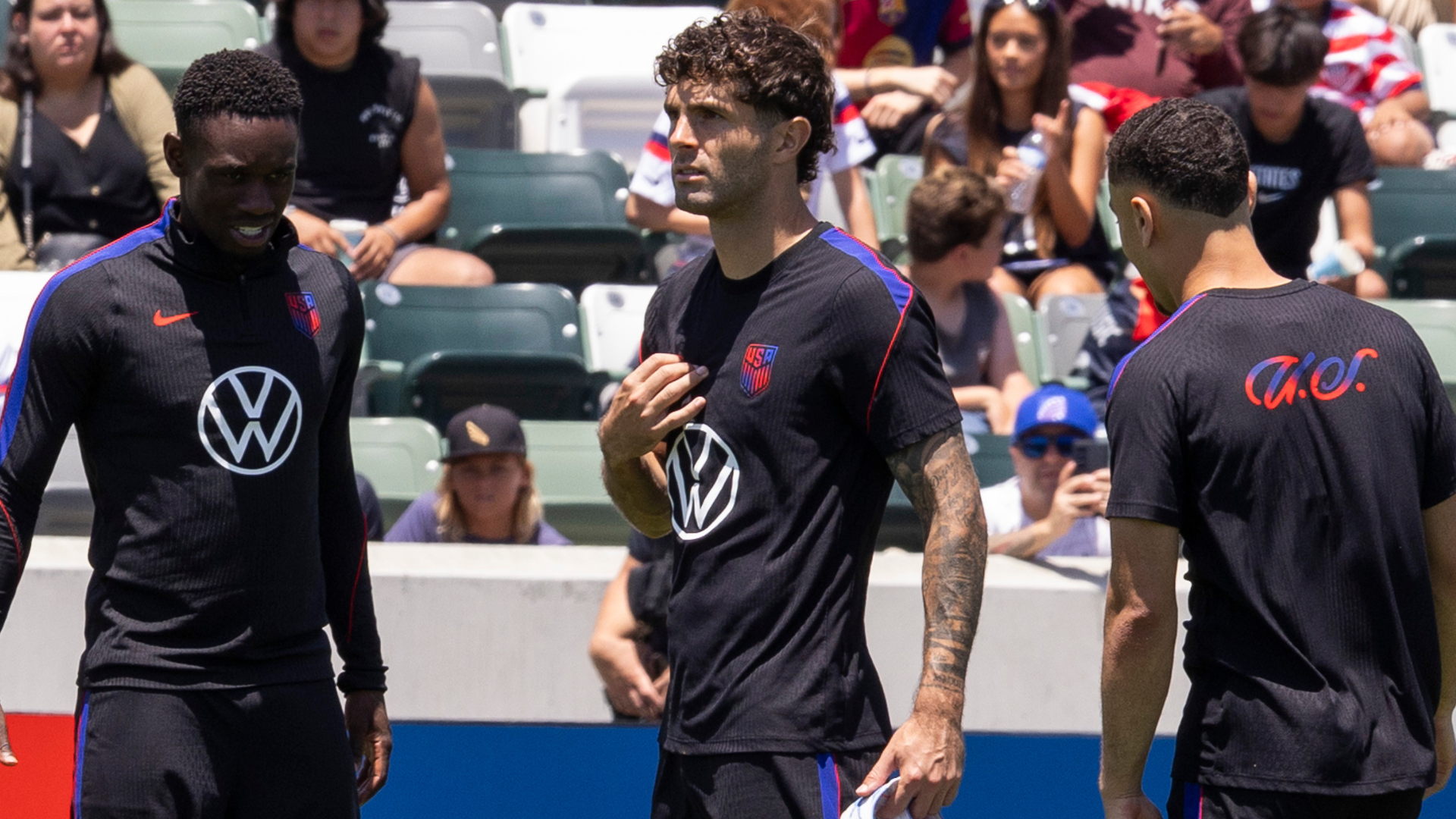
The United States will help open the FIFA World Cup on home soil in June 2026, and the team that walks out in front of its own supporters is, by every published account, the most credentialed generation of American men to wear the shirt. The composition of the squad — and the window in which it was assembled — is now the basis on which the country will be judged.
The case the wire has settled on is unusually tidy. A majority of the players expected to feature in the USMNT's World Cup squad have been running together in the U.S. youth national team program since their teens, and the spine of that group is hitting its playing prime. CBS Sports reported on 11 June 2026 that the team is chiefly made up of players described as members of a golden generation now entering their peak years. That framing has migrated from preview copy into the working assumption of the American soccer press in the run-up to the tournament.
A group that grew up together, on a clock it cannot reset
The structural advantage the USMNT claims is continuity, not depth of individual stars. Most of the projected squad has cycled through the same U-17, U-20 and senior-tournament setups, and the chemistry is treated by American outlets as a competitive asset in its own right. CBS Sports, again on 11 June 2026, framed the current cycle as a coming-of-age moment for a cohort that has been measured against senior-team football since the U-20 cycle that preceded the 2022 World Cup in Qatar.
That history matters because the clock on this group is finite. Christian Pulisic, Weston McKennie, Tyler Adams, Yunus Musah, Folarin Balogun, Giovanni Reyna and Tim Weah are, in most published projections, expected to form the core of a squad that will not field this exact core at the 2030 tournament with the same physical tools. The question the home World Cup is being asked to settle is whether the cohesion survives a knockout round against a confederation that, by FIFA rankings and by recent tournament results, is in front of them.
The 48-team field changes the math
The other structural shift is the field itself. FIFA's expansion to a 48-team tournament, applied for the first time at a senior men's World Cup, redraws the path through the group stage. CBS Sports' group-by-group hub on 11 June 2026 mapped every group and every fixture for the 48-team field, a volume of matches that gives the USMNT a longer runway in the round-robin phase than any previous host enjoyed.
The corollary is less comfortable. A larger field means a knockout bracket that absorbs more middling sides, which means the round of 32 and round of 16 are now tournament stages in their own right. A group-stage exit, which would have been a defining humiliation in a 32-team format, becomes a harder line to cross — and a deeper loss of face, on home turf, than at any prior U.S. tournament. The group-stage standings tab now maintained by CBS Sports will, by mid-tournament, function as the dominant daily news cycle for American soccer.
The counter-read: depth, not stars, decides host runs
The skeptical case is not that the talent is overstated — the U.S. talent pool is, on most objective measures, deeper than at any prior cycle. It is that home-soil World Cups have rarely been settled by the quality of the starting eleven. Hosts tend to be undone by the third match of the group, by fixture congestion, and by the absence of a Plan B when opponents decide to sit deep. Senegal 2002, South Korea 2002, Russia 2018 and Qatar 2022 all exited before the semifinal despite a partisan crowd and a week of grace; only South Korea in 2002 made the last four of that group, and that run still required an extra-time win over Spain and a stoppage-time goal from a referee-aided call that has never been cleanly cleared up.
The published U.S. preview line, per CBS Sports, has been more measured than the hype cycle suggests: a side that has come of age, not a side that has won. That distinction will be tested the first time the U.S. concedes first in front of a sold-out NFL stadium.
Stakes, structural frame, and the narrow band of acceptable outcomes
What is at stake is less the trophy — the betting public and the U.S. press both understand that a semifinal, not a final, is the realistic ceiling — and more the consolidation of a federation project that began in earnest with the failed 2018 qualifying campaign and rebuilt itself around the player-development pipeline that has produced the current squad. A deep run on home soil converts that pipeline into political capital for the federation, the clubs that develop the players, and the league (Major League Soccer) that wants to argue it is the structural reason the pipeline exists. An early exit reverses the arrow on every one of those arguments.
The narrower structural read is that World Cups hosted by the United States tend to be remembered less for the host's results than for what they did to the host's federation. The 1994 tournament, which the U.S. also hosted, ended in a round-of-16 loss to Brazil; the lasting legacy was MLS, which launched the following year. A repeat in 2026 — a deep run, a federation that survives it intact, and a league that can claim the credit — is the realistic upside. A repeat in the other direction is the realistic downside. The wire coverage to date is, fairly or not, betting on the first.
This article was framed in plain editorial voice from CBS Sports' 11 June 2026 World Cup preview coverage, with no independent claim about the USMNT's prospects beyond what those previews have published. The harder questions — the third group-stage match, the knockout ceiling, the federation politics that follow the tournament — are not yet in the public record.