Yoon sentenced to 30 years as Seoul court ties drone flights to martial-law plot
A Seoul court has jailed the impeached former president for 30 years, ruling the 2024 drone flights over Pyongyang were part of an attempt to manufacture a crisis and justify authoritarian rule.
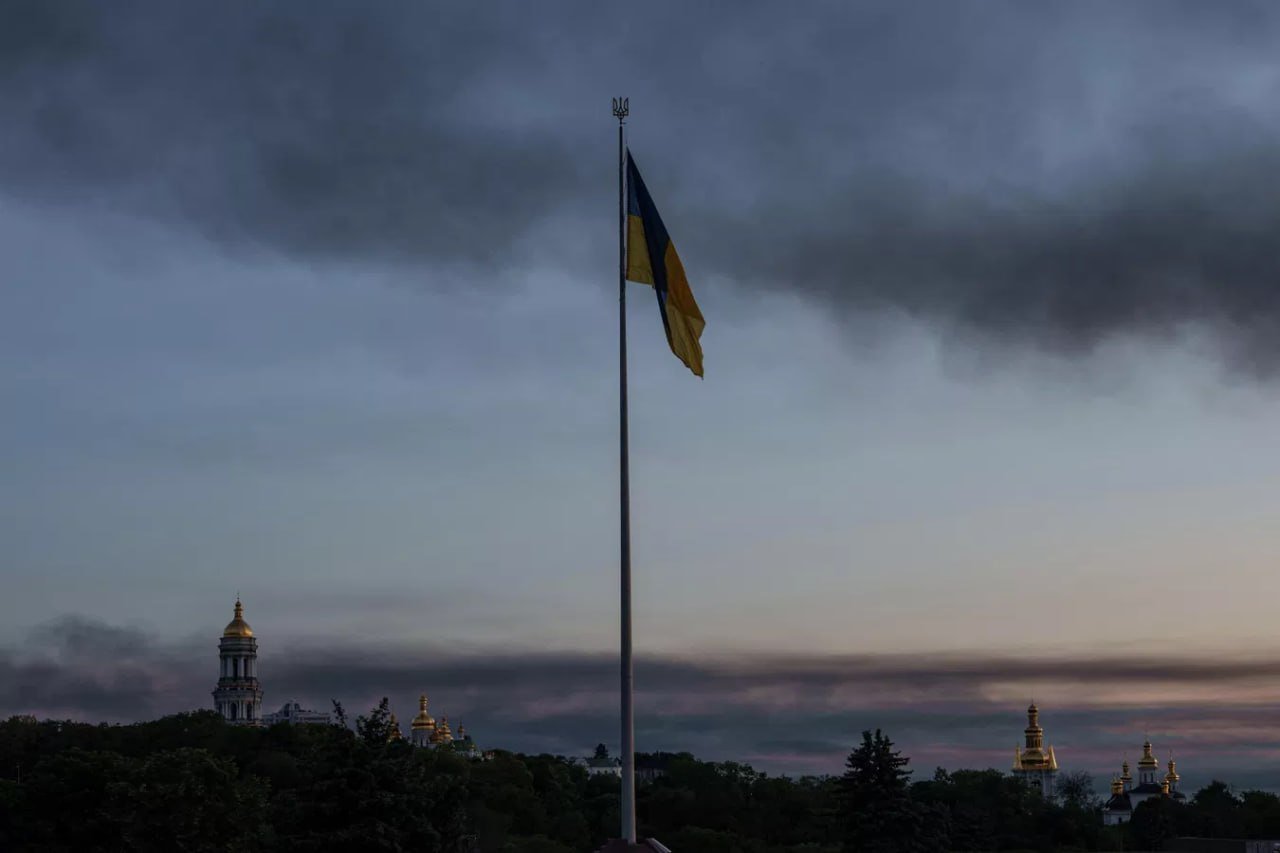
A Seoul court sentenced former South Korean President Yoon Suk Yeol to 30 years in prison on Friday 12 June 2026, ruling that a covert military operation that sent drones into North Korean airspace in 2024 was part of a deliberate attempt to manufacture instability and justify an authoritarian power grab. The verdict is the first criminal conviction to bind the short, chaotic period of martial law that Yoon declared in December 2024 to the wider machinery of his presidency, and it lands as South Korea continues to digest what its own institutions — courts, election commission, opposition-led parliament — were able to do to a sitting head of state who tried to shut them down.
The judgment, handed down in the morning in Seoul, treats the drone flights not as a rogue intelligence stunt but as evidence of premeditation. Prosecutors had argued throughout the trial that the overflights of Pyongyang were designed to provoke a North Korean reaction severe enough to give Yoon cover for the 3 December 2024 martial-law declaration; the court, according to the Reuters wire carried by the Telegram channel wfwitness, accepted that framing. The sentence — 30 years — is among the heaviest ever imposed on a former South Korean head of state and signals that the judiciary views the episode as a constitutional crime, not a policy failure.
What the court actually found
The New York Times, citing the verdict, reported that the court concluded Yoon "had sought to stir up instability to justify his bid for authoritarian rule in 2024." That formulation matters. It is not a finding that the drone flights were merely reckless, nor that they were an act of war Pyongyang could have responded to. It is a finding of purpose: that the flights were instrumental, designed to produce a security crisis that the sitting president could then cite as the predicate for extraordinary measures. In the court's reading, the December 2024 martial-law declaration — hours of troops surrounding the National Assembly, special-forces helicopters on the roof — was the destination, not the aberration.
Al Jazeera's breaking-news wire on the sentencing frames the case in narrower terms — a 30-year term "for sending military drones into North Korea" — which captures the statutory hook without the political framing. Both reads are consistent with the same underlying conduct: a covert operation against a neighbouring state, ordered from inside the presidential office, that the court has now ruled served a domestic political end.
A wider pattern, not a single decision
The drone operation is the second of the martial-law-era plots to be tested in court. The first — the December 2024 declaration itself, the deployment of troops to the legislature, the attempt to arrest opposition politicians — was the visible event that the country watched in real time and that ultimately produced Yoon's impeachment. The drone case is the connective tissue: it is the alleged justification. If the martial law was a fit of panic, the sentence would be lighter and the doctrine narrower. By imposing 30 years on the predicate act, the court is saying the predicate act was calculated.
This matters for how the rest of the cases proceed. Yoon still faces separate trials on insurrection charges linked to the December declaration itself, on allegations that he obstructed the investigation, and on counts arising from the parallel attempt to detain then-opposition leader Lee Jae-myung. The drone conviction establishes a template: covert operations ordered from the Blue House, executed by military intelligence, justified on security grounds, and in fact serving a domestic political purpose. Each subsequent verdict can now lean on this finding of intent.
The North Korea problem the verdict creates
Pyongyang has not been a quiet player in the South's constitutional drama. North Korean state media has used the Yoon case intermittently to argue that successive South Korean governments pursue hostile policies regardless of which party holds the Blue House — a position the drone verdict does nothing to weaken. The court's own narrative — that the flights were designed to provoke a North Korean response — implicitly confirms that South Korean military assets were probing DPRK airspace without a publicly declared security rationale.
The structural irony is that a court ruling designed to punish an attempted authoritarian power grab has also, in the same document, validated a North Korean talking point: that the drones over Pyongyang were not a routine intelligence operation but a political act. For the Yoon defence team, that is an argument against the sentence; for Pyongyang, it is confirmation. For Seoul's diplomats, it is an additional explanation they will need to give to partners in Washington, Tokyo and Beijing about why a South Korean court has now formally characterised a cross-border military operation as a constitutional crime.
What remains contested
The defence is expected to appeal, and the legal picture is not closed. Two questions will dominate the next phase. First, the causation finding — the court's conclusion that the flights were designed to provoke a North Korean response — is an inference about intent, not a confession. The appeal will press on whether the evidentiary record supports that intent finding as distinct from mere recklessness. Second, the relationship between the drone conviction and the still-pending insurrection case is procedurally awkward: a court has now ruled that the drone operation served an authoritarian purpose, while the insurrection case — which carries the heaviest potential penalties — has yet to be heard on its merits.
Monexus has not seen the full written judgment; the wire reporting summarised above captures the operative findings, but the underlying reasoning — the specific documentary and witness record the court relied on — is not yet public. The sentence is the headline; the written opinion, when released, will determine whether appellate courts treat the drone conviction as a clean standalone ruling or as a politically entangled first move in a longer legal sequence.
For South Korea's democratic institutions, the signal of the 30-year term is unmistakable. A former president attempted to use the security apparatus against his own legislature; the legislature impeached him; the election commission and the courts have since processed that impeachment into a series of criminal convictions. Whether one agrees or disagrees with the court's reading of intent, the institutional chain has held under a stress test that few consolidated democracies have had to run.
This article was filed in line with Monexus's standard desk protocol: South Korean and Western wire reporting on the verdict (Reuters via wfwitness, Al Jazeera, The New York Times) is the primary evidence base; the court's own written judgment was not available at the time of writing and is flagged as such.
Wire provenance
This editorial synthesis draws on the following public wire/social posts:
- https://t.me/wfwitness