A single rocket, a border siren: the small incidents keeping the Hezbollah–Israel front line alive
On the evening of 13 June 2026, sirens sounded in Metula and the Israeli Air Force reported intercepting a single Hezbollah rocket aimed at soldiers in southern Lebanon. The episode fits a familiar pattern of low-volume fire that the IDF is under growing pressure to absorb without escalation.
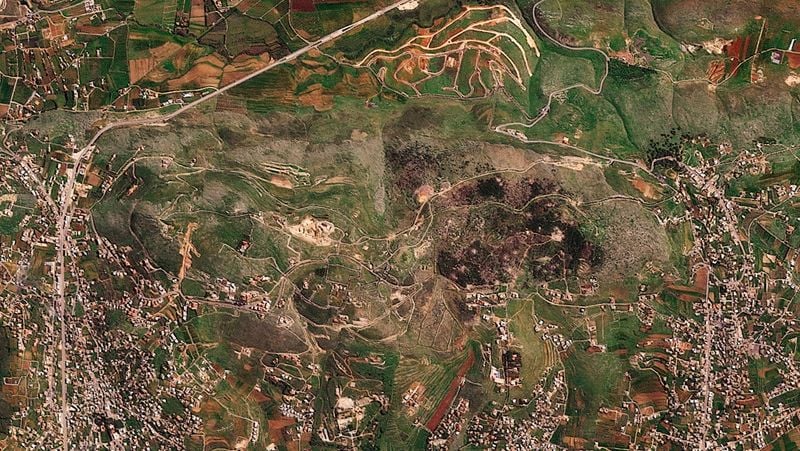
At 20:53 UTC on 13 June 2026, the Israel Defense Forces announced that its air force had intercepted a rocket launched by what it termed "the Hezbollah terrorist organization" toward Israeli soldiers operating in southern Lebanon, with no injuries reported on the Israeli side. Within minutes, alerts sounded in the northern Israeli border town of Metula, and open-source intelligence accounts tracking the frontier were posting that the projectile had been shot down before impact. The incident is small by any conventional measure — a single rocket, a single interception, a single siren — yet the reporting around it captures the texture of the Israel–Lebanon front in mid-2026: low-volume, technically managed, politically significant.
The reason a single interception is worth tracking is that the Israel–Lebanon frontier has become the most carefully calibrated of the country's active security files. The October 2023 Hamas-led attack and the war that followed in Gaza have periodically opened second fronts in the north, and every salvo exchanged across the Blue Line is now read in Tel Aviv, Beirut, Doha, Tehran and Washington for what it implies about restraint, deterrence and the unfinished business of post-ceasefire arrangements. A 13 June episode that produces no casualties is, in that sense, the front line behaving as designed.
What the IDF and the trackers reported
The IDF's official Telegram channel posted at 20:53 UTC that the air force had "intercepted a rocket launched by the Hezbollah terrorist organization toward IDF soldiers operating in southern Lebanon," and that "no injuries were reported." The post framed the target as a military position rather than an Israeli community, which is the wording the IDF has used in recent months when fire is directed at troops inside Lebanon rather than at towns on the Israeli side of the border. The mapping account AMK_Mapping, drawing on the same alert flow, reported at 20:54 UTC that "Hezbollah attacked IDF positions in southern Lebanon with rockets" and noted that "the IDF claims only one rocket was launched, and that it was shot down," adding that "sirens sounded in the neighbouring border Israeli town of Metula." GeoPWatch, another open-source channel, echoed the alert at 20:55 UTC, writing that "alerts" were "now in Metula" and relaying the IDF statement that a rocket aimed at Israeli troops in southern Lebanon had been intercepted "a short while ago."
The three accounts converge on a narrow set of facts: one rocket, one interception, sirens in Metula, no reported injuries. The two tracking channels add context the IDF's brief statement does not — namely that the sirens that activated in Israel were triggered by an inbound projectile that the military says was already neutralised. That distinction matters for residents of Metula, a town of roughly 1,500 people on the Israeli side of the border that has experienced repeated evacuations and intermittent rocket alerts since October 2023.
Why the wording matters
The IDF's reference to "IDF soldiers operating in southern Lebanon" is itself a signal. Israeli ground forces have conducted periodic operations inside Lebanese territory since the start of the war on the northern front, framed by the military as limited, targeted activity against Hezbollah infrastructure in the area adjacent to the border. When the IDF describes a rocket as having been fired at soldiers inside Lebanon rather than at Israeli territory, it is drawing a line between two categories of incident: those that engage Israeli troops deployed forward of the border, and those that strike Israeli communities and infrastructure behind it. The latter category, historically, has produced more forceful Israeli responses.
The wire language of "alerts in Metula" — repeated by both AMK_Mapping and GeoPWatch — is also a function of Israel's layered early-warning system. Sirens in a border town do not necessarily indicate impact; they can be triggered by a launch detected across the border, by a projectile thought to be heading in that direction, or by debris from an interception. Monexus could not independently verify from the available source material whether the Metula sirens were a direct response to the inbound rocket or a precautionary activation triggered by the launch itself, and the IDF's statement does not address it.
The structural picture: a frontier designed to absorb
Read in isolation, the episode is a footnote. Read against the back catalogue of similar incidents, it is the front line functioning in its current mode. The 13 June 2026 report arrives against a backdrop in which the Israel–Lebanon border has, for the better part of three years, been the site of regular but carefully contained exchanges: rockets, anti-tank missiles and drone incursions from Hezbollah and aligned groups; targeted strikes, commando operations and air activity from Israel; and a diplomatic and intelligence track running in parallel, mediated by the United States, France and, at various points, Qatar.
Two structural features define the current arrangement. First, the volume of fire is low relative to the capacity of both sides. The 13 June episode — one rocket, intercepted — is consistent with a pattern in which Hezbollah or its affiliated cells retain the ability to launch, and Israel retains the ability to intercept, without either side appearing to seek a step-change. Second, the framing of each incident is itself a contested object. The IDF's brief, blunt language ("the Hezbollah terrorist organization," "intercepted") is mirrored by Hezbollah-aligned channels that, in parallel reporting not included in this thread, characterise the same actions as legitimate resistance against an occupying force inside Lebanese territory. The two narratives rarely engage with each other directly; they coexist as parallel ledgers.
The pressure on that arrangement is not symmetric. Israel is the side that has evacuated or seen the departure of tens of thousands of residents from northern communities since October 2023, and the political clock on returning them to homes near an active rocket frontier is a domestic constraint on its decision-making. Hezbollah, by contrast, has absorbed significant losses to its senior cadre and infrastructure since the start of the war and operates under the broader shadow of the wider regional confrontation, including the setbacks experienced by its Iranian patron.
The plausible counter-read, and the limits of the available evidence
A reasonable alternative reading is that episodes like the 13 June interception are not the front line behaving as designed but the front line under stress — a sign that the deconfliction regime between the two sides is thinner than the official language suggests, and that any single malfunction, miscalculation or political shock could escalate. The siren in Metula, in this reading, is evidence that Israeli civilians remain within the reach of a launch that the military says was successfully intercepted; the margin between "intercepted" and "not" is, in practice, a function of operator skill, system availability and the specific geometry of the engagement.
This publication finds the more cautious reading more defensible on the available evidence. The 13 June episode produced no reported Israeli or Lebanese casualties, no confirmed infrastructure damage and no immediate Israeli political response beyond the standard military statement. The post-incident posture — three Telegram channels producing near-simultaneous, broadly consistent accounts; no Israeli retaliatory strike announced in the hour after the interception; no Hezbollah statement claiming the attack or claiming a different outcome — is consistent with an incident that the relevant actors have filed under "managed" rather than "escalation." That is not the same as saying the frontier is safe; it is saying that, on the night of 13 June 2026, the system held.
What the source material does not establish is the broader context that would allow a fuller judgment. The thread does not specify whether the rocket fire was in response to a particular Israeli action, whether it was part of a pattern of launches in preceding days, or whether it was connected to diplomatic activity elsewhere. The IDF statement does not identify the specific unit or position targeted, and the open-source channels do not report a Hezbollah claim of responsibility within the window of the thread. Each of these gaps is normal for a fast-moving frontier incident, and each is the kind of detail that, in the hours and days that follow, will typically be filled in by wire reporting, on-the-ground photography and, often, by the parties themselves.
Stakes
The stakes of an incident like this are not measured by the destruction it causes but by the precedent it sets. Every intercepted rocket, every siren that proves precautionary, every hour in which the post-incident posture is "managed" rather than "escalation" is a data point in a slow accumulation of evidence about whether the Israel–Lebanon frontier can be held at low intensity while the war in Gaza and the wider regional confrontation continue. If the data points stop accumulating — if the sirens begin to correspond to impacts, or the interceptions begin to fail, or the political pressure to respond begins to override the operational preference to contain — the same arithmetic that has kept the front quiet since late 2023 will break. On the evening of 13 June 2026, the available evidence is that it did not break. That is a thin, conditional reassurance, and the right way to read it is as a record of a system that is currently working, not as a forecast that it will continue to.
Desk note: Monexus has reported the 13 June 2026 Metula siren and Hezbollah rocket interception strictly on the basis of the IDF's own brief and two open-source tracking channels, with no elaboration beyond what those sources establish. Where the available material is silent — on Hezbollah's claim of responsibility, on the specific IDF unit targeted, on any prior incidents in the preceding 24 hours — this publication has said so rather than fill the gaps. The piece is structured around the gap between the smallness of the event and the weight of the pattern it sits inside.
Wire provenance
This editorial synthesis draws on the following public wire/social posts:
- https://t.me/idfofficial
- https://t.me/AMK_Mapping
- https://t.me/GeoPWatch