Smotrich's 'ten buildings' threat and the question of Israeli escalation logic
Israel's far-right finance minister says the only way to deter Hezbollah is destruction on a 10-to-1 ratio. The wire has spent 36 hours arguing over what he meant — and what the IDF is now expected to do.
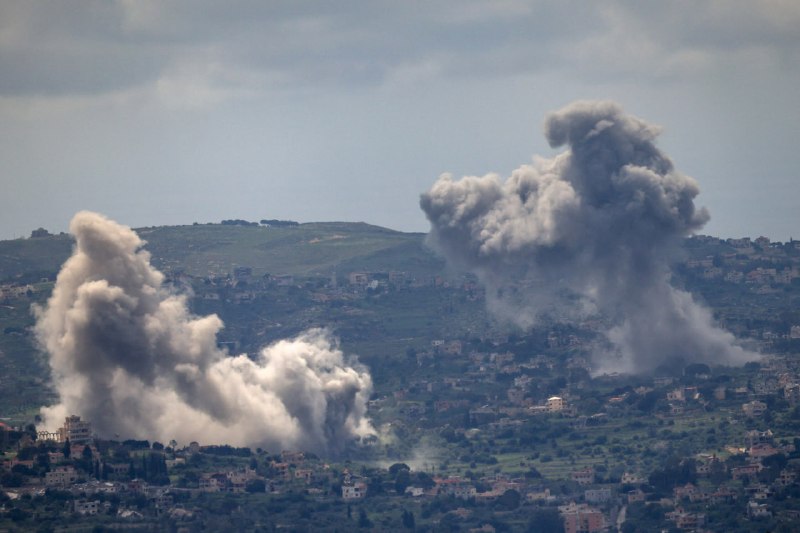
On the evening of 13 June 2026, Israel's Finance Minister Bezalel Smotrich told an Israeli audience that the only way to stop Hezbollah fire on the country's north was destruction in southern Beirut at a ratio of ten buildings for every projectile. The line travelled fast. By 19:44 UTC, Israeli-language account @sprinterpress on X had carried the quote in English; by 19:21, Iran's Fars News had re-broadcast it from the same wording; by 19:13, geopolitical aggregator GeoPWatch had packaged the line in a flag-and-cross graphic on Telegram; by 19:11, the Clash Report channel had added the geographic detail that names the southern Beirut suburb of Dahiyeh — Hezbollah's main civil-military stronghold. Within thirty-three minutes, a single sentence had moved from a Hebrew-language cabinet minister to the global wire in four distinct translations.
That speed, more than the threat itself, is the story. The Smotrich statement functions as a stress test of where Israeli escalation rhetoric sits in 2026: who in the cabinet is permitted to set the decibel level of threats toward a non-state actor with a state sponsor, and whether the language travels faster than the policy that is supposed to back it. The next forty-eight hours will determine whether the quote is absorbed into the routine of statements-then-strikes, or whether it becomes a problem the prime minister's office has to manage in public.
What Smotrich actually said, and what he is authorised to say
The substance of the statement is narrow. Smotrich argued that Hezbollah must not be permitted to "exploit the situation" — language Israeli officials have used for the better part of two years to describe the Iran-aligned group's continuing rocket and drone fire into northern Israel — and proposed a one-to-ten ratio of Lebanese civilian infrastructure destruction in response. The reference to Dahiyeh is significant: the southern Beirut suburb was the principal target of the 2006 Israel–Hezbollah war's air campaign, in which an estimated 1,200 Lebanese civilians were killed according to later UN and Lebanese government tallies, and has been the geographic shorthand in Israeli strategic discussion for "Hezbollah's address" for two decades.
Smotrich is, on paper, an unusual messenger. The Finance Minister of Israel is not a member of the security cabinet; operational decisions on war and peace in the north are formally reserved for the prime minister, the defence minister, and a small war-cabinet forum that has at various points included opposition figures. Smotrich's portfolio is the budget, taxation, and relations with the settler movement from which he draws his political base. But in the current Israeli political configuration, the leader of the Religious Zionism party is also a kingmaker inside the governing coalition, and his statements on the northern front have functioned since 2024 as a kind of unofficial outer-ring of threat — signalling how far the right flank of the coalition is prepared to push for escalation if the formal cabinet does not move on its own.
The unusual feature of the 13 June 2026 statement is the explicit civilian-infrastructure arithmetic. Past Israeli official rhetoric has tended to route such threats through anonymous military spokespeople, and to couch them in the technical language of "targets" — Hezbollah command nodes, weapons depots, launcher sites. Smotrich named a ratio and a place.
The translation chain
The statement's migration from Israeli political media to Iran-aligned and then to the global English-language monitoring ecosystem is itself a study in how the modern news wire functions. The earliest post cited in the cluster is from the Israeli account @sprinterpress on X at 19:44 UTC, framing Smotrich's Hebrew remarks in English and adding the verb "fall" — a small but pointed choice that reads as destruction rather than demolition. Twenty-three minutes earlier, Fars News — the Iranian state-affiliated outlet whose English service runs through the @FarsNewsInt Telegram channel — had already broadcast the statement in its own framing, calling Smotrich "Minister of Finance of the Zionist regime" and reaching the same arithmetic. The order matters: the Iranian wire did not wait for English-language Israeli media to translate; it produced its own version in parallel.
GeoPWatch, a geopolitical aggregator Telegram channel with a large following among Middle East analysts, packaged the line as a flag-and-cross graphic at 19:13 UTC, and the Clash Report channel added the Dahiyeh specificity six minutes later. The reverse — the Israeli origin and the Iranian re-broadcast, separated by a few minutes in absolute time — illustrates a structural fact of the 2026 information environment: the old pipeline of foreign-ministry briefings, embassy reads, and think-tank translations has been replaced by an ecosystem in which political statements, in any language, can be processed, re-framed, and re-distributed to millions of readers inside the half-hour. The wire now runs at the speed of a translation API.
Counter-read: a maximalist in a maximalist room
The dominant Western framing of Smotrich has tended to read him as a far-right outlier whose bellicosity sits at the edge of, but is constrained by, the mainstream of Israeli policy. That reading has merit, but it is incomplete. Israeli politics in 2026 contains a broad cross-coalition consensus that Hezbollah's post-2024 posture — its reconstitution of rocket and precision-missile production in southern Lebanon, its reassertion of command presence in Syria after the fall of Assad in late 2024, and its continuing fire into the Galilee panhandle — is unacceptable and must be reversed. The dispute is about scale, tempo, and explicit civilian cost, not about whether the threat should be issued.
By that reading, Smotrich is a maximalist, but he is a maximalist inside a generally maximalist room. The more important question is whether the statement was a deliberate escalation designed to push the security cabinet toward a wider operation in Lebanon, or whether it was an off-the-cuff remark that escaped the careful calibration that usually surrounds statements on the northern front. The clue may lie in timing. The 13 June statement came on the same day that Israeli media was reporting the cabinet's continued disagreement over the scale of any ground operation; Smotrich's statement, by setting a public ratio, raises the cost of any smaller-scale action in the eyes of the Israeli public. The more modest the eventual operation, the more it will look like the cabinet flinched.
The structural frame is straightforward. The Israeli political system in mid-2026 contains a finance minister whose leverage over the coalition's survival gives him effective veto power over escalation decisions, and whose rhetoric is, on the evidence of 13 June, no longer constrained by the conventional separation between treasury and security portfolios. That is the change worth watching, not the quote itself.
The Dahiyeh precedent
The reference to Dahiyeh cannot be read outside its 2006 context. In the July–August 2006 war, the Israeli Air Force conducted an extensive campaign against the southern Beirut suburb, which functioned as both a residential area and Hezbollah's principal logistics, communications, and command hub. International human rights organisations and UN agencies later documented extensive civilian casualties and the destruction of large residential blocks; Israeli official statements at the time and since have framed the campaign as targeted at military infrastructure embedded in civilian areas. The arithmetic of 2006 — roughly 1,200 Lebanese civilian deaths, the displacement of approximately one million people, and damage to civilian infrastructure that took years to rebuild, per UN and World Bank assessments — is the implicit reference point of any Israeli politician who names Dahiyeh in 2026.
The 13 June statement is, in that sense, a claim that the 2006 ratio was insufficient and that future operations should be more destructive still. Whether the Israeli public and the security cabinet accept that claim is the operational question for the rest of June.
Stakes and the next forty-eight hours
The concrete stakes of the statement fall in three places. First, the northern Israeli communities whose evacuation status remains in force — the policy question of whether they return, when, and under what security guarantee is unresolved, and the 13 June statement is part of the input to that decision. Second, the diplomatic channel: any mediated framework for Hezbollah's withdrawal north of the Litani River, or for a demilitarisation agreement in southern Lebanon, requires a baseline of declared Israeli intent; the more maximalist the declared intent, the harder the negotiation. Third, the relationship between Israel and the United States: the US has, since late 2024, conditioned significant military aid on Israeli operations that respect proportionality and civilian-protection norms, and a finance minister publicly calling for a ten-to-one civilian-infrastructure ratio is a parameter the US side will note.
The structural frame in plain prose: the Israeli political system in 2026 is one in which coalition-leverage politics has effectively merged the rhetoric of escalation with the rhetoric of routine governance. The Smotrich statement of 13 June is what that merger sounds like.
What remains uncertain is whether the 13 June statement presages a wider operation in Lebanon in the coming weeks, or whether it will be absorbed into the routine pattern of statement-then-strike, in which threats are issued, calibrated, partially walked back, and used as diplomatic leverage. The sources do not specify the cabinet's response, the IDF's operational planning, or the US position; the picture will sharpen as the security cabinet meets and as the wire produces verifiable reporting in the days that follow.
Desk note: Monexus frames this story as a stress test of Israeli escalation rhetoric and coalition politics, not as a partisan reading of intent. We have used the Fars News transmission as wire provenance, not as endorsement of its editorial framing of Smotrich; the Israeli-language source @sprinterpress on X is treated as the originating transmission for the English-language wire. The Dahiyeh reference is contextualised against the documented record of the 2006 war, drawn from UN and World Bank assessments reported in the sources. Reader caveat: this article will be updated as official Israeli and US positions are reported.
Wire provenance
This editorial synthesis draws on the following public wire/social posts:
- https://t.me/FarsNewsInt
- https://t.me/GeoPWatch
- https://t.me/ClashReport