The Trillionaire, the Rockets, and the Public-Private Line: Reading SpaceX's $2 Trillion Debut
SpaceX priced at $75 billion and traded past $2 trillion on its first day, briefly making Elon Musk the world's first trillionaire. The numbers are almost beside the point: they confirm how much of the next industrial frontier is being auctioned before the public has any say in it.
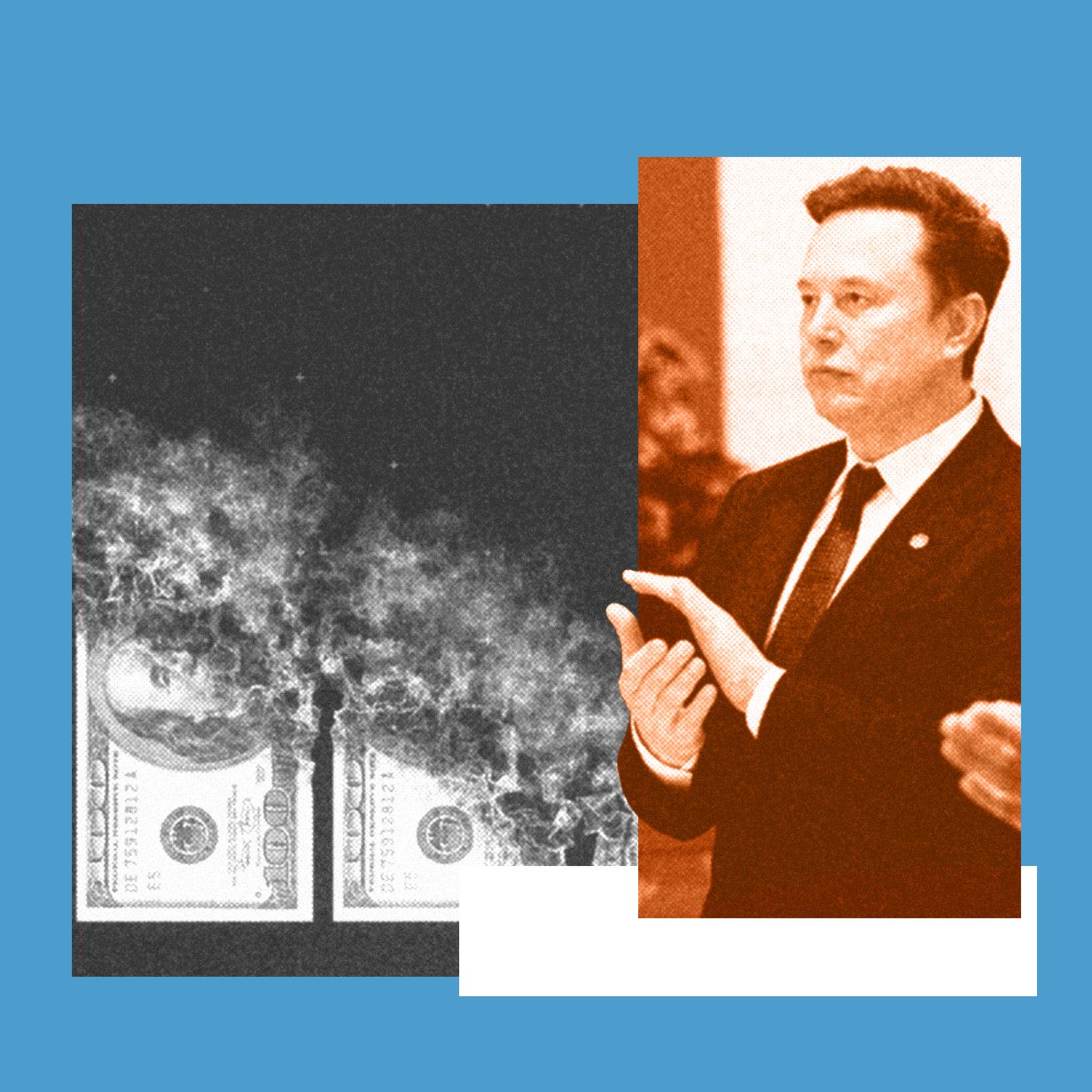
On the afternoon of 12 June 2026, the bell rang in New York and a privately held American space company became, for a few hours, the most valuable private enterprise ever to cross the public threshold. SpaceX priced its initial public offering at $75 billion in primary proceeds, opened trading at $151 a share, and within minutes the implied valuation cleared $2 trillion. By the close, the company's founder and largest shareholder, Elon Musk, was briefly the world's first trillionaire, a marker the world's wealth tables have been quietly preparing for since Tesla's own 2020 surge put the question on the agenda. Reuters confirmed the IPO size and the first-day pop in its 19:00 UTC news summary; Cointelegraph flagged the open at $151 and the trillionaire threshold in a pair of dispatches circulated over Telegram at 15:54 and 16:30 UTC the same day. The story is bigger than the leaderboard.
What the debut confirms is less a market judgment than a structural one: the next industrial frontier — space launch, satellite internet, defence payloads, and the orbital data layer underneath them — is being parcelled out through the public market after a decade of private accumulation. The public is being invited to buy a stake. It is not being invited to set the terms.
The numbers, briefly
The base deal — a $75 billion raise at the IPO price — is one of the largest primary equity offerings in US market history, on a par with the Saudi Aramco 2019 listing in raw proceeds, though narrower in free float. Cointelegraph's intraday report, circulated at 15:54 UTC on 12 June 2026, recorded the open at $151 a share, which on the disclosed share count implied a market capitalisation north of $2 trillion. Reuters, in its 19:00 UTC same-day summary, put the first-day gain at roughly 19 percent, pushing the implied value further past the $2 trillion mark. Musk's stake, which is concentrated through a multi-class structure that preserves founder voting control, briefly carried a paper value exceeding $1 trillion. Cointelegraph's 16:30 UTC follow-up confirmed the trillionaire threshold and called it a first.
The mechanics matter. A $75 billion primary raise at this scale is not a financing event in the conventional sense; SpaceX was not short of private capital. It is a price-discovery event for a balance sheet that the public had previously been told was already worth roughly $400 billion in late private rounds, then $1.5 trillion in early-2026 secondary trades, and now — with the same launch cadence, the same Starlink subscriber base, and the same Pentagon contract book — finds itself bid to $2 trillion in opening minutes. The jump from $400 billion to $2 trillion in eighteen months is not, on its face, a comment on operations. It is a comment on what the market believes operations will be worth once the orbital layer is monetised at scale.
The company the market was actually buying
SpaceX is, on paper, three businesses under one roof. There is the launch franchise — Falcon 9, Falcon Heavy, and the partially reusable Starship programme — which has become the default US ride to orbit for both commercial constellations and national-security payloads. There is Starlink, the low-earth-orbit broadband constellation that has gone from a side project to the company's largest revenue line, with subscriber numbers in the multi-millions across consumer, enterprise, and government contracts. And there is the defence and civil-military layer, including the Crew Dragon human-spaceflight programme for NASA, the Pentagon's bulk-launch contracts, and a growing portfolio of classified work routed through the National Security Space Launch programme.
Each of these businesses has, until now, been valued within a private-company framework that priced illiquidity, founder control, and the long horizon of cash returns. Going public collapses that discount. Reuters' 19:00 UTC summary framed the listing as the moment those three revenue lines — launch services, consumer connectivity, and national-security space — were fused into a single equity instrument that institutional buyers could underwrite. The 19 percent first-day move suggests the institutional read is bullish, but it is bullish in a particular way: it prices SpaceX not as a launch company with a satellite side hustle, but as an infrastructure utility with a launch company attached.
The shift in framing is the story. A utility-style multiple applied to a company that still flies most of its manifest under cost-plus defence contracts and still subsidises consumer terminals on Starlink is, in effect, a bet that the orbital layer will behave like fibre did in the late 1990s — a single integrated network, with one operator setting the terms of access.
The dollar politics, translated
There is a temptation to read the $2 trillion print as a vindication of the American model: a private company, capitalised by US pension funds and retail investors, executing on a frontier that most other advanced economies have ceded. The structural read is messier. SpaceX's launch cadence and constellation footprint have been underwritten, directly or indirectly, by NASA procurement, by the Pentagon's reliance on commercial launch for both routine and classified payloads, and by the Federal Communications Commission's allocation of spectrum and orbital slots for Starlink. The public has paid in three currencies — tax dollars through the contract book, regulatory permission through the licence stack, and now equity capital through the IPO — for the same company to list on its own terms.
The countervailing read, more common in non-US coverage of the same event, is that SpaceX's first-day pop is the market's vote of confidence in a model where the boundary between a national champion and a publicly traded corporation is, at best, a contractual one. In Europe, the leading launch competitor is Arianespace, organised as a consortium of state and private shareholders. In China, the comparable capacity sits inside state-owned enterprises with their own industrial-policy logic. The US approach — a private operator with the contractual rights of a national champion and the upside of a listed equity — is genuinely unusual. Reuters' 19:00 UTC framing of the listing emphasised exactly that fusion: a private balance sheet with public-mission obligations.
The dominant framing — a triumphant American private-sector story — holds up only if you treat the Pentagon and NASA contracts as commercial revenue. They are commercial revenue; the invoices clear. But the contract structure, the exclusivity provisions, and the political weight behind the launch manifest are not the same thing as a private-sector market test. SpaceX is now priced as if they were.
Who buys at the top of a moment
The investor base for a $75 billion primary is narrow by design. The float is constrained; the multi-class structure preserves founder voting control; the institutional book is being filled by sovereign-wealth funds, large US asset managers, and a smaller cohort of family offices. Retail participation is real but is structurally capped by allocation rules and the multi-class voting architecture. Reuters' same-day summary flagged the 19 percent first-day move as evidence of tight supply against institutional demand, not broad public enthusiasm. Cointelegraph's 16:30 UTC dispatch noted the trillionaire mark on Musk's paper stake, but the same mechanics that deliver the trillionaire also insulate the founder from any public-shareholder discipline that a normal float would impose.
The structural point: a $2 trillion market cap, on a thin free float, with a multi-class voting structure, and a contract book denominated in US defence dollars, is a particular kind of asset. It behaves less like an equity and more like a sovereign bond whose coupon is paid in launch slots. The public, here, is not the principal; it is the junior creditor, taking the marginal price risk in exchange for a fraction of the upside and none of the control.
The frontier, and who is excluded from it
The deeper pattern is one of the editorial observations of the past several years, restated in concrete form. The orbital layer — the infrastructure that the next decade of global communications, earth observation, and missile-warning capability will sit on top of — is now controlled, end to end, by a single publicly listed US company. There is no comparable public equity in Europe. There is no comparable listed vehicle in China. There is, in practical terms, no third option for any government, telco, or large enterprise that wants a non-American, non-Chinese orbital platform at scale.
The corollary, less often stated, is that the public has been given the chance to buy this asset only after the asset has been built. The launch towers, the Starship test programme, the Starlink constellation, the NASA Crew Dragon contract, the Pentagon launch pipeline — all of it was capitalised, in the first instance, by private rounds, by founder equity, and by US government procurement. The public is buying the harvest, not planting the field. Reuters' 19:00 UTC summary of the deal and the first-day pop noted the scale of the raise; the structural question — what return the public should expect from a company that already had more demand for launch than it could service — was left for analysts to pick up in the days that followed. Cointelegraph's intraday coverage, by contrast, leaned into the human-interest framing: the trillionaire, the rockets, the leaderboard. Both treatments are accurate. Neither addresses the structural concentration underneath the moment.
Stakes, plain
If the trajectory continues, three things follow. First, the cost of access to orbit for any non-US government will rise, because the dominant supplier will be a publicly traded entity whose pricing reflects a $2 trillion equity base, not a $400 billion one. Second, the political weight of any US decision to restrict launch or satellite access for a foreign customer will become more fraught, because the company being restricted will, by then, be partly owned by US pension funds and retail investors who have a financial interest in the contract. Third, the line between US national-security space policy and US listed-equity returns will blur further, and the institutional infrastructure to manage that blur — export controls, FCC licensing, Pentagon procurement — will become a more contested political space.
The counterpoint, and it is a real one, is that the alternative — keeping SpaceX private — would have meant concentrating the same franchise in fewer hands with even less public visibility. The IPO at least produces a disclosure regime, a 10-Q cadence, and a public market price for the contract book. That is not nothing. It is also not enough.
What the sources do not yet settle
The wire coverage from Reuters and Cointelegraph on 12 and 13 June 2026 confirms the IPO size, the open at $151, the $2 trillion-plus market capitalisation, the 19 percent first-day gain, and the trillionaire threshold on Musk's paper stake. It does not settle the question of free float, the precise institutional composition of the order book, the voting structure versus the economic structure, or the forward guidance SpaceX will give in its first earnings cycle. Reuters' 19:00 UTC same-day summary treated the listing as a market event; the structural questions — what the public is actually buying, on what terms, and with what governance rights — are downstream of the first earnings call and the first proxy season. Those are the next stories. The trillionaire is the headline. The terms of the listing are the substance.
This publication covered the SpaceX debut as a structural event first: a frontier industry crossing the public threshold after a decade of private accumulation, with the public-mission contract book and the public-mission equity structure now sitting on the same balance sheet. The wire coverage leaned on the trillionaire and the first-day pop. Both framings are accurate. The next earnings season is the test of which one lasts.
Wire provenance
This editorial synthesis draws on the following public wire/social posts:
- https://t.me/cointelegraph
- https://t.me/cointelegraph
- https://t.me/Cointelegraph
- https://t.me/cointelegraph
- https://t.me/Cointelegraph