SpaceX's record IPO turns Musk into the first trillionaire — and the index funds that hold the rest of America's retirement savings have already made their call
The largest listing in history crowned Musk the world's first trillionaire on Friday. Hours earlier, the index that holds trillions in retirement savings decided not to include the stock — and the divergence is the story.
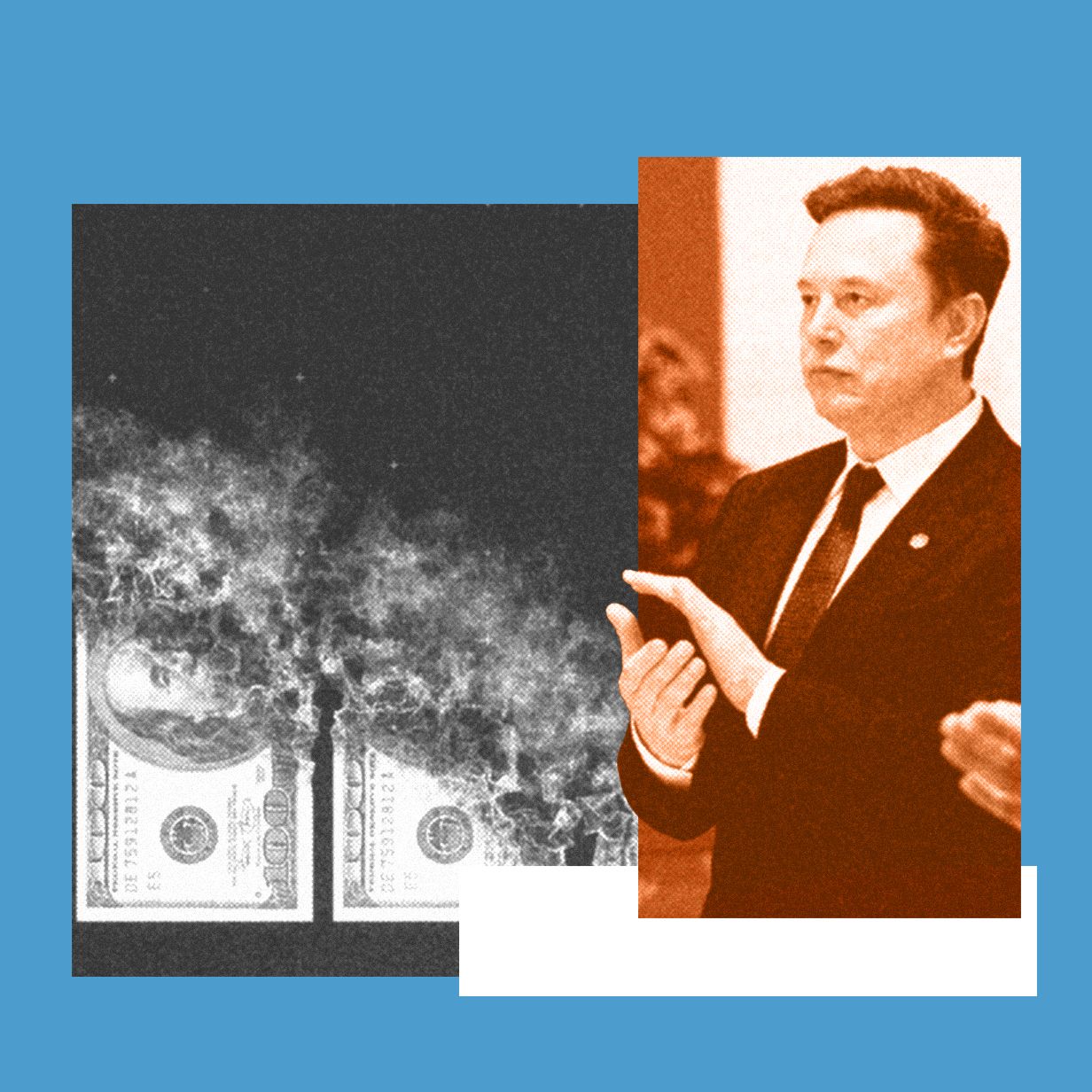
On Friday, 12 June 2026, SpaceX opened the biggest initial public offering in the history of public markets and Elon Musk became the first human being whose net worth crossed one trillion dollars. Within hours, news desks worldwide had done the obvious arithmetic: Musk versus every other tech founder, Musk versus the GDP of mid-sized countries, Musk versus history. The less noticed story sat one layer underneath — the decision, already made and reported on the same day, by the index that holds the largest single pool of retirement capital on Earth, to leave the new trillion-dollar listing out of its benchmark.
That single omission tells readers far more about the next decade of capital allocation than the trillion-dollar headline does. Public wealth, as a practical matter, is no longer a question of which individuals own the means of production. It is a question of which private assets the largest passive vehicles will accept on their books — and on what terms.
A listing that broke every precedent
LiveMint reported at 17:59 UTC on 12 June 2026 that Musk had become the first trillionaire as SpaceX's IPO opened, the largest in market history. The event was a milestone by any reasonable measure: a private company whose Falcon 9 workhorse and Starlink constellation have become operational infrastructure for the United States government, NATO members, and commercial users across roughly 130 countries had priced into the public markets, and its principal had vaulted past every previous wealth record.
The scale is worth pausing on. The IPO, framed as the biggest in history, is not just a financial event. SpaceX is a launch provider with active defence contracts, a satellite operator that has reshaped the orbital commons, and the parent of a deep-space programme whose stated goal is crewed Mars settlement. A company that combines those functions is, in any prior era, the kind of enterprise that would either be state-owned, state-controlled, or broken up by antitrust action. That it is now a publicly traded growth name — with Musk as the dominant shareholder — is itself the news, before any dollar amount is attached.
The index made its call first
The under-told half of the same day, again on 12 June 2026, is that the S&P 500 had already declined to incorporate the new listing. A widely read finance column on the same date noted that the index committee had said no to SpaceX at the moment of admission — a decision that directly affects every American with a 401(k), IRA, or target-date fund benchmarked to large-cap US equities, because index funds and ETFs are required to track the index they are sold as tracking. Trillions of dollars of retirement capital do not, in other words, automatically meet the new trillion-dollar Musk asset.
Two things are happening at once. First, a founder who already controlled the dominant launch provider, a major EV maker, an AI company, a tunnel venture, and a social-media platform has now converted the largest of those holdings into publicly traded paper. Second, the passive-investing complex — the channel through which most ordinary American households now own US equities — has, in effect, declared that paper insufficiently proven on the public-market criteria the index uses. Investors who want SpaceX exposure will have to buy it directly, hold it in a brokerage, and bear the concentration risk themselves. Investors who do not, or cannot, will simply not own it.
This is a quieter and more consequential split than the headline trillion-dollar framing suggests. It is the difference between wealth that anchors the public balance sheet of US retirement saving, and wealth that sits alongside it.
What employee number one makes of it
The BBC's Michelle Fleury published interviews on 12 June 2026 with Tom Mueller, who joined SpaceX in 2002 as the company's first employee, working alongside Musk on the early Merlin engine and the founding engineering team. The interviews, posted in both video and text form on the same day, give the listing a human anchor. Mueller's framing is characteristically understated: SpaceX, in his telling, was built in 2002 by a small group who believed that commercial launch could be done for a fraction of the incumbent price, and that the United States had effectively forfeited low Earth orbit if someone did not rebuild domestic launch capacity.
That founding narrative matters, because the IPO is now asking public markets to underwrite the next stage of an enterprise whose original remit was restoring American access to orbit. More than two decades on, SpaceX is the dominant Western launch provider, the operator of the largest satellite constellation ever deployed, and the principal US counter-weight to Chinese launch capacity — a market in which Beijing's state-directed industrial policy has produced real and growing competition. The same company now trades publicly while its founder's net worth is reported, for the first time, in twelve figures. Mueller's recollection, in the BBC interviews, of those early years is the right scale on which to measure what has changed since.
A pattern of who gets to print money, and on whose terms
The deeper question this listing exposes is who, in the current arrangement, gets to convert private industrial power into personal paper wealth — and on what terms the rest of the public is allowed to share in it. The S&P 500's committee has its own answer, encoded in float, liquidity, profitability, and governance rules, and the decision to leave SpaceX out, at least for now, sits inside that technical logic.
But the technical answer obscures a political one. A retirement system in which a large and growing share of household capital is passively allocated through a private committee's judgment is a system in which the boundary between public wealth and concentrated private wealth is drawn by a small group of index providers, not by voters, regulators, or even active asset managers. The SpaceX decision is a clean illustration: the index committee is, in effect, a gatekeeper with discretion over which private concentrations the broad public is allowed to own at low cost.
The structural frame here is the slow transformation of capital markets from a system in which public listing and broad ownership were largely the same thing, into a system in which the largest private concentrations of productive capacity can be partially monetised into public-paper wealth for founders and early backers, while the passive-investing public — the entity that nominally owns the market — may or may not be invited to share in the upside on the same terms.
For the global picture, the stakes run in two directions. The first is the concentration of operational capacity for space, AI infrastructure, and advanced manufacturing in the hands of a small number of founder-controlled vehicles, several of them now in the public market. The second is the steady migration of the centre of capital formation away from broad public ownership and into private vehicles accessible mainly to institutional and accredited capital. China's industrial policy apparatus, for its part, treats launch capacity, satellite constellations, and AI compute as strategic infrastructure with state-aligned financing and consolidated public ownership — a model that delivers scale and speed the Western model struggles to match, and that the United States is, in this listing, both competing with and partially emulating.
What remains uncertain
Three things are still unclear. First, the precise criteria the S&P 500 committee applied, and the timeline on which SpaceX could become eligible. Second, the actual free float and concentration of voting power that will exist in the post-IPO company, which will shape every future governance and antitrust question about Musk's industrial empire. Third, how index-tracking funds themselves — the vehicles that mechanically hold what the benchmark holds — will respond to member demand, since retail investors who want SpaceX exposure and a low-cost index wrapper in the same product have, at the moment, no clean way to get both.
The sources do not specify any of these. The reporting available on 12 June 2026 establishes that the listing happened, that Musk's net worth crossed one trillion dollars, and that the S&P 500 declined to admit the stock. Everything beyond that is the open question this decade's capital markets will have to answer.
This publication's framing here treats the S&P 500's exclusion as the lead analytical fact, not the celebration of the listing. The wire coverage on the same day leaned heavily on the trillion-dollar headline; the index decision is the structurally more durable story.
Wire provenance
This editorial synthesis draws on the following public wire/social posts:
- https://t.me/LiveMint/